Iowa defies trend with cheaper electricity amid AI boom


Add Axios as your preferred source to
see more of our stories on Google.
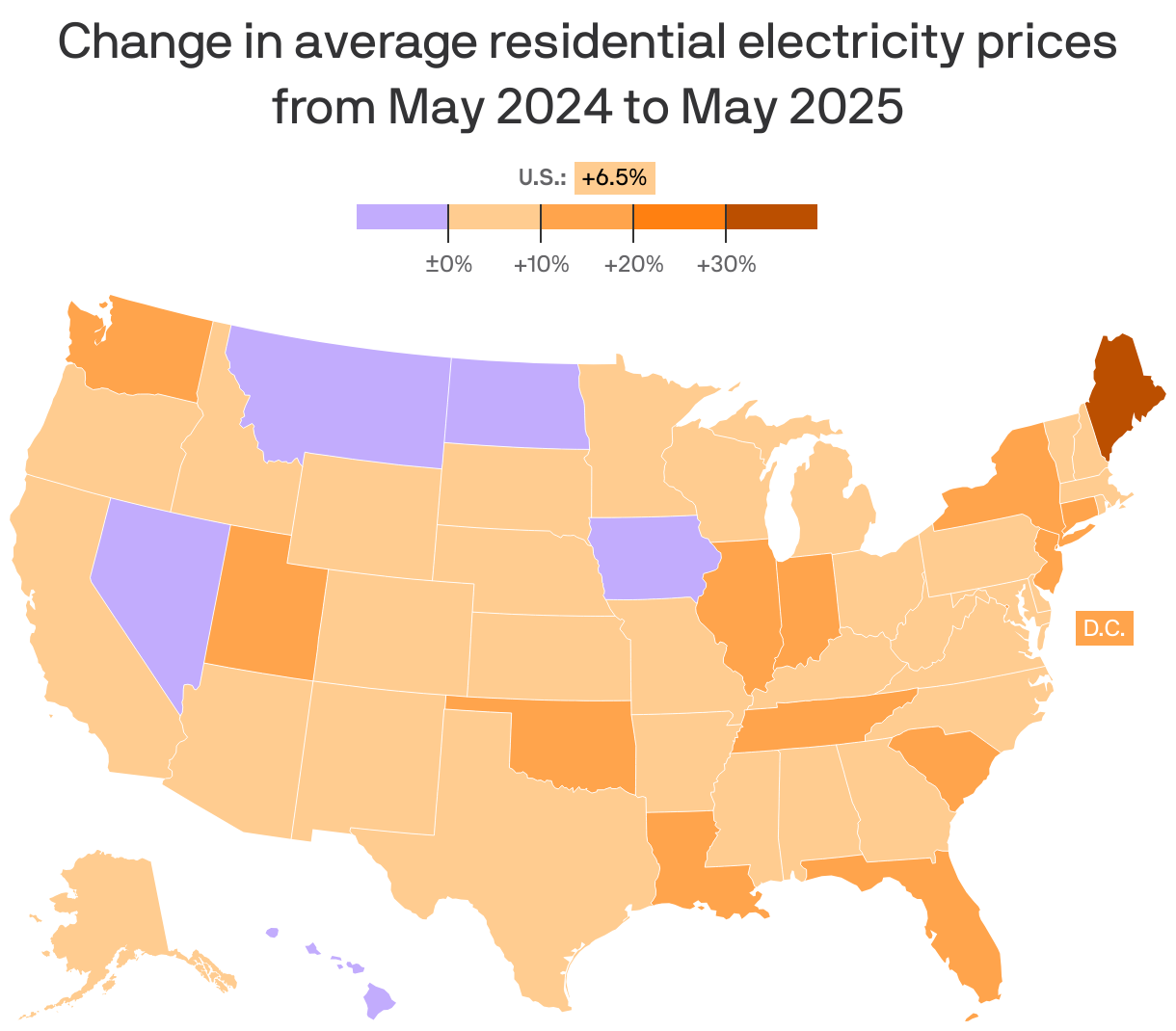
Iowa's electricity prices decreased over the past year, while most other states experienced increases.
Why it matters: Keeping rates affordable is crucial as the state emerges as a hub for energy-intensive industries like AI-powered data centers and cryptocurrency mining.
- Clean energy advocates warn that the phase-out of wind and solar tax breaks could disrupt the movement and cause higher utility bills.
State of play: Iowa leads the country in the percentage of electricity it uses that's generated by wind, which can buffer against fossil fuel price spikes and promote pricing stability.
- DSM-based MidAmerican Energy attributes nearly $16 billion in wind and solar projects over the past two decades for helping to keep its rates affordable.
By the numbers: The nationwide average retail residential price for 1 kilowatt-hour of electricity rose from 16.41 cents to 17.47 cents between May 2024 and May 2025, per the latest available data from the U.S. Energy Information Administration, a gain of about 6.5%.
- Some states saw much larger increases, such as Maine (+36.3%), Connecticut (+18.4%) and Utah (+15.2%).
- Five states experienced decreases: Nevada (-17.7%), Hawai'i (-7%), Montana (-2.6%), Iowa (-0.5%) and North Dakota (-0.1%).
Zoom in: Iowa's average rate is 14.23 cents, the 15th lowest in the nation as of May, but higher than several neighboring states, including Missouri (12.97 cents) and Nebraska (13.18 cents), according to the data.
- Hawai'i (41.03 cents) and California (35.03 cents) had the highest rates.
What we're watching: U.S. Sen. Chuck Grassley (R-Iowa) announced last week that he is blocking President Trump's nominees for the Treasury Department until he can be sure about the rules linked to the tax credit phase-out, which could be issued by Aug. 18.
Editor's note: This story has been corrected to show that the electricity rates are counted in cents (not dollars).