Des Moines swats its mosquito budget

Add Axios as your preferred source to
see more of our stories on Google.
After more than 25 years, Des Moines plans to discontinue mosquito spraying, monitoring and testing in the upcoming season to save money.
Why it matters: Mosquitoes transmit diseases such as West Nile virus, which can lead to flu-like illness — especially for people over 60 — resulting in long-term complications and, in rare cases, death.
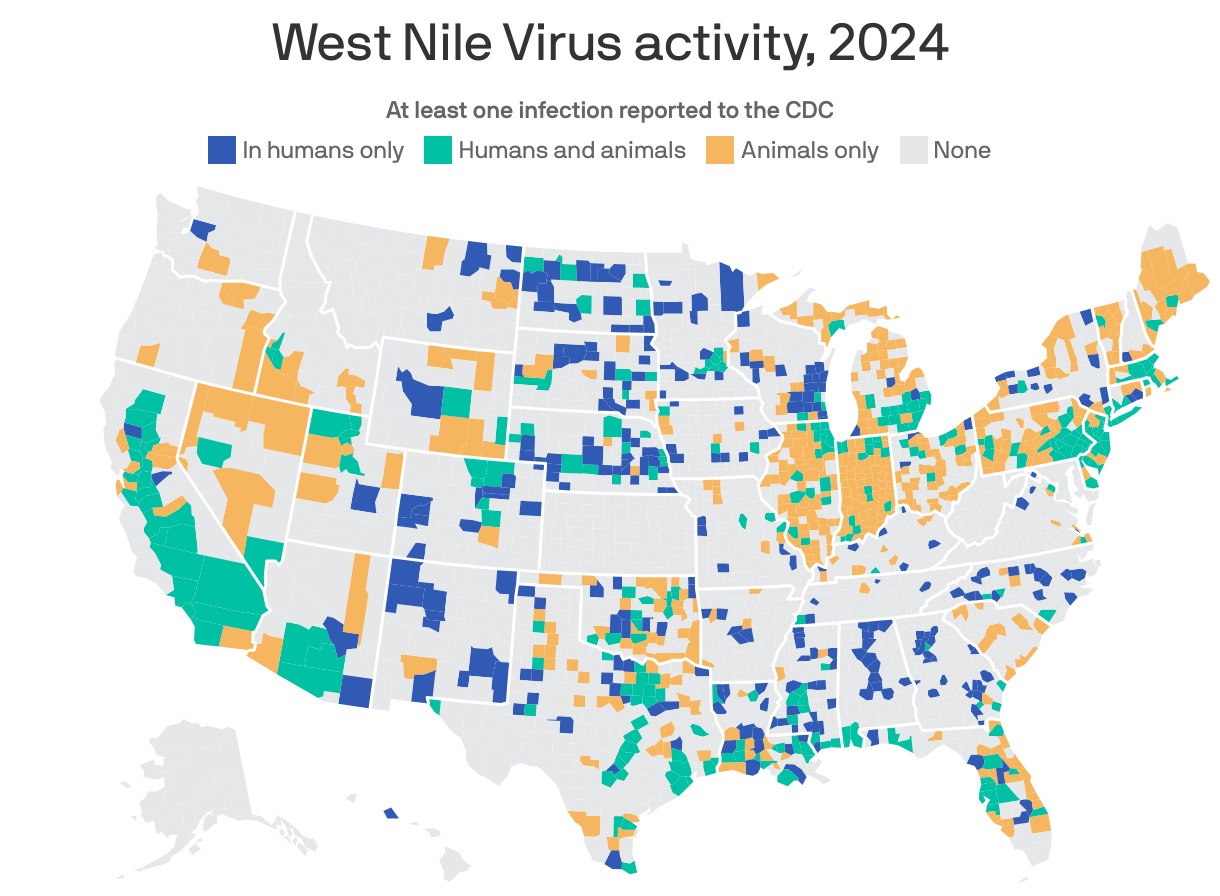
Threat level: There were at least five cases of West Nile in Polk County last year, the most since 2018, when there were 12, per the CDC.
By the numbers: The city will provide one aerial larvicide application this spring as they did in previous years but skip on-the-ground treatments they used to do when tests showed they were needed.
- The change will reduce projected costs by 80%, from $375,000 to $75,000, Chris Reindl, a neighborhood inspections supervisor, tells Axios.
- The savings are around 1.8% of a $17 million shortfall in the city's proposed $839.3 million budget.
Caveat: The City Council could reinstate the program if public health concerns arise, DSM neighborhood services director Chris Johansen tells Axios.
The big picture: West Nile is among the expanding threat of diseases carried by insects due to longer, hotter summers, milder winters and changes in land use and travel.
- There were more than 27,600 hospitalizations and almost 3,000 deaths from the disease in the U.S. between 1999 and 2023, per the CDC.
The intrigue: Anthony Fauci, the former director of the National Institute of Allergy and Infectious Diseases, was severely sickened by West Nile last year.
- Mosquitoes are "the deadliest animal on the planet," he wrote in a New York Times guest essay advocating for more prevention.
State of play: Local governments will soon vote on their budgets for the upcoming fiscal year that starts in July. Johnston and West Des Moines told Axios they do not plan changes to their mosquito control programs.
- Ankeny suspended its citywide program in 2011, citing costs and "general ineffectiveness in widespread areas," but continues to spray in high-traffic recreational sites.
- Polk County will continue its program in unincorporated areas but has concerns that DSM's plan could trigger higher mosquito counts across the metro's most populated parts, Board of Supervisors Chair Matt McCoy tells Axios.
What's next: The DSM City Council is expected to vote on its upcoming budget on April 7.