Denver restaurants have 4th-lowest survival rate in the country


Add Axios as your preferred source to
see more of our stories on Google.
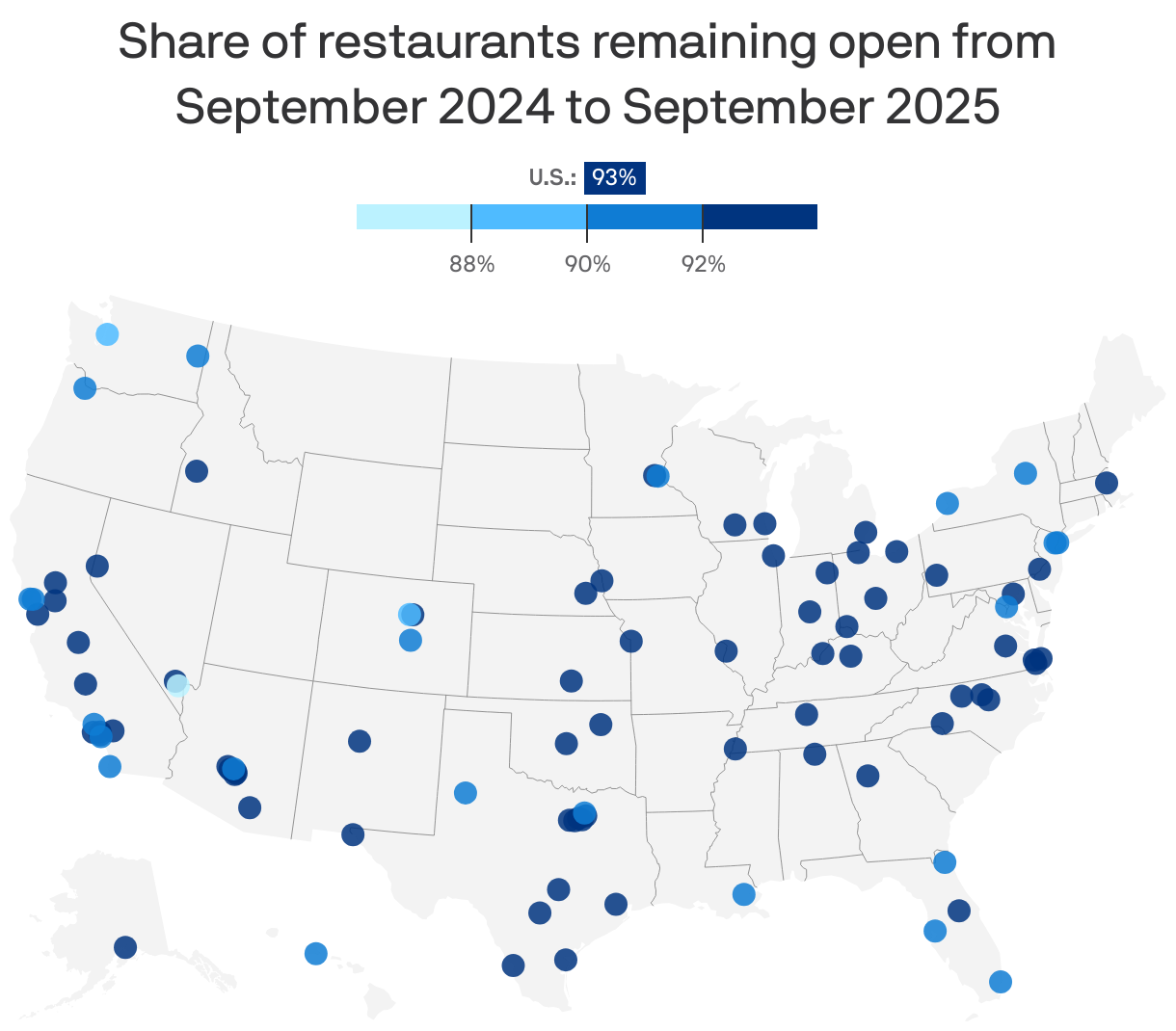
Denver's one-year restaurant survival rate is among the lowest of major U.S. cities, according to DoorDash data shared exclusively with Axios.
Why it matters: Some churn is normal, even healthy. But especially low rates of restaurant survival in any given city could suggest something rotten in the local industry.
By the numbers: In Denver, 90.5% of restaurants open last September that used DoorDash remained open this September, the data shows.
- Only three other major cities had lower rates: Fremont, California (87.6%), Henderson, Nevada (89.2%), and Seattle (89.8%)
- The national average is 93%.
Yes, but: Some cities with relatively low resiliency rates in the covered period also saw lots of new openings, DoorDash found.
- The Denver metro, for example, saw at least 40 new openings in the last month alone, according to Westword.
What they're saying: The report's data should be considered in full context to get the best idea of any particular city's performance, DoorDash chief analytics officer Jessica Lachs tells Axios.
- "Being high or low on one of these scales doesn't necessarily mean that a city is doing well or doing poorly," Lachs says.
The big picture: A low survival rate is bad news for the state's local economy, which receives a massive boost from the restaurant industry.
- Colorado's restaurants are projected to generate more than $32.4 billion in economic output this year, per the National Restaurant Association.
- The Denver metro alone is estimated to generate more than half of that, with a direct economic contribution of about $17 billion.
The bottom line: Running a restaurant is tough even in the best of times — and with rising costs and cash-strapped consumers, this isn't the best of times.