These cities have the best 1-year restaurant survival rates

Add Axios as your preferred source to
see more of our stories on Google.
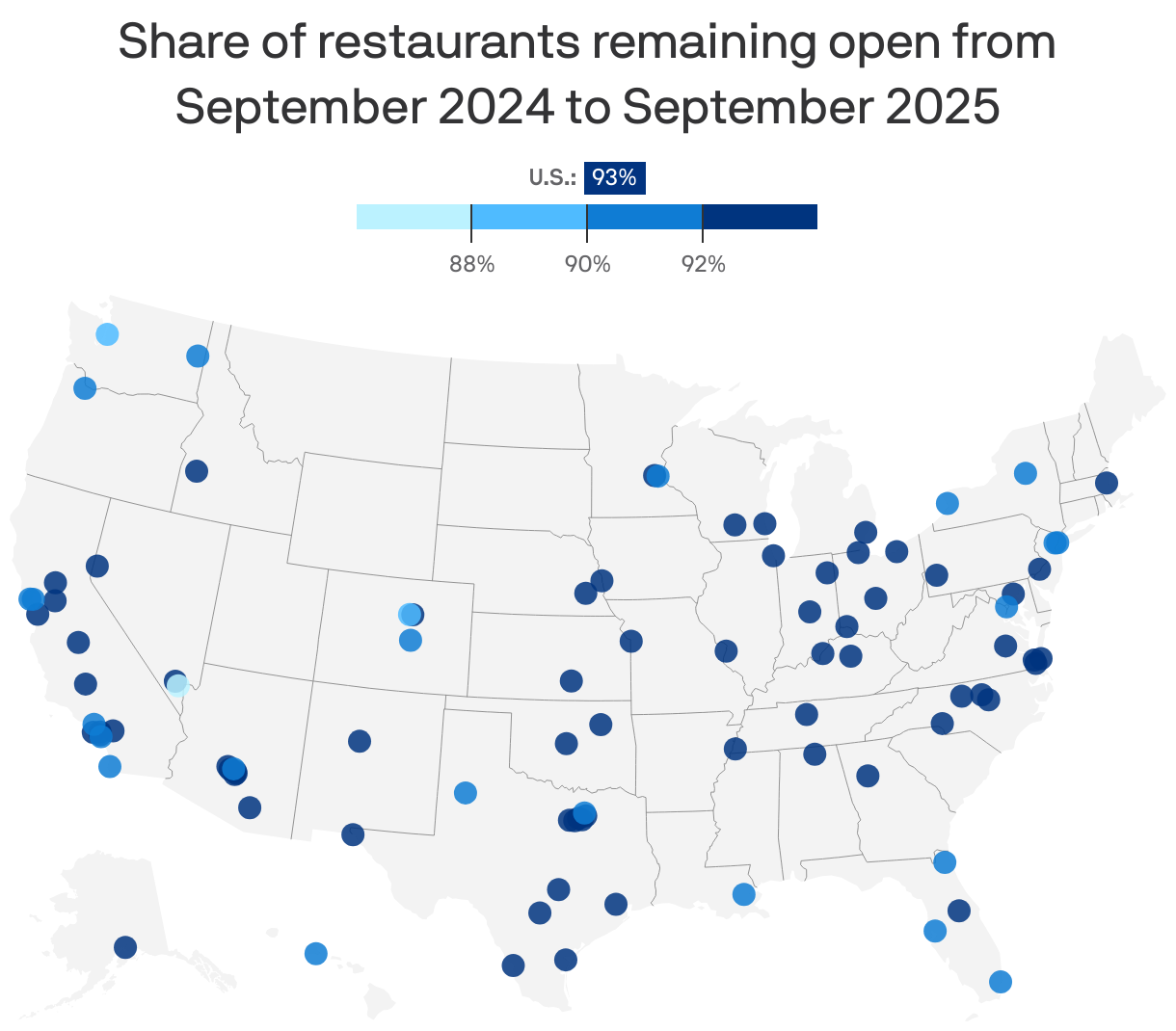
The vast majority of restaurants using DoorDash in the biggest U.S. cities that were open in September 2024 remained open in September 2025, per new data from the company shared exclusively with Axios.
Why it matters: Some churn is normal, even healthy. But especially low rates of restaurant survival in any given city may suggest something rotten in the state of the local industry.
Zoom in: Lincoln, Nebraska (97.3%), Anaheim, California (95.7%), and Fort Wayne, Indiana (95.5%) had the best restaurant resiliency rates in the covered period, per DoorDash.
- Fremont, California (87.6%), Henderson, Nevada (89.2%), and Seattle (89.8%) had the lowest such rates — meaning lots of closures.
- The resiliency rate across all included cities was 93%.
Yes, but: Some cities with relatively low resiliency rates in the covered period — New Orleans, for example, at 90.8% — also had lots of new openings, the company found.
How it works: The data is part of DoorDash's new State of Local Commerce report, which features a bounty of metrics on restaurant trends and more across the 100 most populous U.S. cities.
What they're saying: The report's data should be considered in full context to get the best idea of any particular city's performance, DoorDash chief analytics officer Jessica Lachs tells Axios.
- "Being high or low on one of these scales doesn't necessarily mean that a city is doing well or doing poorly," Lachs says.
- "When we looked at the data, there really wasn't any city that was, across the board, a lower performer. It really is a mixed bag everywhere."
Reality check: One year of survival isn't nothing, but business closure rates tend to rise on longer time horizons.
- Go deeper: Read Axios Local reporting on restaurants' struggles in D.C., Salt Lake City, New Orleans, Minnesota, and Colorado.
The bottom line: Running a restaurant is tough even in the best of times — and with rising costs and cash-strapped consumers, this isn't the best of times.
