Colorado student loan debt averages $37,400 per borrower


Add Axios as your preferred source to
see more of our stories on Google.
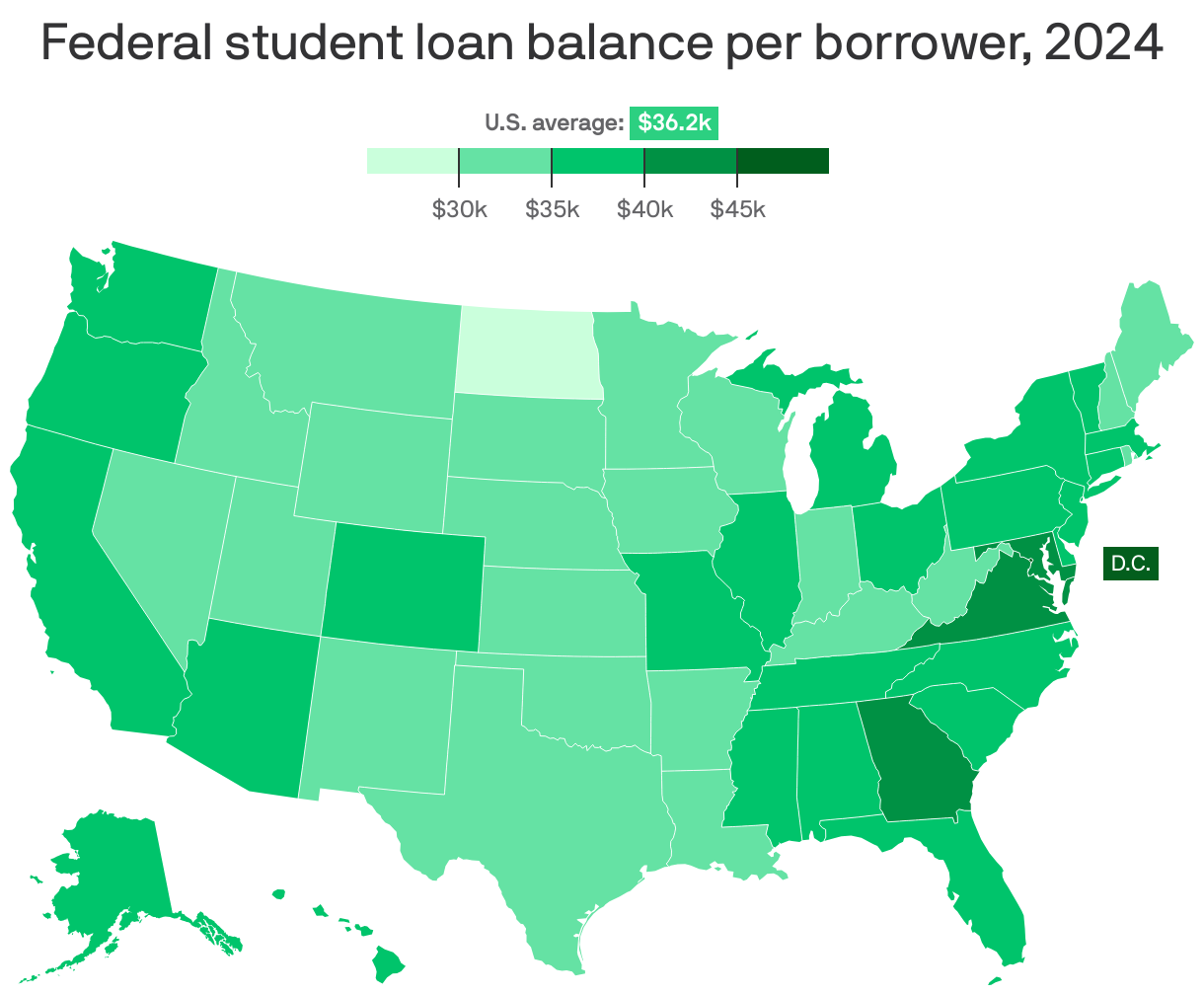
Coloradans collectively owe nearly $30 billion in student loan debt.
Why it matters: President-elect Trump is able to put an end to his predecessor's years-long efforts to erase that financial burden, which included about $20 million in debt forgiveness for more than 2,500 Colorado borrowers.
State of play: Trump has repeatedly bashed the Biden administration's student loan forgiveness plans and vowed to dismantle the Department of Education, which manages most federal student loans.
- But he hasn't outlined a clear plan for handling the nearly $2 trillion national student debt crisis in his second White House term.
By the numbers: Nearly 773,000 Coloradans have student loans, about 13% of the state's population, federal data shows.
- Borrowers in Colorado owe an average of $37,400 — slightly higher than the national figure of $36,200.
- Most (around 174,000 people) have debts between $20,000 and $40,000.
Zoom out: Washington, D.C. leads the nation with about $54,800 per borrower, while North Dakota trails at about $29,600.
Context: Colorado's college tuition costs are among the highest nationwide. It ranks No. 16 in-state tuition and fees ($13,100) and No. 9 for out-of-state tuition and fees ($35,900), per a recent College Board report.
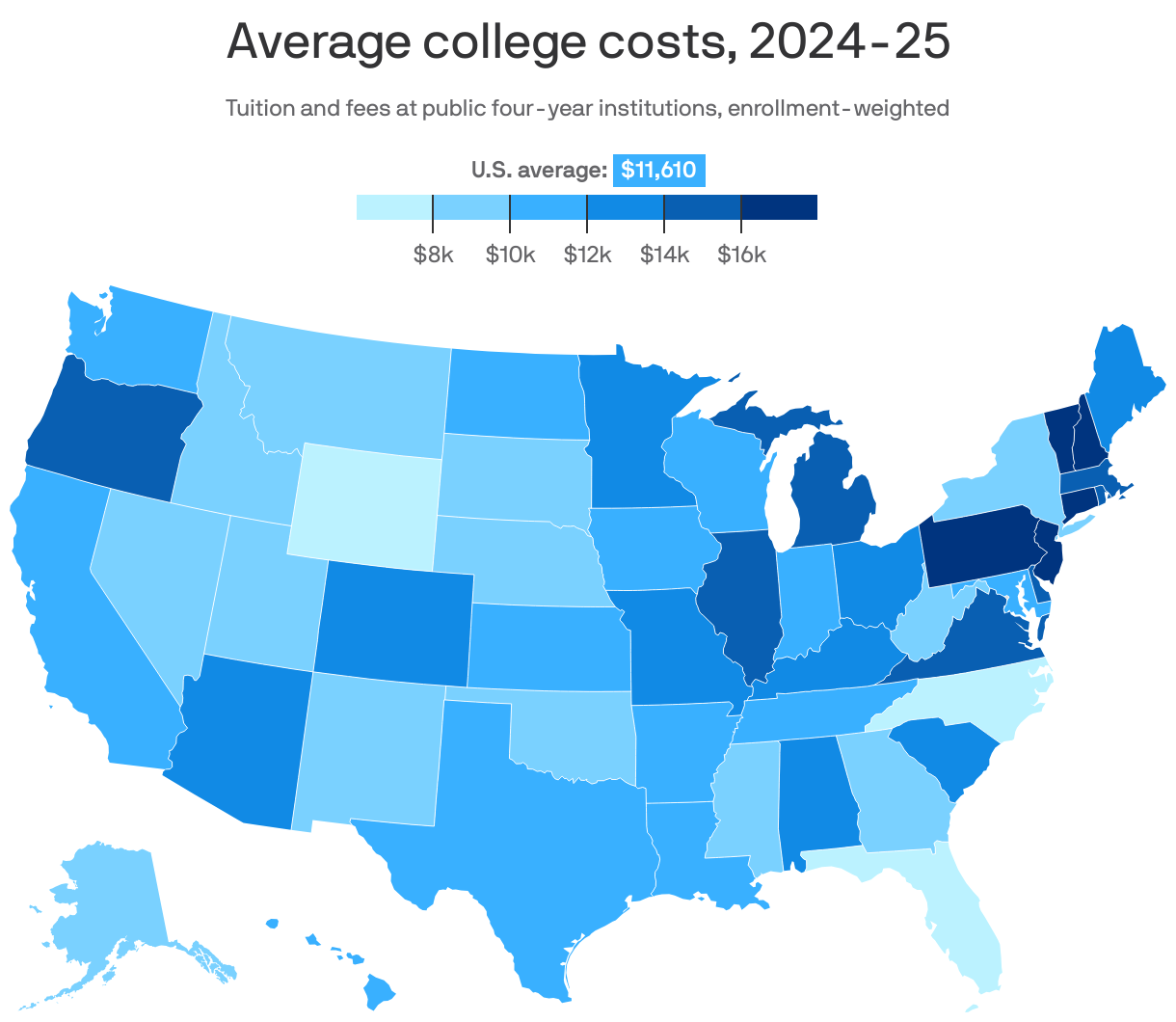
Yes, but: The cost of in-state tuition and fees over the last five years has dropped 6%, the report found.
- Meanwhile, Colorado lawmakers passed legislation this year that makes college students whose families earn less than $90,000 a year eligible for tax credits that cover the cost of tuition for two years.
Catch up quick: After the conservative-majority U.S. Supreme Court blocked Biden's signature student loan forgiveness plan last year, his administration still found ways to deliver relief to some borrowers by circumventing the need for congressional or court approval.
- Biden used the Department of Education's existing authority to provide more than $168 billion in relief to more than 4.7 million borrowers since 2021.
What to watch: The next Trump administration could roll back the efforts through similar regulatory changes.