Denver named national leader for living-wage jobs


Add Axios as your preferred source to
see more of our stories on Google.
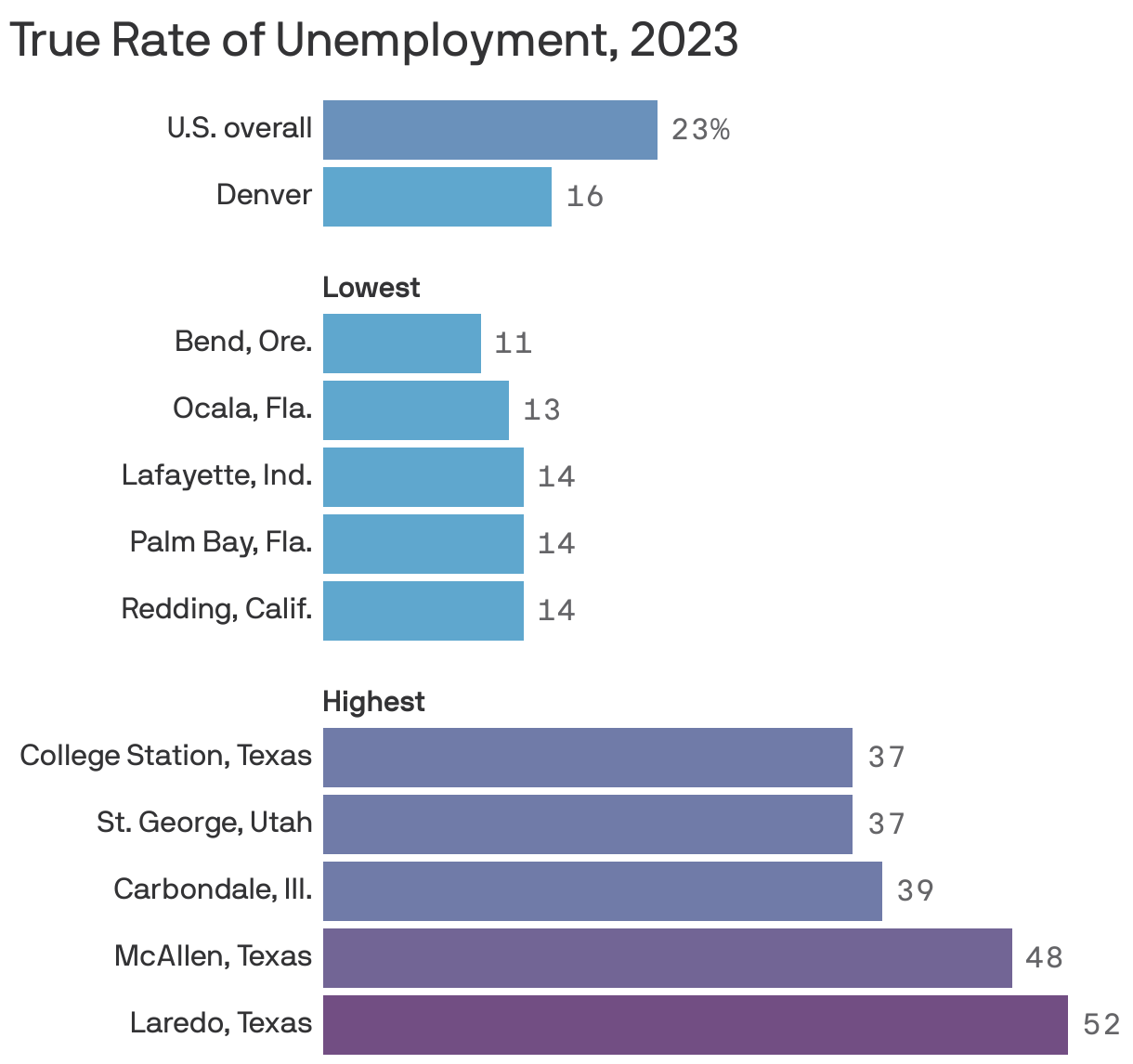
Denver is seeing low levels of unemployment — in stark contrast to areas with large numbers of low-wage jobs, such as El Paso, Texas; Fresno, California and New Orleans, new data first shared with Axios shows.
Why it matters: A strong labor market signals a healthy economy, spurring more consumer spending and less reliance on social welfare programs.
Zoom in: The unemployment rate in the Denver-Aurora-Lakewood metro was 16% in 2023, well below the national rate of 23%, according to Ludwig Institute for Shared Economic Prosperity's proprietary True Rate of Unemployment.
- The region also ranked as the national leader for living-wage jobs.
Flashback: Denver leaders voted in 2019 to raise the city's minimum wage on an incremental basis. As of this year, it's now $18.29 and $15.27 for tipped food and beverage workers.
- The statewide minimum wage also increased from $13.65 to $14.42 — and from $10.63 to $11.40 for tipped employees.
Yes, but: Denver's rising labor costs have caused some cash-strapped businesses to close their doors for good, particularly in the restaurant industry.
Zoom out: In several cities outside the Denver metro, unemployment figures hover closer to the national average. Rates were around 21% in Greeley and 25% in Colorado Springs.
- Fort Collins, however, exceeded nationwide numbers at 30%.
How it works: LISEP's True Rate of Unemployment measures the proportion of workers looking for a full-time job that pays a living wage — and who are unable to find one.
What they're saying: "Local communities investing in infrastructure, housing, and future-oriented industries consistently outperform those more reliant on low-wage jobs," LISEP founder Gene Ludwig said in a statement.
The bottom line: There are plenty of good jobs in America — but they're not evenly distributed.