Columbus maps public land with an eye on housing

Add Axios as your preferred source to
see more of our stories on Google.
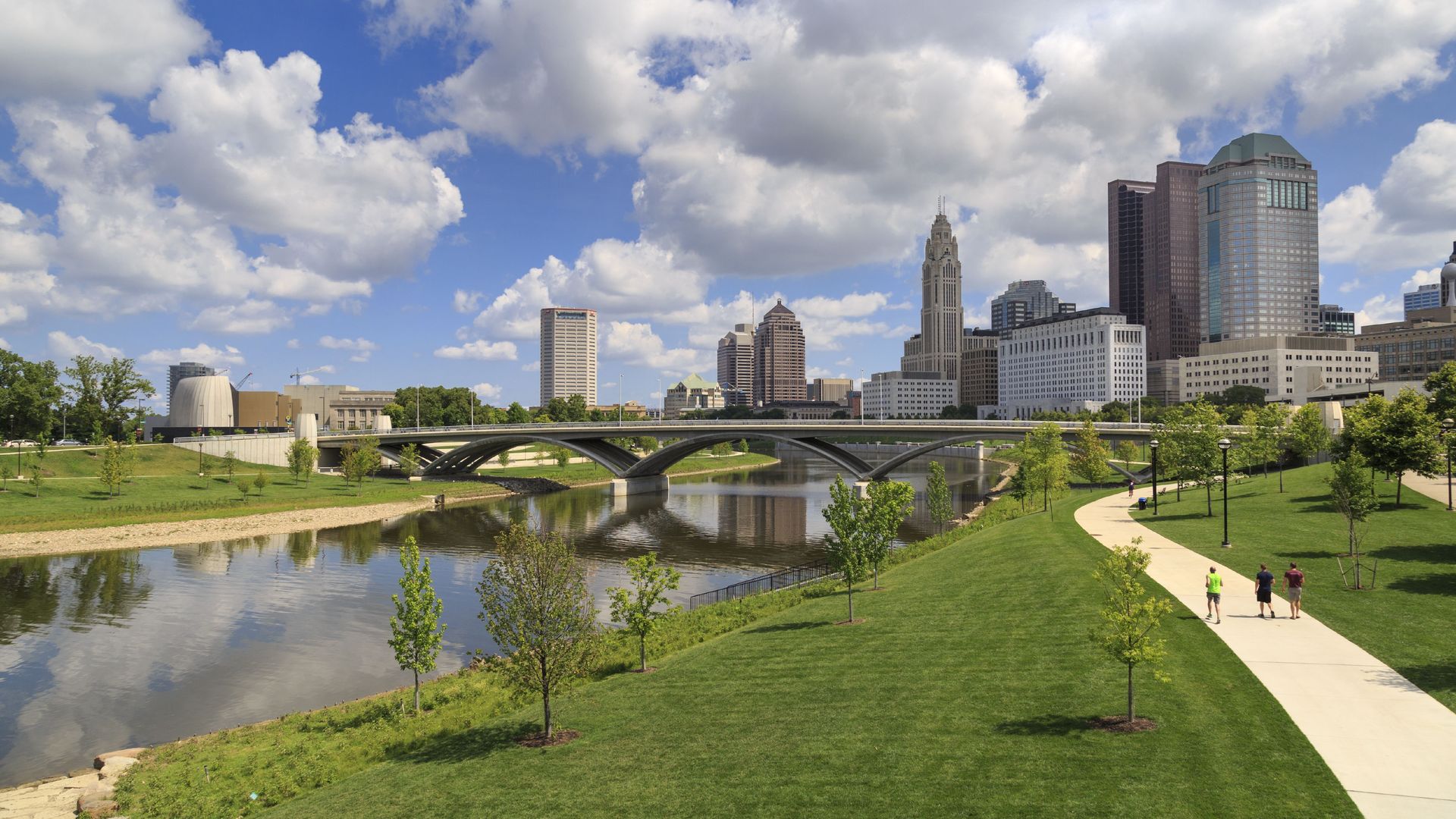
Columbus hopes it can use its new inventory of public space to spur development, like it did with the Scioto Mile. Photo: Jumping Rocks/Universal Images Group via Getty Images
Columbus has created its first-ever inventory of every square mile of public and tax-exempt land, which local leaders hope to use to spur development and housing projects.
Why it matters: Columbus has $500 million in bond funds to help tackle a regional housing crisis. Better planning and knowledge of available space can help those funds go further.
Driving the news: The city spent $140,000 to participate in an initiative called Putting Assets to Work (PAW), which helps municipalities catalogue public assets and identify underutilized tax-exempt properties.
Between the lines: This property information has always been out there, thanks to county assessors, recorders and other city staff. Gathering it with strategic recommendations is the hard part.
- "The data is there, but nobody is looking at it from the perspective of what it could be," PAW's Ben McAdams told reporters Thursday.
Stunning stats: PAW's analysis identified 66 square miles of publicly owned and tax-exempt land, the equivalent of 22 Ohio State campuses.
- The city itself owns about 14% of that land (excluding parks and recreation space), and nonprofits and governments own another 24%.
- Much of the rest is owned by "partner organizations" like hospitals, universities and churches.
Case in point: The vacant West Broad Missionary Chapel site owned by the city is currently worth about $500,000.
- If redeveloped into housing and business space, it would be valued around $2.8 million, per PAW's assessment.
- The Arena District and Scioto Mile were two existing examples of public space used to spur development.
Between the lines: PAW advocates for cities keeping control of land and its uses when possible.
- Rather than selling and losing control, its leaders say, it's often smarter to build through long-term leases and other agreements.
What we're watching: PAW makes three main recommendations.
- Focus development on areas near planned LinkUS stations and along bus rapid transit corridors.
- Use a revolving loan fund to "multiply the housing bond" and incentivize development at key sites.
- Consider establishing a public asset corporation with the job of developing and keeping control of public land.
The big picture: Council President Shannon Hardin and Councilmember Nick Bankston want to push Columbus toward an era of proactive and collaborative thinking.
- Like a potential revolving loan fund, that means more strategic use of funding, space and resources.
- "The $500 million that we have set aside from bonds will not solve affordable housing, but it can be used as a leveraged, catalytic resource," Hardin says.