Bus Rapid Transit aims to change Columbus travel

Add Axios as your preferred source to
see more of our stories on Google.
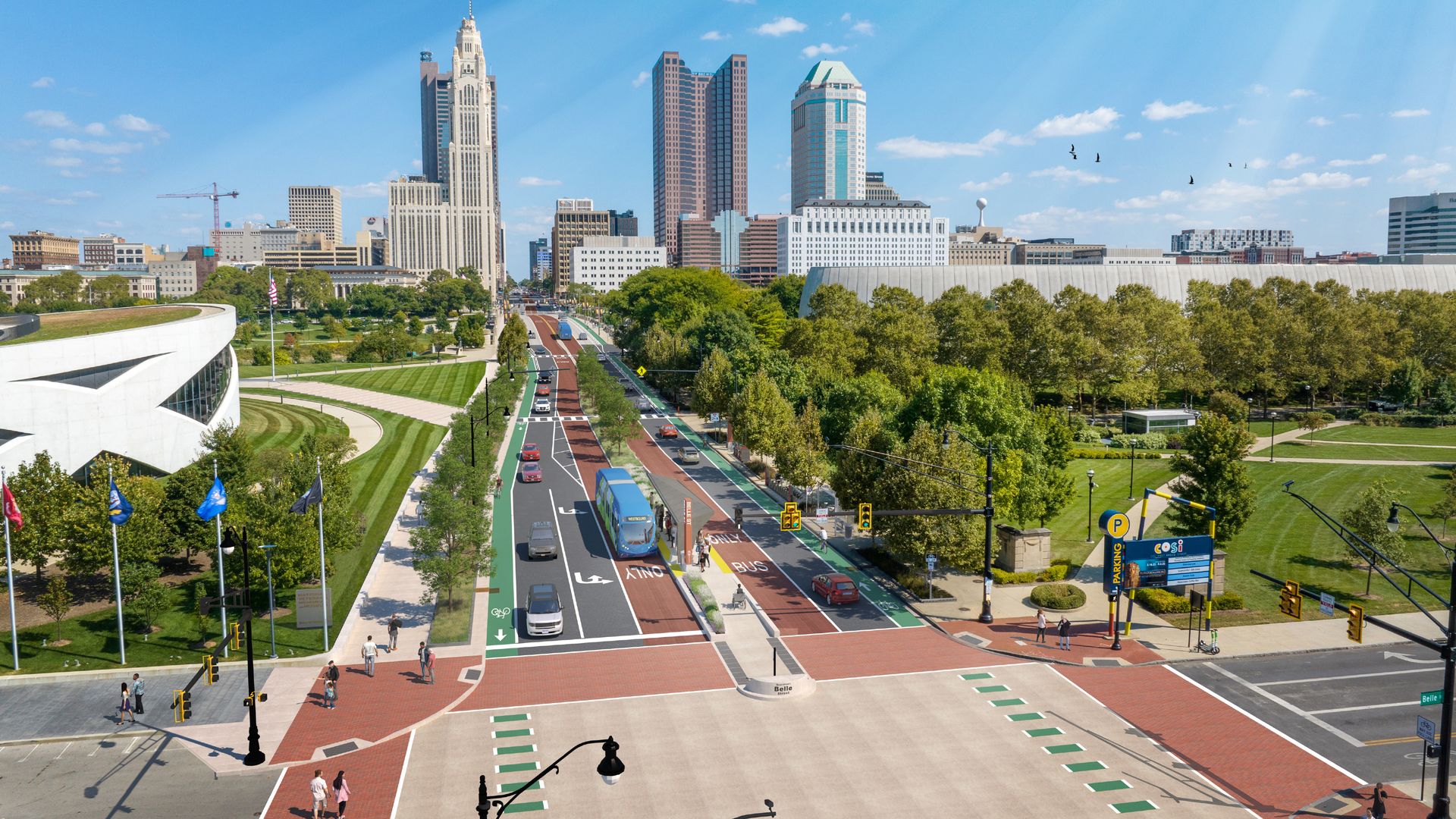
A view of the planned Bus Rapid Transit lanes on West Broad Street. Rendering: Courtesy of LinkUS Columbus
As major infrastructure upgrades begin to take shape, the Central Ohio Transit Authority hopes its first Bus Rapid Transit lines change the way Columbus travels.
Why it matters: Planned BRT lines are one of the focal points of COTA's voter-approved $8 billion LinkUS mobility plan.
- BRT lines are designed to streamline service and accommodate our growing population.
The big picture: COTA is committed to building three BRT corridors on West Broad Street, East Main Street and a route connecting downtown with Dublin. Two other potential corridors are being studied.
- In addition to BRT work, LinkUS funding enables COTA to add hundreds of miles of new paths, trails and bus lines, plus expand transit operating hours.
How it works: BRT lines function differently from standard bus routes.
- They feature dedicated lanes, larger buses, increased frequency, fewer stops and buses that communicate with traffic signals — all to increase speed and reliability.
- Improved stations allow riders to pay before riding, offer protection from the elements and add bus-level platforms for easier boarding.
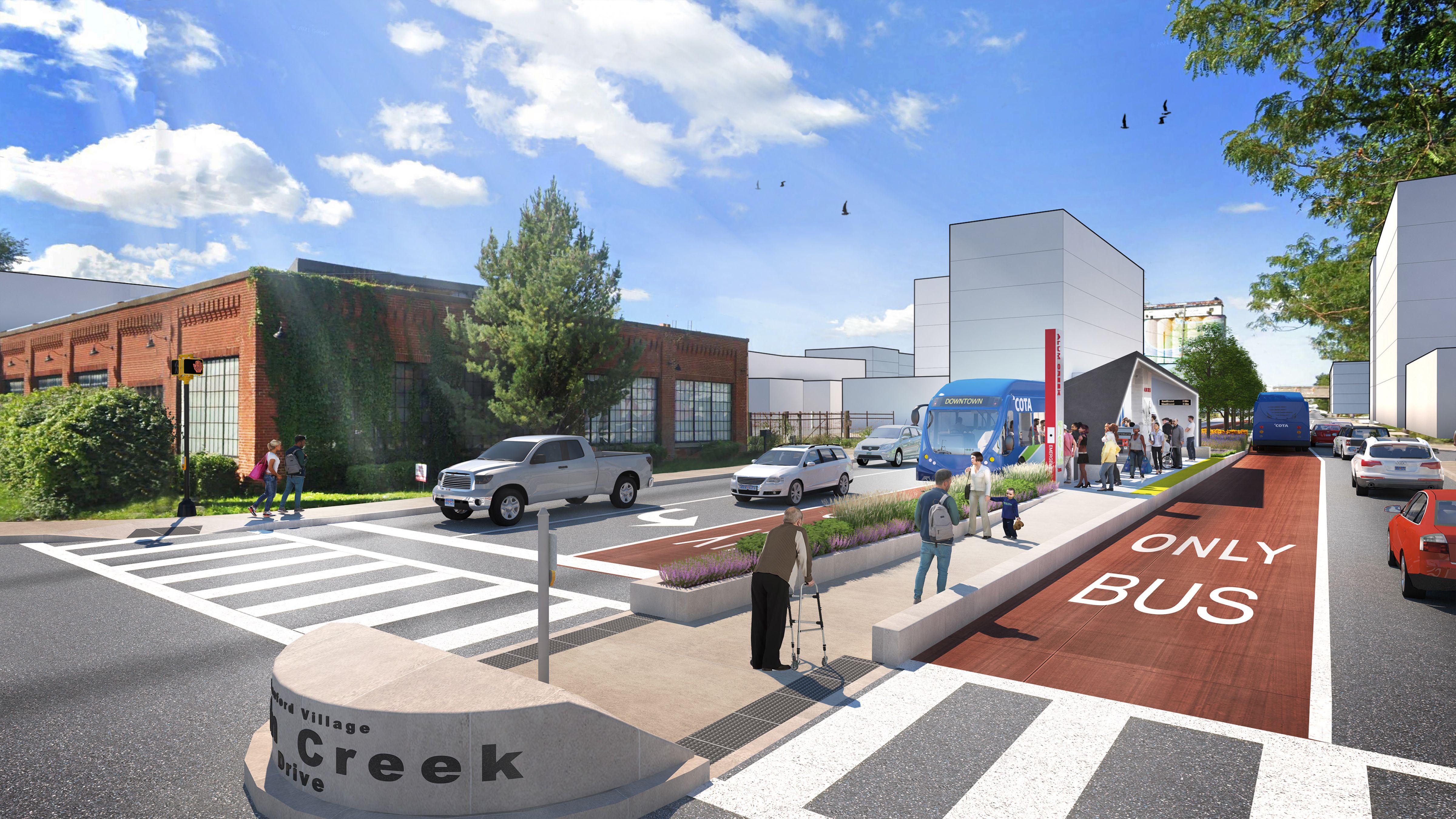
Between the lines: The BRT experience aims to imitate the experience of a subway or train.
- "We call it light rail on wheels," COTA spokesperson Jeff Pullin tells Axios, "because it has the same amenities, including arriving every eight to 10 minutes."
Case in point: The first planned BRT line, on West Broad Street, will break ground this year and should drastically reduce west side commute times.
- LinkUS transit program manager Zach Sunderland tells Axios that COTA's current West Broad corridor takes an estimated 45 minutes to get from the end of the line to downtown, not counting delays from traffic, weather or construction.
- The BRT line should cut that time to about 30 minutes and avoid external elements.
The big picture: COTA's plans were developed after looking at similar systems in cities like Seattle, Denver, Indianapolis and Minneapolis, which saw BRT ridership skyrocket last year.
Friction point: If this is "light rail on wheels," why not just build a light rail system instead?
- The biggest factor: Columbus doesn't have the population density required to qualify for federal light rail funding, COTA officials say.
- Even if the city did qualify, a single light rail line would cost as much as the $8 billion funding LinkUS for 25 years.
- Columbus would also have to acquire huge quantities of land for construction, leveling homes and businesses under eminent domain.
What they're saying: Sunderland says COTA hopes to double ridership from 3% of the population to 6%.
- "As we grow as a region, traffic is not going to get any easier and parking prices will go up. We hope this improvement will make transit more attractive and easier to use."