How the Columbus Zoo's new aquarium fits a bigger vision

Add Axios as your preferred source to
see more of our stories on Google.
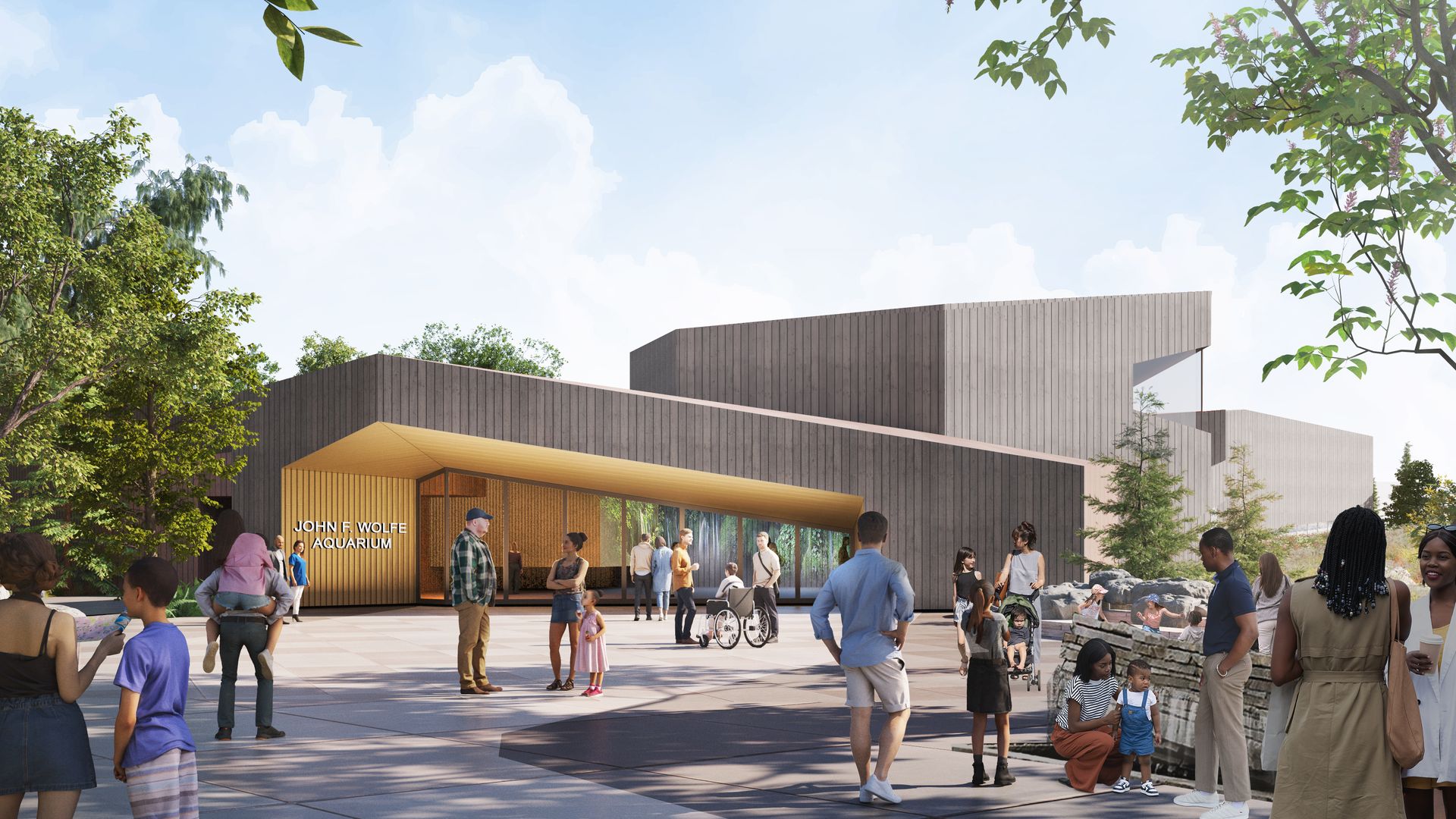
A rendering of the planned John F. Wolfe Aquarium. Image: LMN Architects and Thinc Design, courtesy of the zoo
For nearly three decades, the Columbus Zoo has carried "and Aquarium" in its name. Soon, it'll finally have one that matches the billing.
Why it matters: The newly announced standalone John F. Wolfe Aquarium will be Ohio's largest when it opens in 2029.
- It's also the centerpiece of a long-term strategy to transform the zoo from a seasonal regional attraction into a year-round destination, president and CEO Tom Schmid tells Axios.
The big picture: The zoo started embracing this broader vision soon after Schmid arrived in 2021. It's since completed multiple exhibit overhauls, added more behind-the-scenes experiences and started planning for a hotel.
- Five years ago, about 70% of zoo visitors were members, which he says "wasn't a sustainable business model."
- The ratio has since evened to about 50-50, with attendance mostly concentrated during summer and Wildlights — for now.
Catch up quick: The largest gift in zoo history, $50 million from a Wolfe family foundation, will make the $175 million aquarium project possible.
- It's named after a former Dispatch publisher and will be built on current parking spaces.
- All animals currently in Discovery Reef will move to the new space, but the manatees next door will stay.
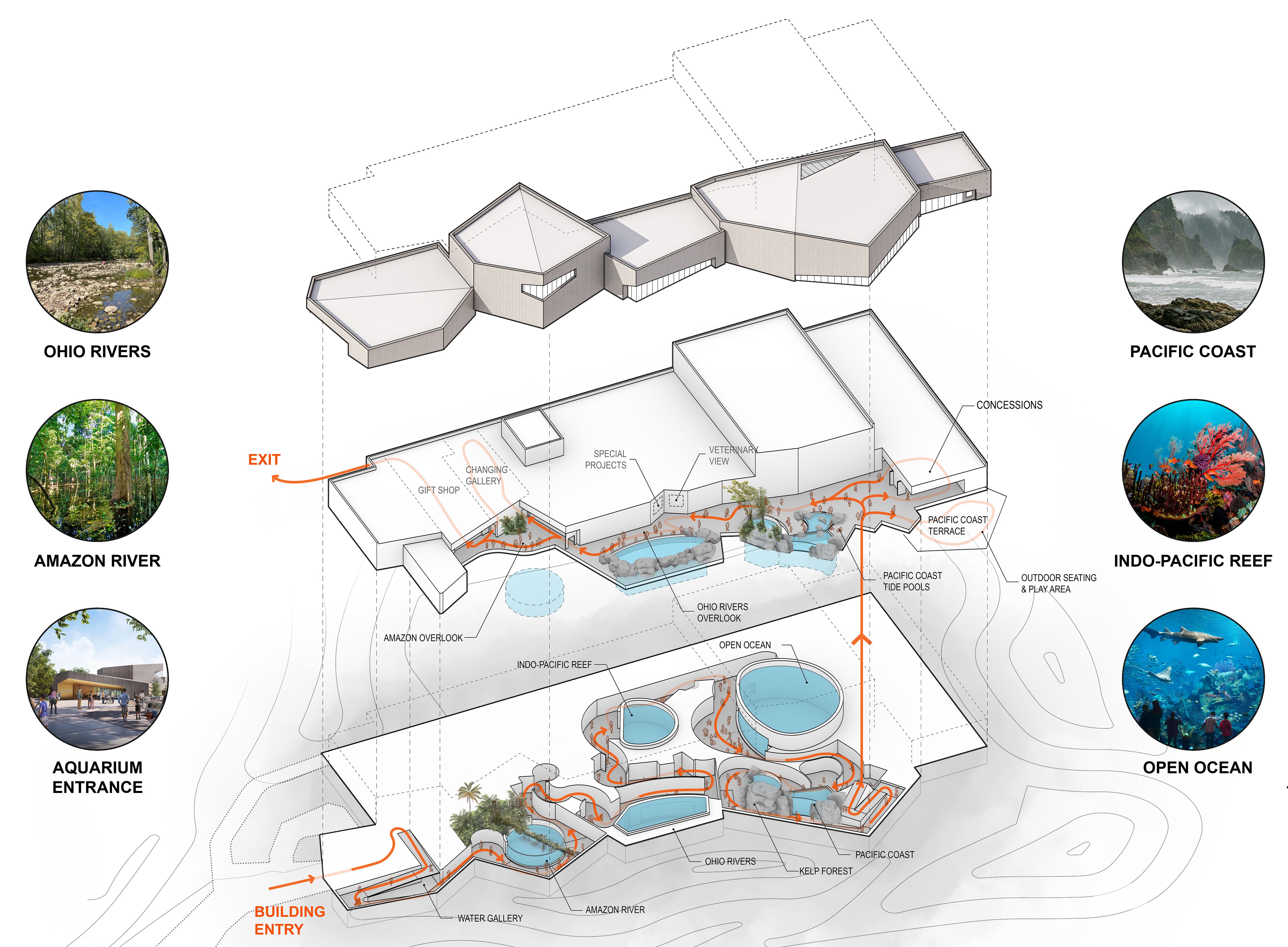
Dive in: The facility will be over 10 times larger than Discovery Reef, spanning 100,000 square feet and holding over 1 million gallons of water.
- That's comparable to Newport Aquarium in Kentucky.
- It will feature 27 "immersive exhibits," from a massive Open Ocean with large sharks and vibrant corals to a two-story re-creation of the Amazon River basin.
- It'll also highlight native fish from the Scioto River.
Underwater ecosystems are "a miraculous world that very few people get a chance to see," says Schmid, who previously ran the Texas State Aquarium.
- "I think it's going to be really eye-opening for so many folks."
Friction point: The new attraction will be separately ticketed, frustrating some on social media.
- Officials are still working out details on pricing and membership, as well as on a rebrand that could drop "and Aquarium" from the zoo's name.
At nearly 600 acres, the zoo is already one of the country's largest and is a full-day experience on its own, Schmid notes.
What's next: Construction on a separate holding facility, where new animals will be quarantined and acclimated, will begin later this year near the zoo's Lakeside Pavilion.
- An aquarium groundbreaking is planned for 2027.
How the Wolfe family has shaped the Columbus Zoo
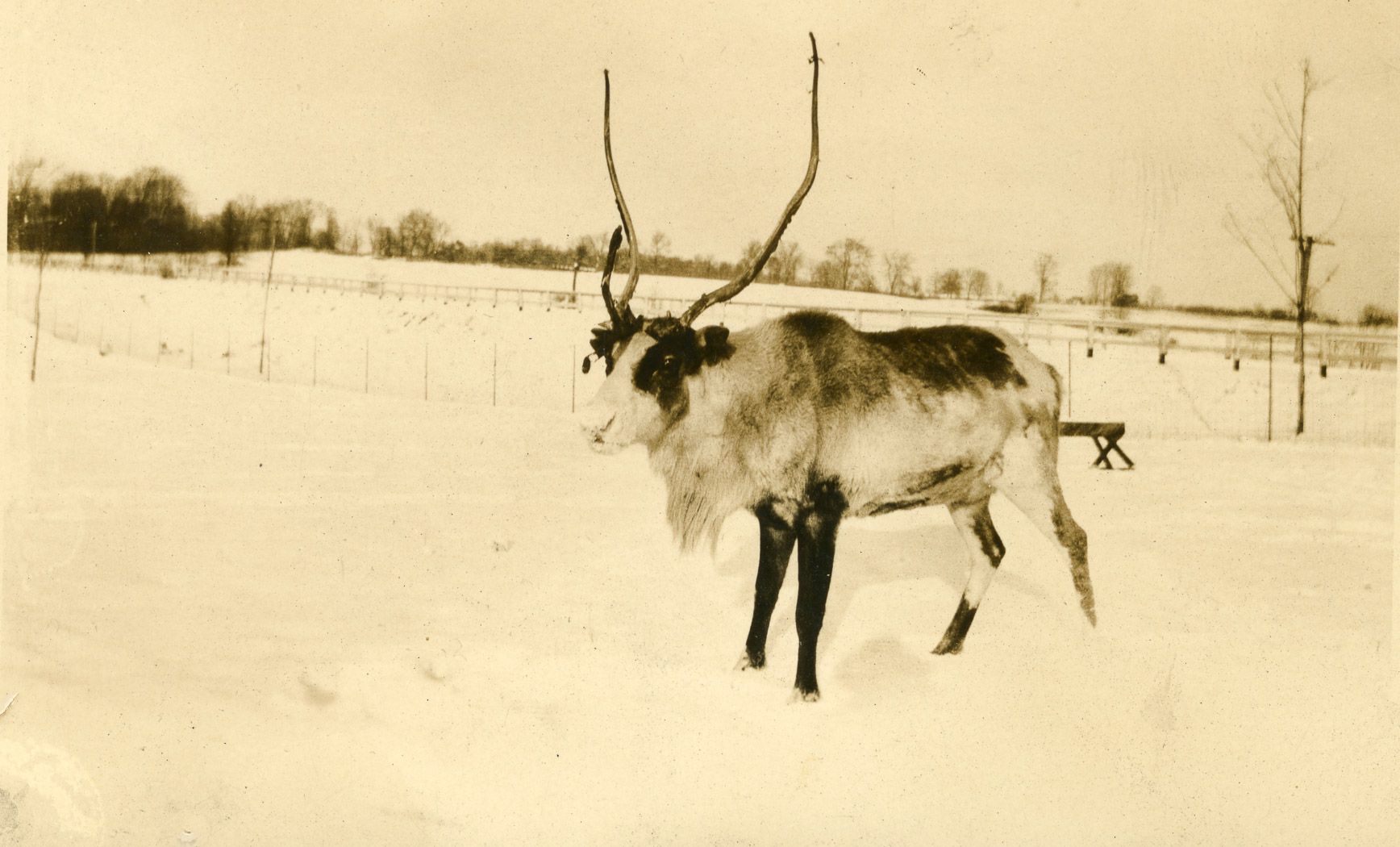
The zoo's donation honoring John F. Wolfe is a full-circle moment.
Flashback: His ancestors' generosity led to the zoo's creation — specifically, a gift of six Alaskan reindeer to the city of Columbus in 1927.
- Dispatch publishers Harry P. Wolfe and Robert F. Wolfe (John's grandfather and great-uncle, respectively) brought the reindeer to town for a public Christmas celebration in 1926.
- The animals temporarily lived at Franklin Park.
Yes, but: After seeing locals' "keen interest" in them, "the idea of a municipal zoo was born," the Dispatch reported in July 1927.
- That's the month City Council approved setting aside land near O'Shaughnessy Dam for a "reindeer park," which evolved into the zoo located there today.
Fast forward: The Wolfe family has continued to support the zoo over the past century.
- Katie Wolfe Lloyd, John's daughter, currently sits on its board of directors.
Fun fact: Katie's father loved fish. He had multiple aquariums, she recently told Business First, and a koi pond at a Buckeye Lake home was "his happy place."