A Columbus Zoo swan love story takes flight

Add Axios as your preferred source to
see more of our stories on Google.
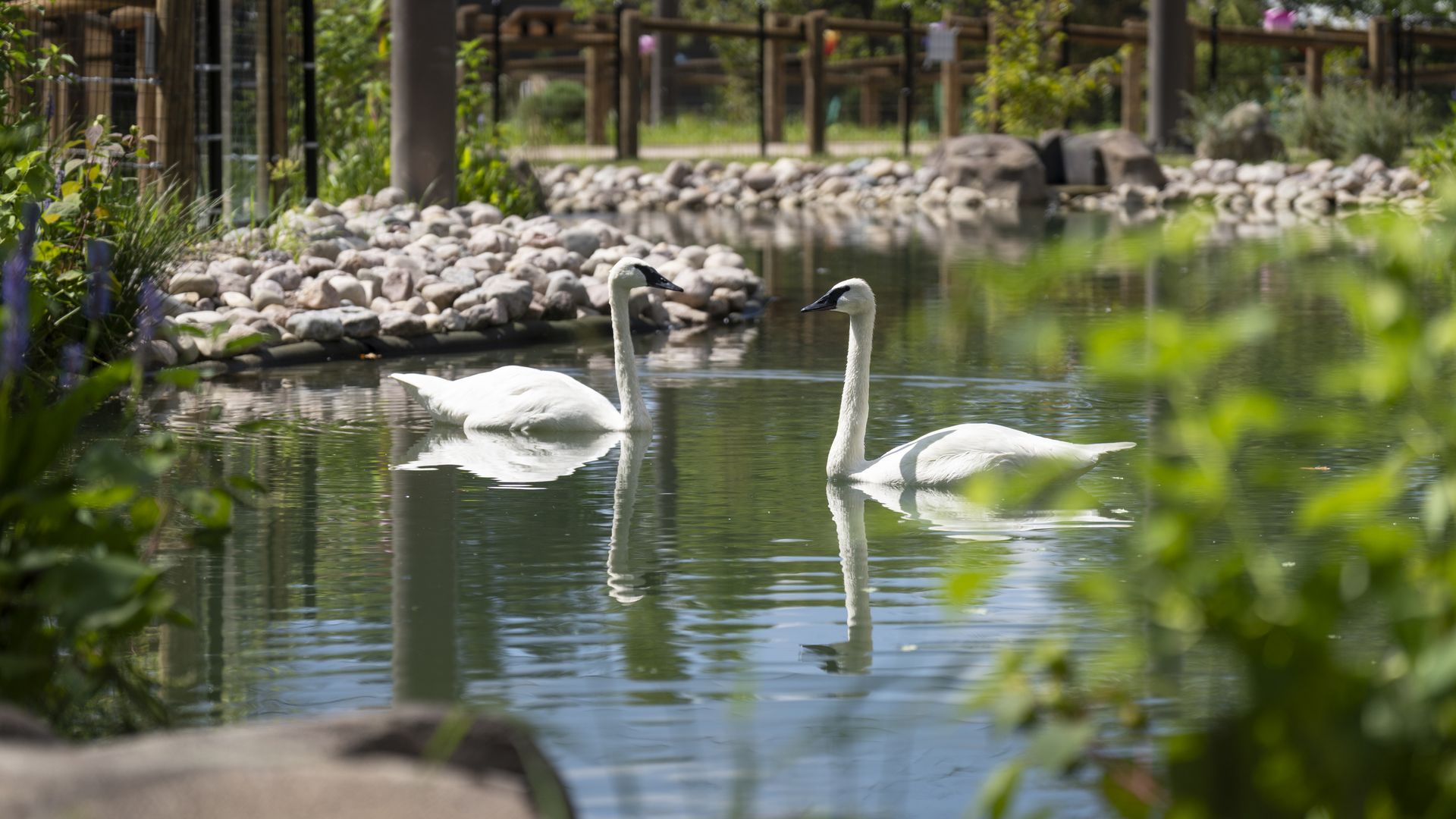
Trumpeter swans Sloane and Stella are ready to nest. Photos: Grahm S. Jones/Courtesy of the Columbus Zoo and Aquarium
Romance is in the air — and on the water — at the Columbus Zoo and Aquarium this Valentine's Day.
Why it matters: The zoo's pair of bonded trumpeter swans will likely build their first nest this spring — a love story and a comeback story all wrapped into one.
- If eggs hatch, it would be a first for the zoo and a big step for a species that has struggled for centuries in its wild habitats.
Catch up quick: Trumpeter swans famously mate for life.
- Sloane and Stella, both almost 5 years old, came to Columbus from different places but have spent most of their lives together.
- The zoo played matchmaker, and the pair agreed they found "the one" in summer 2022, after a few months of getting to know each other.
- Keepers have since watched their relationship deepen, with Sloane growing protective of his mate and breeding grounds.
Between the lines: That "swagger" is a good sign, and keepers are crossing their fingers for eggs this year since the love birds have reached typical breeding age, North America Trek curator Nikki Smith tells Axios.
- Any cygnets (baby swans) raised in Columbus would likely be sent to another zoo or reintroduced into their native ranges in another state.
The big picture: Trumpeter swans are thriving today in Ohio, but that wasn't always the case.
- The large, elegant birds were hunted to local extinction for meat and feathers, possibly as early as the 1700s.
- Reintroduction efforts began in the 1990s, accompanied by wetland habitat restoration.
- They were so successful that the species came off Ohio's threatened list in 2024.
By the numbers: At that time, around 900 birds were nesting across 26 counties — many hatched from Alaskan eggs at the Columbus Zoo's conservation park, The Wilds, near Zanesville.
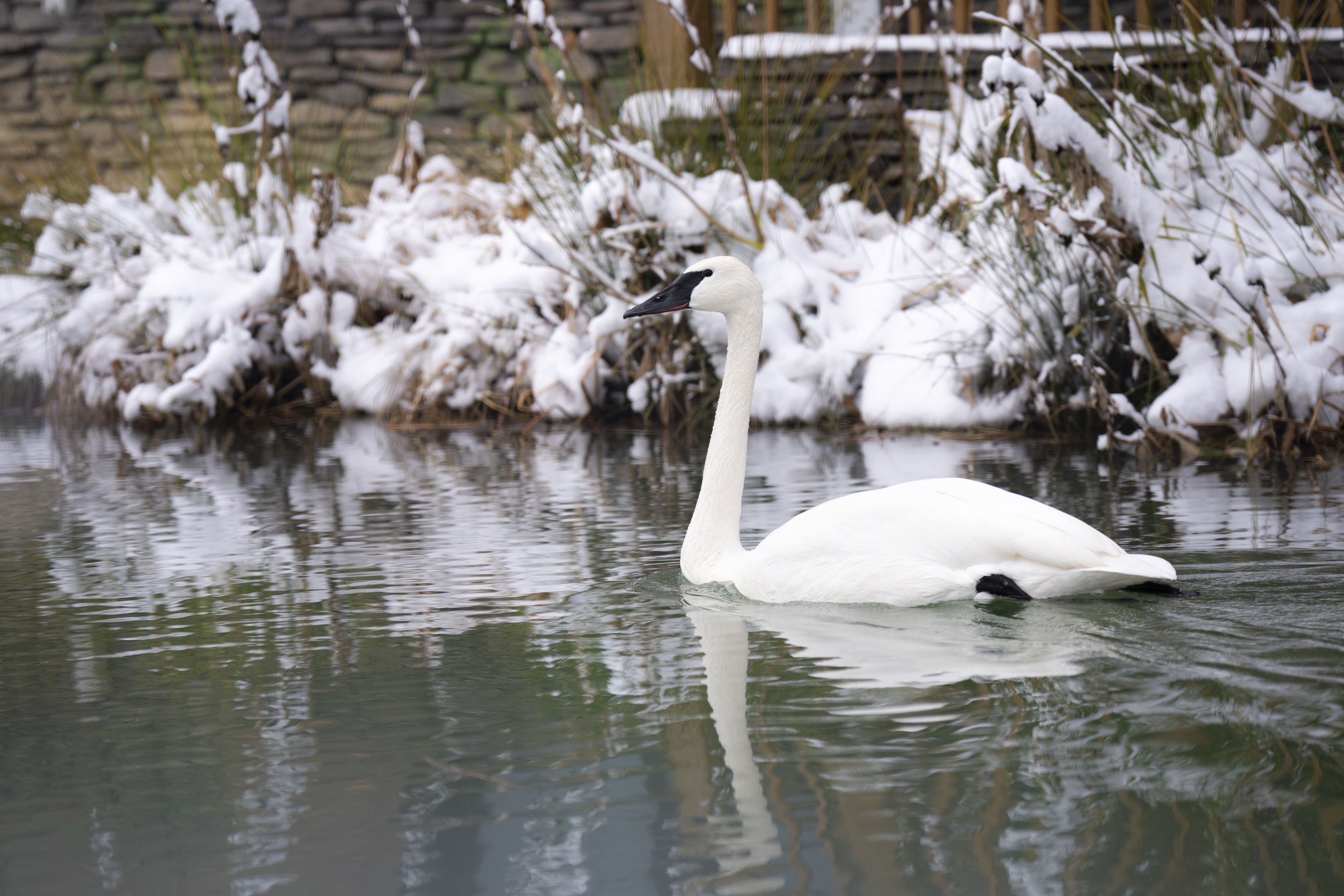
What they're saying: An enduring symbol of love, swans are a "big, beautiful, charismatic species" that can inspire people to protect wild places, Smith says.
- Through Sloane and Stella, zoo guests can see the results of that work firsthand.
- "They're definitely a show-stopper," she says.
What we're watching: Swan eggs hatch during summer — usually two or three per season — so it may not be long before Sloane and Stella become parents.
Stop by: Visit them year-round in the zoo's new North America Trek area.