Massive Anduril weapons plant preps for production

Add Axios as your preferred source to
see more of our stories on Google.
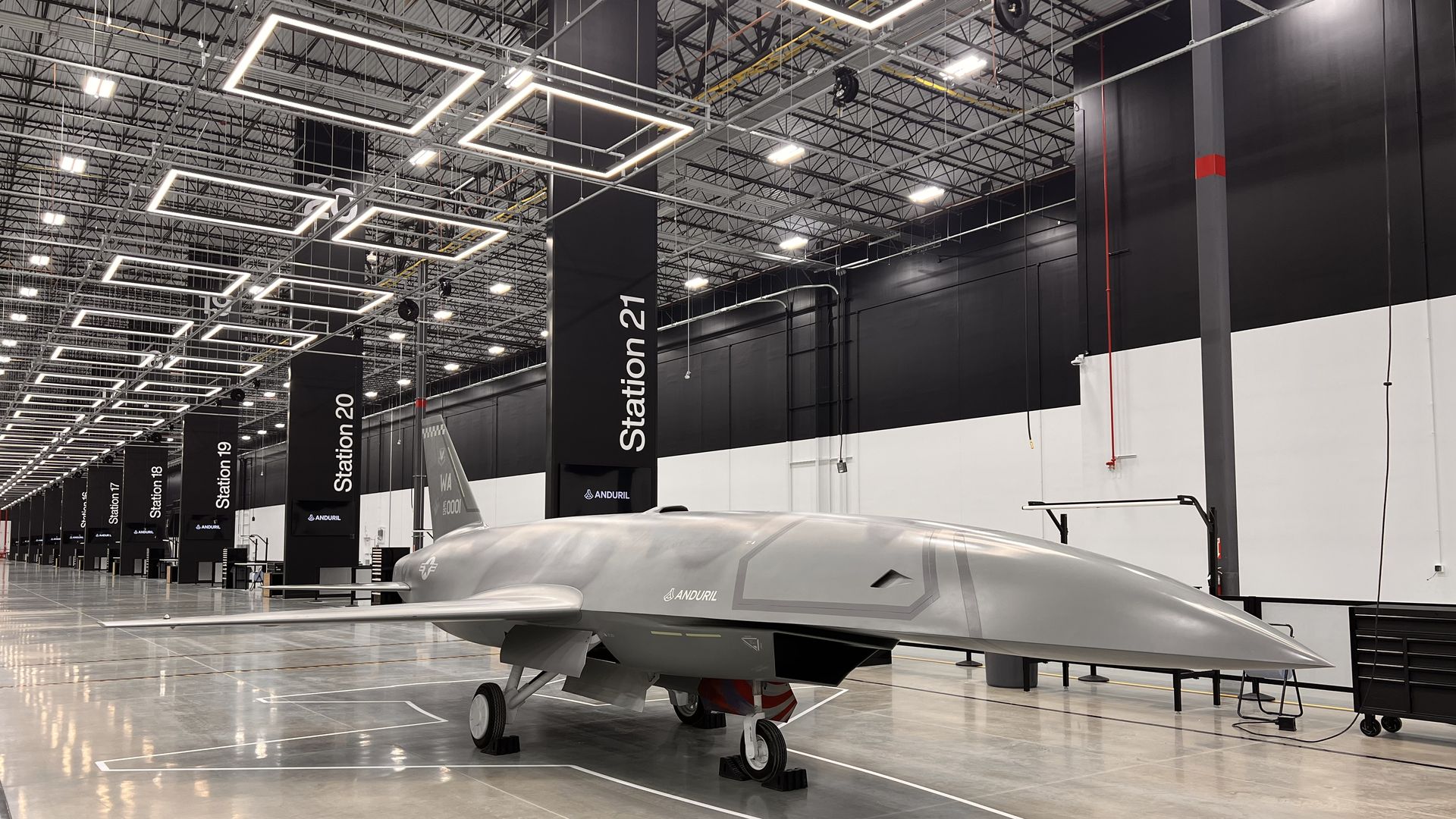
Anduril is days away from beginning production of its Fury autonomous drone in Ohio.
Anduril's Arsenal-1 factory near Rickenbacker is about to start production, and leaders of the autonomous weapons manufacturer believe it will produce superior weaponry at a fraction of the cost and time other companies require.
Why it matters: The project promises to be one of the biggest job creation and economic development projects in Ohio's history and comes with a massive tax break from the state.
- Meanwhile, war in Iran is burning through U.S. munitions, adding urgency to Anduril's project.
Catch up quick: Anduril announced Arsenal-1 early last year and set a July 2026 aim for production to begin.
- It's ahead of schedule, with production lines set to go hot by the end of March.
Driving the news: Anduril recently invited the media to tour its first production facility.
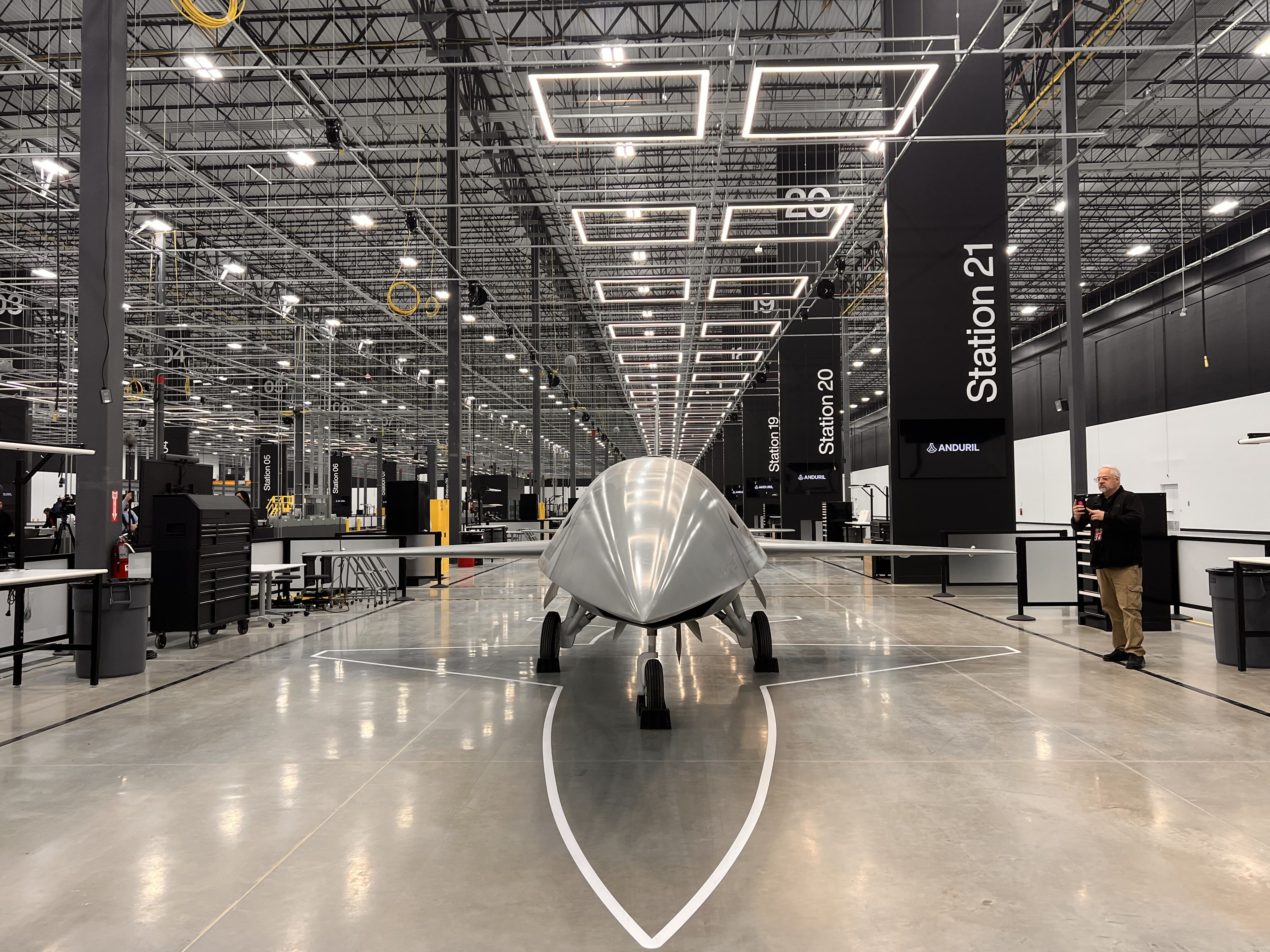
The first of seven planned production buildings will house assembly of the Fury autonomous aircraft.
- Eventually, workers will make the Roadrunner drone, Barracuda jet engine and a classified third product.
How it works: The aircraft will be built by the site's first hiring cohort, a group of about 30 known as the Fury Launch Team.
- The company expects to employ 250 by the end of 2026, working toward the target of 4,000 employees.
- At full strength, three eight-hour shifts will be able to produce 150 aircraft annually.
Yes, but: Anduril says it cannot specify how many will be made — to avoid revealing classified order details.
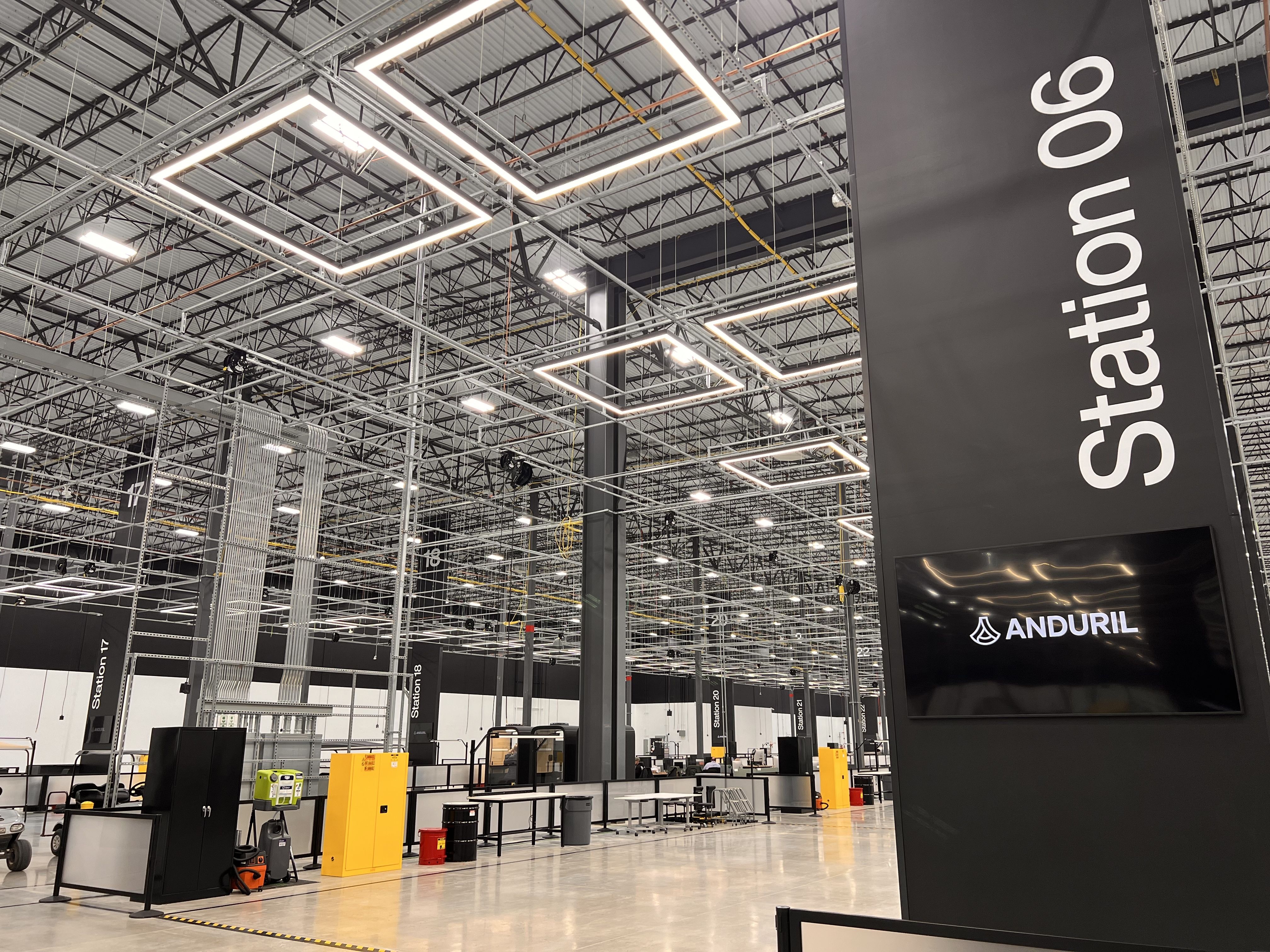
Inside the room: The production floor resembles an Ikea more than a typical manufacturing space.
- The Fury will be built by hand at a series of 22 stations to start, with partial automation expected later for tasks like painting, transportation and material handling, says head of production John Malone.
Constant optimization is the framework for the entire facility, and Malone says every bit of work is framed by the desire to streamline, simplify and adjust.
Case in point: It's notoriously time-consuming and complex to fit landing gear to military aircraft, so Malone says Anduril is skipping that process to build its own.
Between the lines: Anduril says most weapons programs take 12 years from development to deployment — Anduril claims it can do so in two or three, reducing costs by 60% or 80%.
- "We think of the manufacturing process of the products as the product itself," says COO Matt Grimm. "From day one, we're thinking, 'How do we design this thing to be as manufacturable as possible?'"
What we're watching: The company is working with Pickaway County high schools and Ohio universities to help develop engineering curriculum, says David Frash, Anduril's state and local government affairs director.
An urgent need
Conflicts overseas haven't changed the equation for Anduril, but underline urgency around the company's work.
State of play: Conflicts in Ukraine, Iran and elsewhere have the U.S. and other nations scrambling to stockpile weapons, says SVP of production Keith Flynn.
- "There's a need to be able to produce these assets for ourselves and our allies at a rate that hasn't been done for a long, long time."
- "We can see the rate that these assets are being used and how they have to be replenished."
The big picture: According to Anduril's leadership, there's no time to waste.
- "If developing new capabilities — especially those leveraging new software techniques, new AI techniques — is going to take decades to go from program idea to fully fielded, that poses some very big challenges to us as a society," Grimm says.