Ohio limits controversial gestational crates after 15-year wait

Add Axios as your preferred source to
see more of our stories on Google.
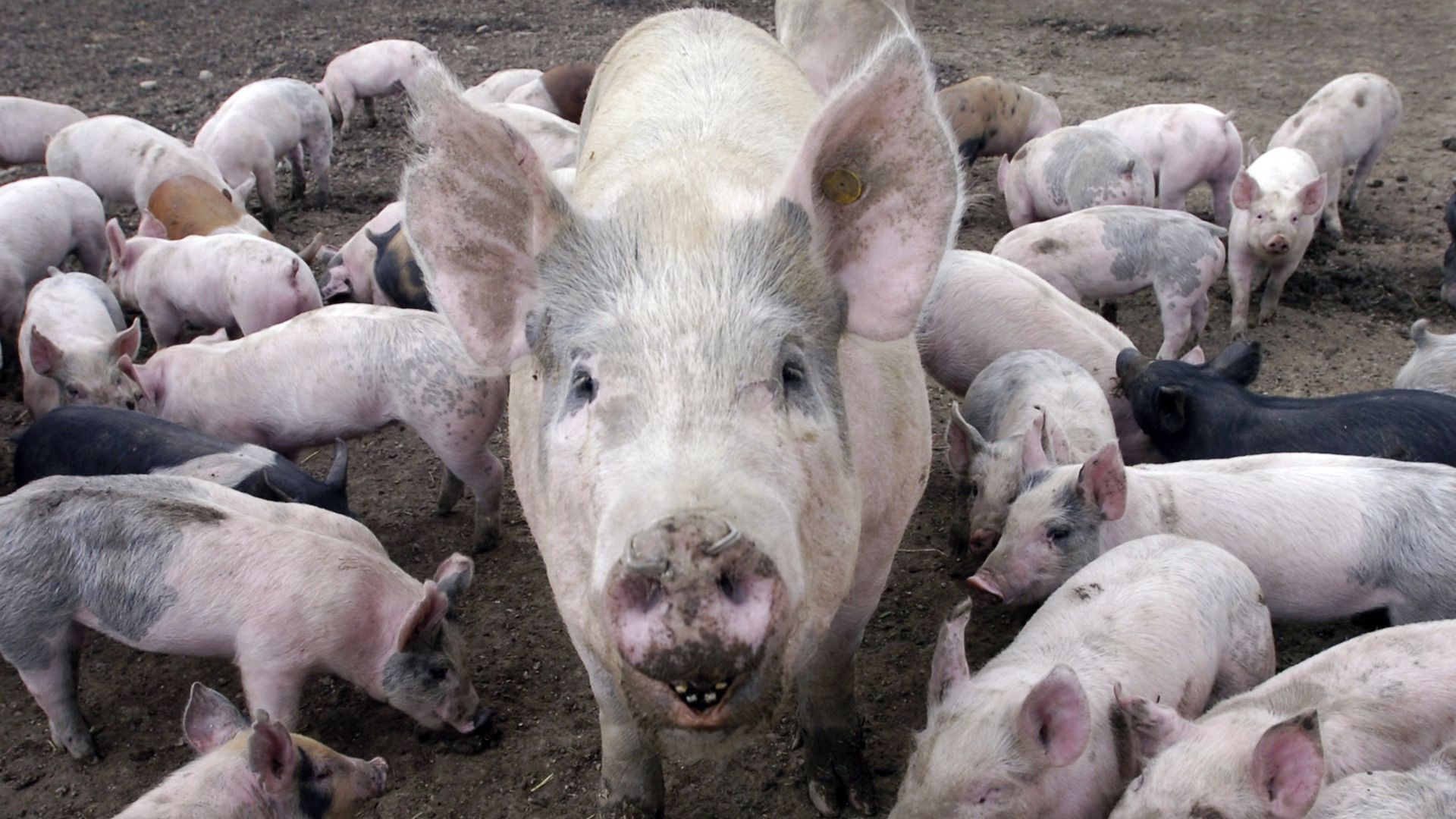
After a 15-year phase-out period, Ohio farms can now only use gestational crates on a limited basis. Photo: Chris Kasson/Bloomberg via Getty Images
Ohio has greatly limited the use of gestational crates for pregnant sows following years of pushing by animal rights advocates.
Why it matters: There are more than 2.5 million hogs in Ohio, which is 10th in hog production in the country.
- Until this year, sows could be subjected to one of the most controversial practices in raising livestock, described by one such advocate as "like living in a coffin."
How it works: A gestation crate is a metal enclosure typically 2 feet by 7 feet in size, which immobilizes a pregnant sow, preventing her from sitting, lying down, turning or fully extending her limbs.
- Under previous laws, a breeding sow could be immobilized for as long as three years while repeatedly impregnated.
Flashback: In 2009, Ohio voters passed a constitutional amendment that established the Livestock Care Standards board.
- Following its passage, activists later threatened to put another amendment on the 2010 ballot to set various other new standards.
Before that issue could make it to the ballot, then-Gov. Ted Strickland brought the Humane Society and the Ohio Farm Bureau together to instead forge an agreement on a wide variety of animal rights issues.
- It ranged from gestational crates and puppy mills to ownership of "wild and dangerous animals" like bears and primates.
- "I've worked on animal welfare laws all over the country, and I've never seen a state address so many animal welfare issues in a single agreement," says Wayne Pacelle, former president of the Humane Society of the U.S.
Yes, but: The agreement gave farms long periods to adjust, including a 15-year phase-out of gestational crates. Critics also said it didn't do enough to restrict exotic animal ownership.
- The latter criticism was borne out a year later, when the Zanesville animal massacre highlighted the need for tougher restrictions.
State of play: After 15 years, the agreement finally limited gestational crates at the start of 2026, only permitting them during a brief period of time "that seeks to maximize embryonic welfare and allows for the confirmation of pregnancy."
- The Ohio Department of Agriculture's Division of Animal Health handles "promoting the health of Ohio's livestock and poultry industries."
What they're saying: Pacelle, now president of Animal Wellness Action and the Center for a Humane Economy, looks back on the 2010 agreement as one that "catapulted animal welfare forward in Ohio" and helped build nationwide momentum.
- "Every major American food retailer now has a policy against gestation crates," he tells Axios. "McDonald's is now 100% gestation crate-free and 100% cage-free for eggs. … That's a tremendous revolution."
The other side: In 2010, Dull Homestead owner Pete Dull told The Dispatch the agreement was a "giant step backwards" and said he would stop raising hogs when the ban took effect.
- The western Ohio farmer is still raising hogs today, telling Axios he's still using the crates because "nobody's enforcing that" and "if they start to enforce it, we're going to quit rather than switch over."
- He says farms have higher death rates in pens than crates, and that crates are "better for animals" because they prevent fights and crushing of piglets.