Central Ohio police use drones for rescues, pursuits and more


Add Axios as your preferred source to
see more of our stories on Google.
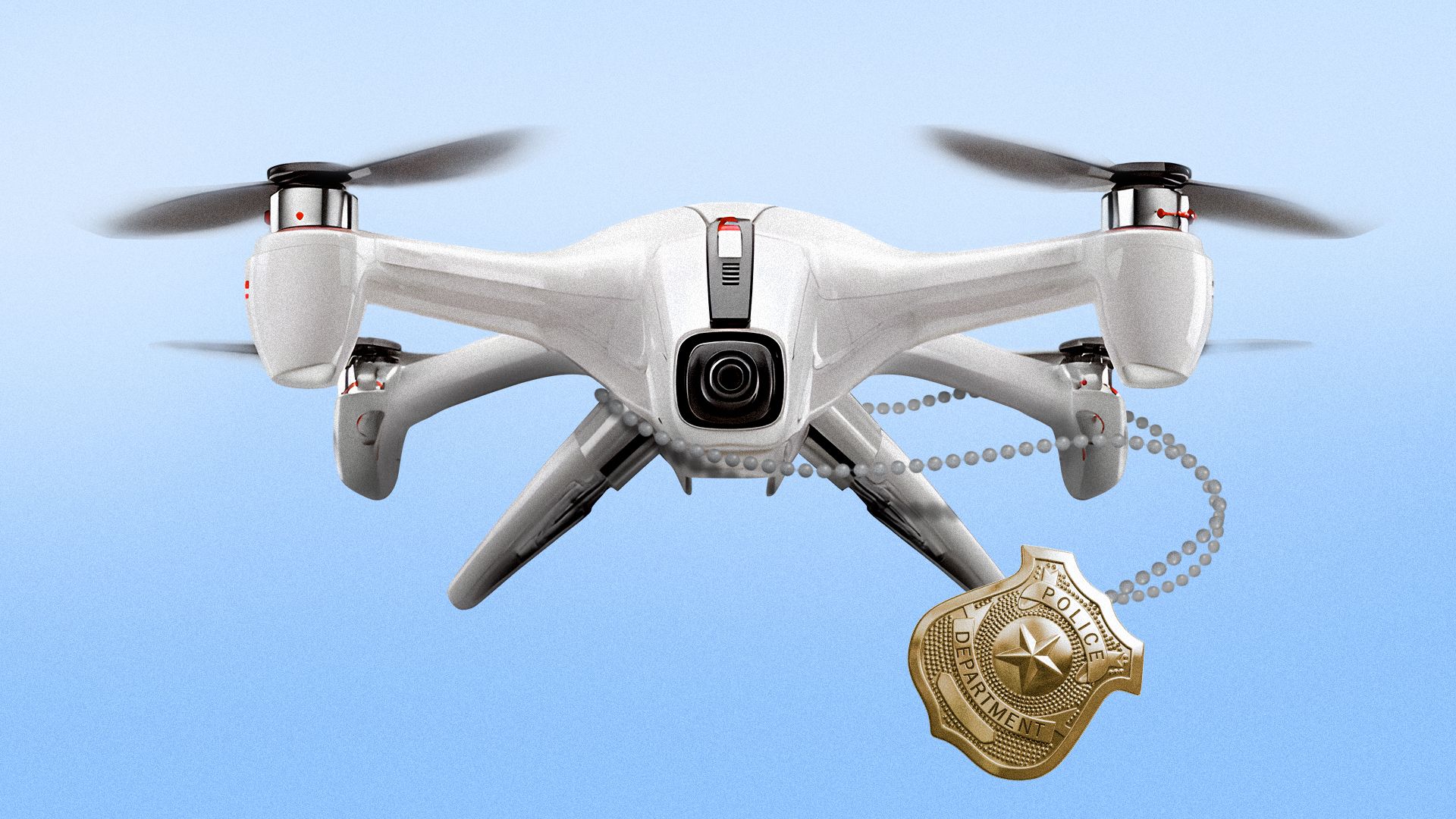
Illustration: Lindsey Bailey/Axios
Police and sheriff's departments across the U.S. are using AI-powered drones for pursuits, investigations and emergencies — locally, one's thermal imaging helped rescue a missing woman with frostbite last winter.
Why it matters: Drones may ease staffing shortages and make police work easier, but using them also raises new questions about surveillance, privacy and regulations.
The big picture: At least 1,500 police and sheriff's departments were flying drones by late 2024, a 150% increase since 2018, per Police1.com, a law enforcement news site.
- An Axios analysis found that almost every major metropolitan area in the country has a law enforcement agency with a drone system, even if the largest city has yet to adopt the technology or publicly announce its use.
Follow the money: Ohio's latest state budget included $2.5 million for a two-year Drones for First Responders pilot program covering costs and training. It's currently accepting applications.
How it works: Drones are powered by AI and equipped with cameras and sensors, enabling them to interpret footage and act on it.
- When dispatched in response to 911 calls, they provide police with real-time aerial views and data — before direct encounters, when officer safety and use of force may be concerns.
- Some are being used to drop off Narcan or supplies.
Zoom in: The Columbus Division of Police spent $172,000 on five drones this year, but hasn't adopted a policy or started flying them yet, WOSU reports.
- Dublin police began using them in 2020 and this year launched four autonomous "eyes in the sky."
- Other area departments with the technology include Reynoldsburg, Upper Arlington, Whitehall and the Franklin County Sheriff's Office.
What they're saying: Local officials call them a "first responder," helping officers see what's happening before arriving on scene.
- They're also cheaper and more nimble than helicopters — though Columbus Chief Elaine Bryant told WOSU drones won't replace their fleet.
The other side: Some residents and civil liberties groups have raised concerns about privacy as more departments adopt the technology.
What we're watching: While the Fourth Amendment prohibits police from gathering images from private property without a warrant, Ohio lawmakers are considering a bipartisan bill to make this a rule for drones, among other regulations.
- It passed the House on Wednesday and awaits a Senate hearing.