Ohio opioid use disorder diagnoses double in 3 years


Add Axios as your preferred source to
see more of our stories on Google.
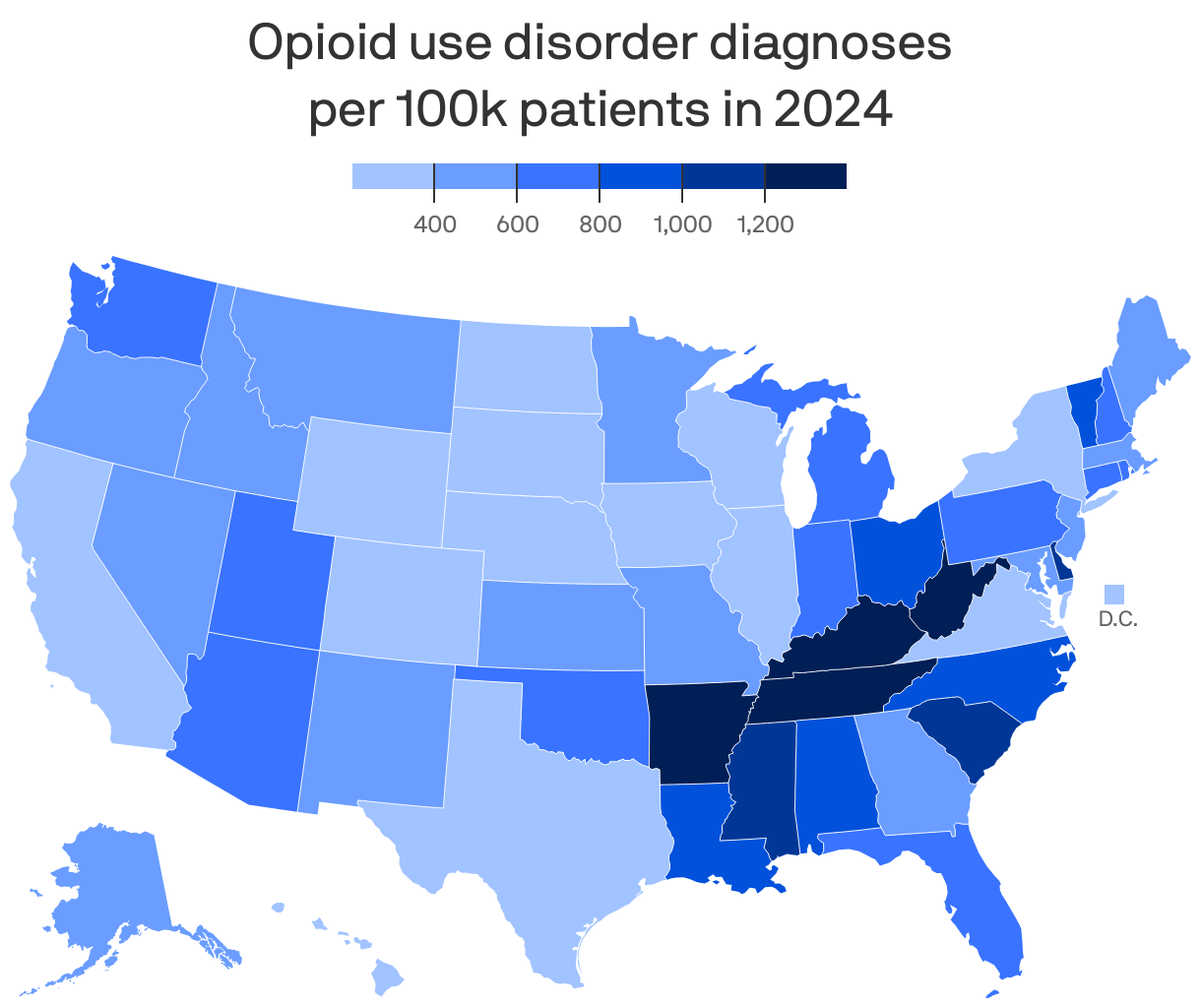
Diagnoses of opioid use disorder (OUD) among the commercially insured in Ohio more than doubled between 2021 and 2024, according to data from FAIR Health's Opioid Tracker shared first with Axios.
Why it matters: The findings suggest the opioid crisis cuts across demographics and income levels, putting health systems and insurers under mounting pressure to manage addiction treatment.
Stunning stat: In Ohio last year, 815 patients per 100,000 were diagnosed with opioid use disorder.
- That's more than double the 383 patients per 100,000 from 2021.
- Ohio's diagnosis rate is significantly higher than the U.S. average of 539 per 100,000.
Zoom in: The 41-50 age group (31.2%) is the highest portion of patients diagnosed with OUD in Ohio, followed by 31-40 (29.6%) and 51-65 (22.1%).
- A majority (54.7%) of those diagnosed were men.
Between the lines: National data shows a shift in where opioid use disorder is treated.
- In-office care fell from 43.8% of U.S. claim lines in 2021 to 38.6% of claims in 2024.
- Telehealth services for OUD grew from 4.3% to 6.3%, and care in nonresidential treatment facilities grew from 1% to 9%.
Threat level: Opioid use disorder is devastating for patients and their families, but it also causes a massive economic impact.
Case in point: That impact is measured in billions of dollars, according to a report published by Franklin County Public Health in December.
- The report estimates that 52,089 people in Franklin County had an opioid use disorder in 2022.
- That population equates to approximately $2 billion in lost productivity, $203 million in lost federal income tax payments and $40 million in lost Ohio income tax payments.
Yes, but: The report exists to quantify economic impact, "not to suggest that monetary loss is the primary concern in this devastating epidemic."