Humans couldn't stop the spotted lanternfly. Wildlife might.

Add Axios as your preferred source to
see more of our stories on Google.
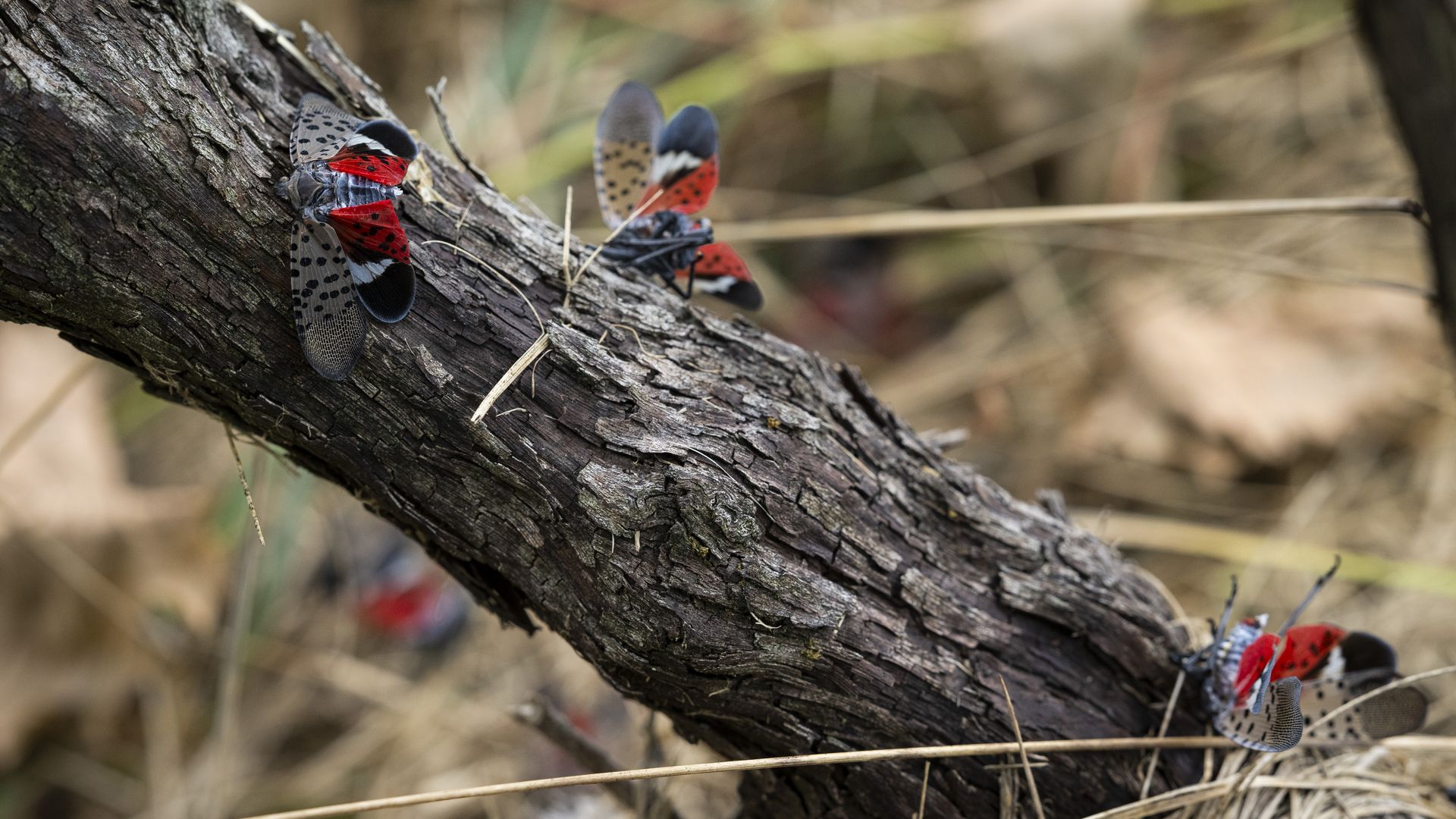
Photo: Graeme Sloan/For The Washington Post via Getty Images
Humans haven't been able to stop the spotted lanternfly (SLF) from overrunning Ohio. Now, it's wildlife's turn to try.
Why it matters: The invasive species is here, and it's a problem — the bug threatens billions of dollars in agricultural devastation if unimpeded.
Catch up quick: Native to Southeast Asia, the SLF began spreading through commercial shipping in the 2000s.
- It arrived stateside in the 2010s and is now in at least 15 states.
- Feeding on trees, it excretes a partially digested sap substance that attracts other nuisance insects and a damaging fungus called sooty mold.
Threat level: Human-driven efforts, like the Ohio Department of Agriculture's campaign to squish them, haven't kept the SLF from spreading.
What they're saying: Researchers like Ohio State entomologist Ashley Leach have accepted that the pest is here to stay.
- "You're looking for a little bit of optimism," she tells Axios. "It's like this impending doom right now."
Yes, but: A reason for that optimism might come from our wildlife.
The big picture: The SLF is relatively new to Ohio, but it's been in states like Pennsylvania for a decade. Researchers there are learning what's effective at killing the SLF.
- They're beginning to observe changes in behavior as other bugs and animals realize the SLF is edible.
The intrigue: Potential predators didn't immediately eat SLFs because of unfamiliarity and their bright colors.
- Now, Leach and other researchers have heard reports of a wide variety of adapting predators.
- So far, that includes insects — like praying mantises, sap-suckers and stink bugs — plus birds and even raccoons.
What we're watching: OSU and other researchers are studying potential SLF predators and behavior changes in Ohio.
- Still, reports from other states and anecdotal evidence provide some much-needed hope that the SLF won't completely destroy parts of Ohio's ecosystem.
The bottom line: Predicting and encouraging these changes is complicated, but there's reason to believe that Ohio's wildlife will start fighting back.
- "We can think about natural enemies and trying to take a bite out of that population — it's not gonna probably feel like they're doing a whole lot at this point," Leach says.
- "But as time goes on ... we might see populations decline and then the natural enemy community is able to kind of keep them more or less in check."