Ohio's war against the spotted lanternfly is already lost

Add Axios as your preferred source to
see more of our stories on Google.
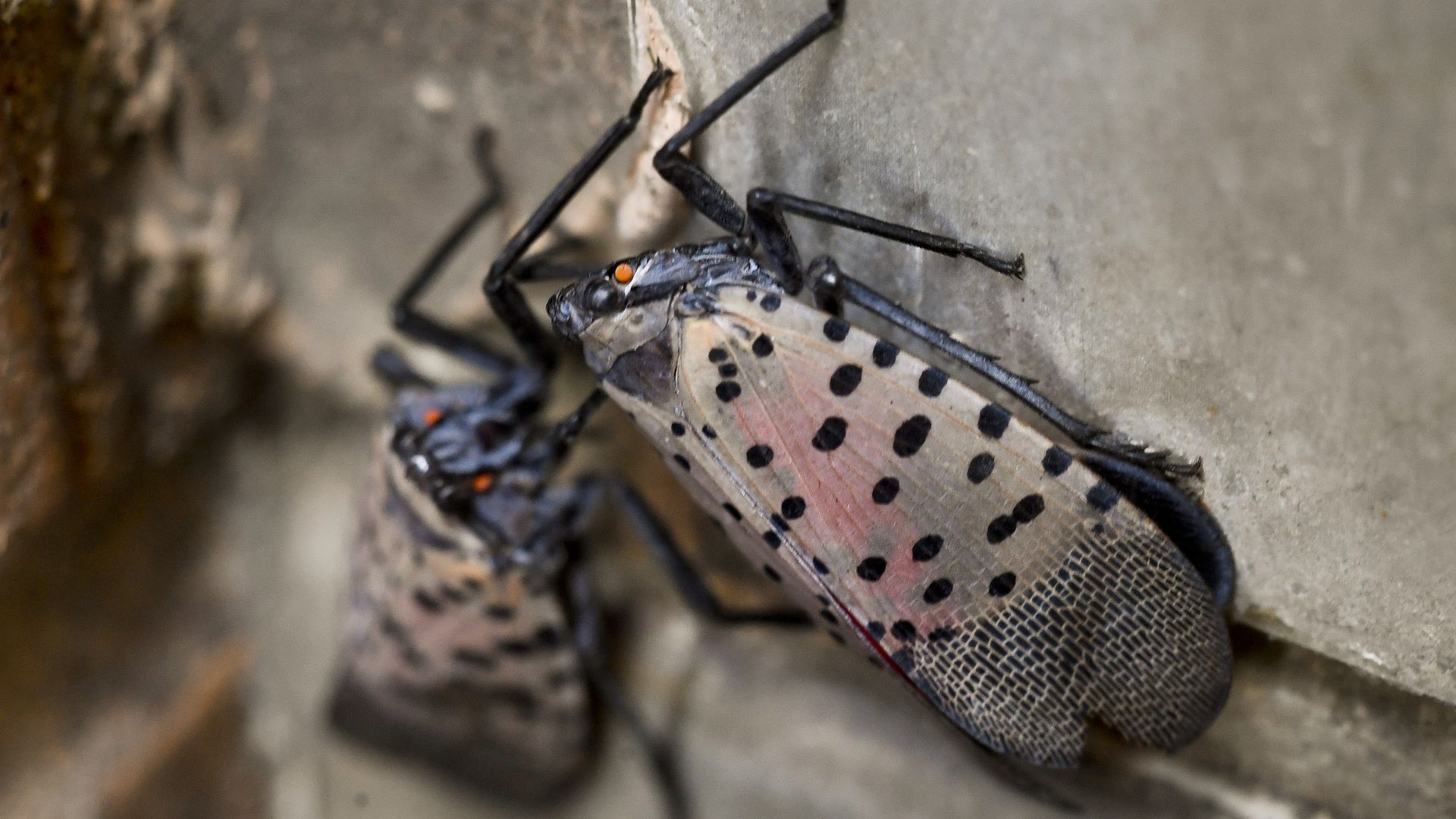
Despite efforts to squish on sight, the invasive species seems here to stay. Photo: Ben Hasty/MediaNews Group/Reading Eagle via Getty Images
You can keep squishing spotted lanternflies on sight, but it appears that Ohio's war against the invasive species has already been lost.
Why it matters: The insect is a destroyer of ecosystems. It feeds on a wide variety of plant life, producing a substance that attracts other insects and fosters the growth of a damaging fungus.
- Spotted lanternflies threaten billions of dollars in agricultural devastation to crops like apples, hops and almonds, and are a nearly existential threat to vineyards.
Catch up quick: Native to Southeast Asia, the spotted lanternfly (SLF) began spreading through commercial shipping to South Korea and Japan in the 2000s.
- After its arrival in Pennsylvania in 2014, the SLF has now spread to at least 15 states.
The intrigue: The SLF loves fellow invasive species the Ailanthus tree, known as "tree of heaven."
Zoom in: Ohio sightings began in 2020 and ramped up last year, with the Ohio Department of Agriculture campaigning for residents to smash them on sight.
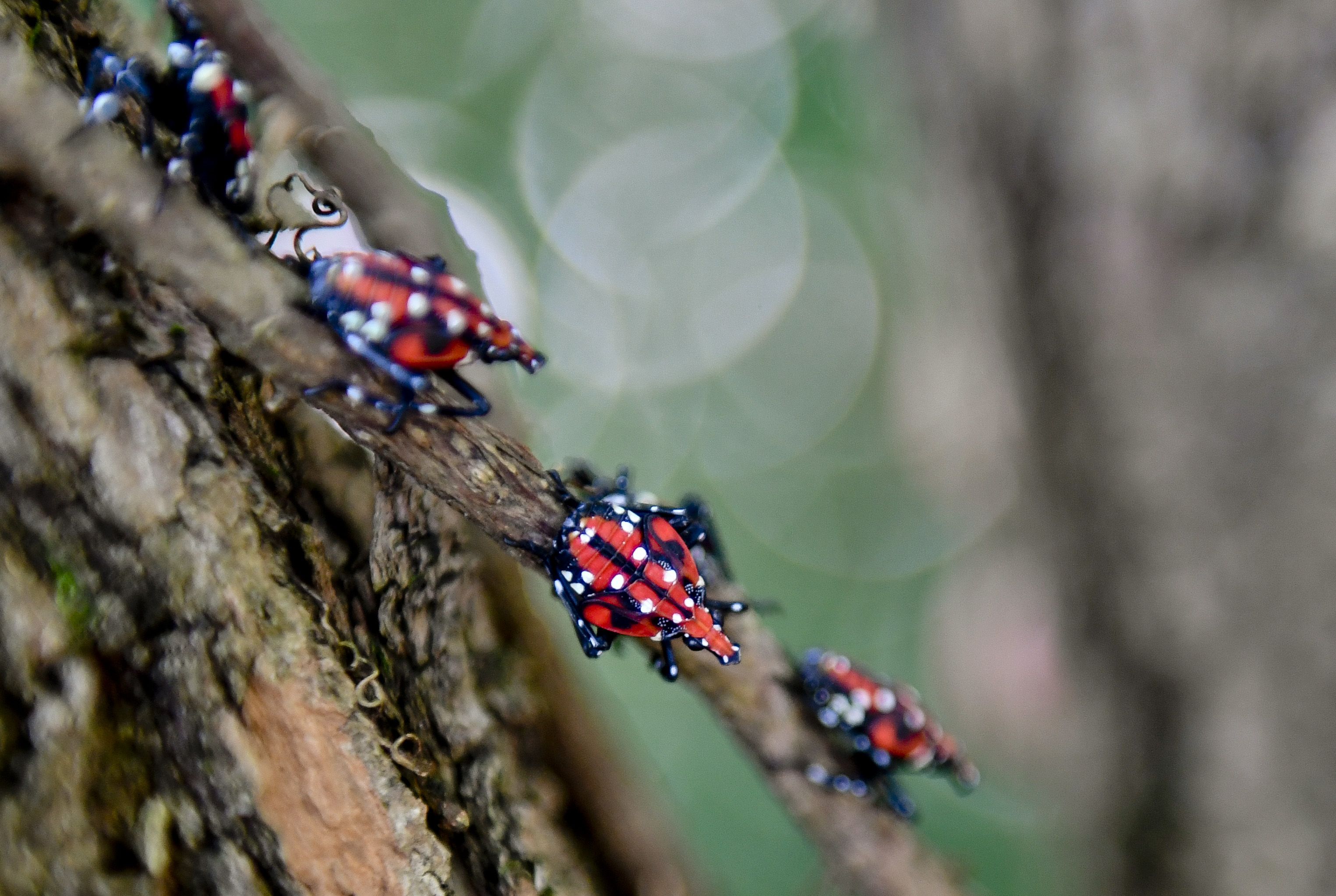
Reality check: The insect has already overwhelmed the state — it's here to stay.
- "That was sort of a catchy way to get people to pay attention and help report it in new areas and to take some action," ODA Plant Health Division chief Dan Kenny tells Axios. "Because, frankly, there's just not a lot that can be done."
What they're doing: Kenny says the state has largely shifted its focus to helping Ohioans (particularly those with orchards or vineyards) in mitigating the impact of the pests, which is still "hard to quantify."
- The ODA is working with Ohio State's vineyard research program to learn more about SLF management, and created a management guide and self-inspection checklist for those concerned.
Zoom out: A bipartisan bill in Congress was introduced in July to fund research toward combating the insects.
- "We must protect our farmers and harvesters from this invasive and dangerous threat," U.S. Rep. Mike Kelly of Pennsylvania said.
The bottom line: Go ahead and keep squishing these bugs and their eggs — it can't hurt.