Why Lyme disease cases are rising in Ohio

Add Axios as your preferred source to
see more of our stories on Google.
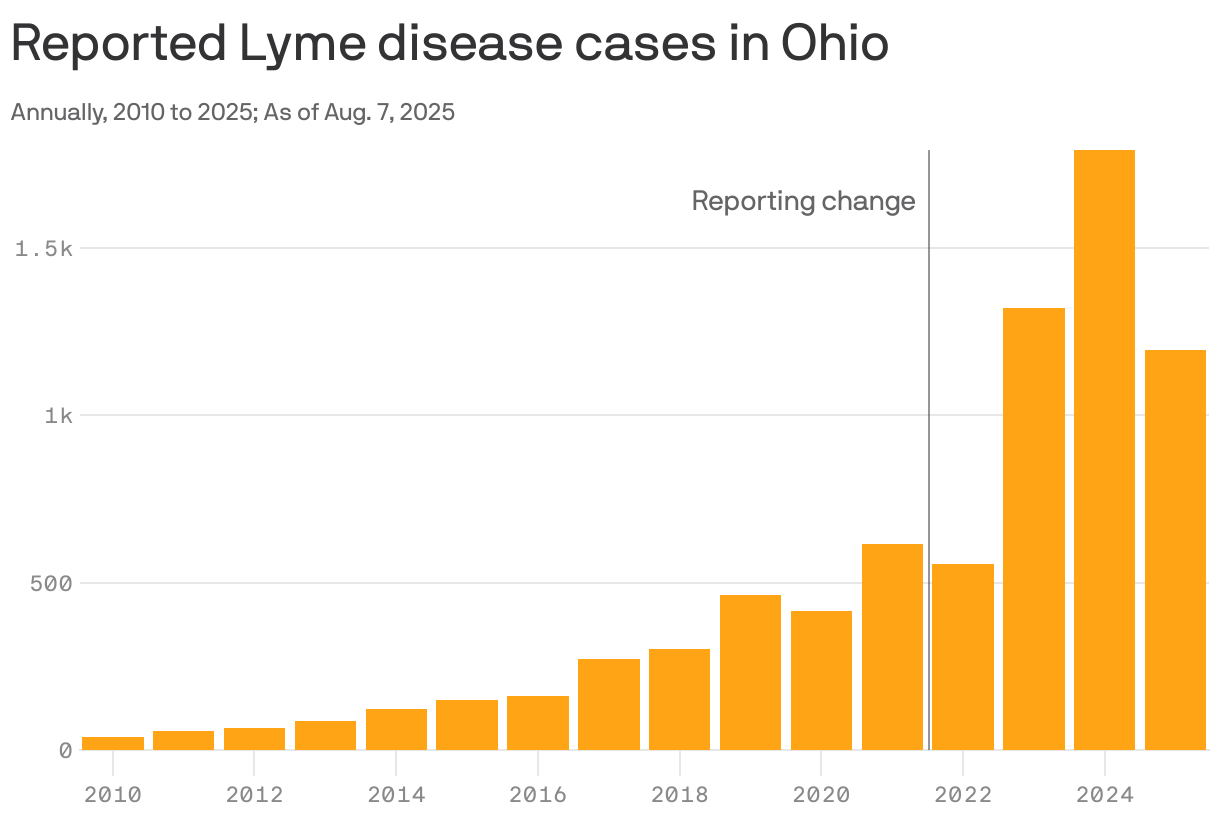
Justin Timberlake's recent diagnosis is putting a spotlight on Lyme disease, a tick-borne illness with staggering growth in Ohio over the past 15 years.
Why it matters: Awareness of early symptoms, such as a rash and fatigue, can help patients catch cases early and treat them with antibiotics.
- If left untreated, the bacterial infection can lead to long-term neurological problems and symptoms like heart palpitations, arthritis, facial palsy and body aches.
By the numbers: There were nearly 1,800 cases reported in Ohio last year, and around 1,200 so far this year. That's up from 40 in 2010.
- A post-2022 spike is largely due to a change in U.S. reporting requirements — but cases here were climbing before the change, with 615 in 2021, Ohio Department of Health data shows.
- The disease remains hard to diagnose and likely significantly underreported.
Between the lines: Climate change is helping ticks survive longer, find new hosts and spread into new habitats.
- Ohio's cases started climbing around the time the blacklegged tick that transmits Lyme disease started appearing here, state and OSU researchers found.
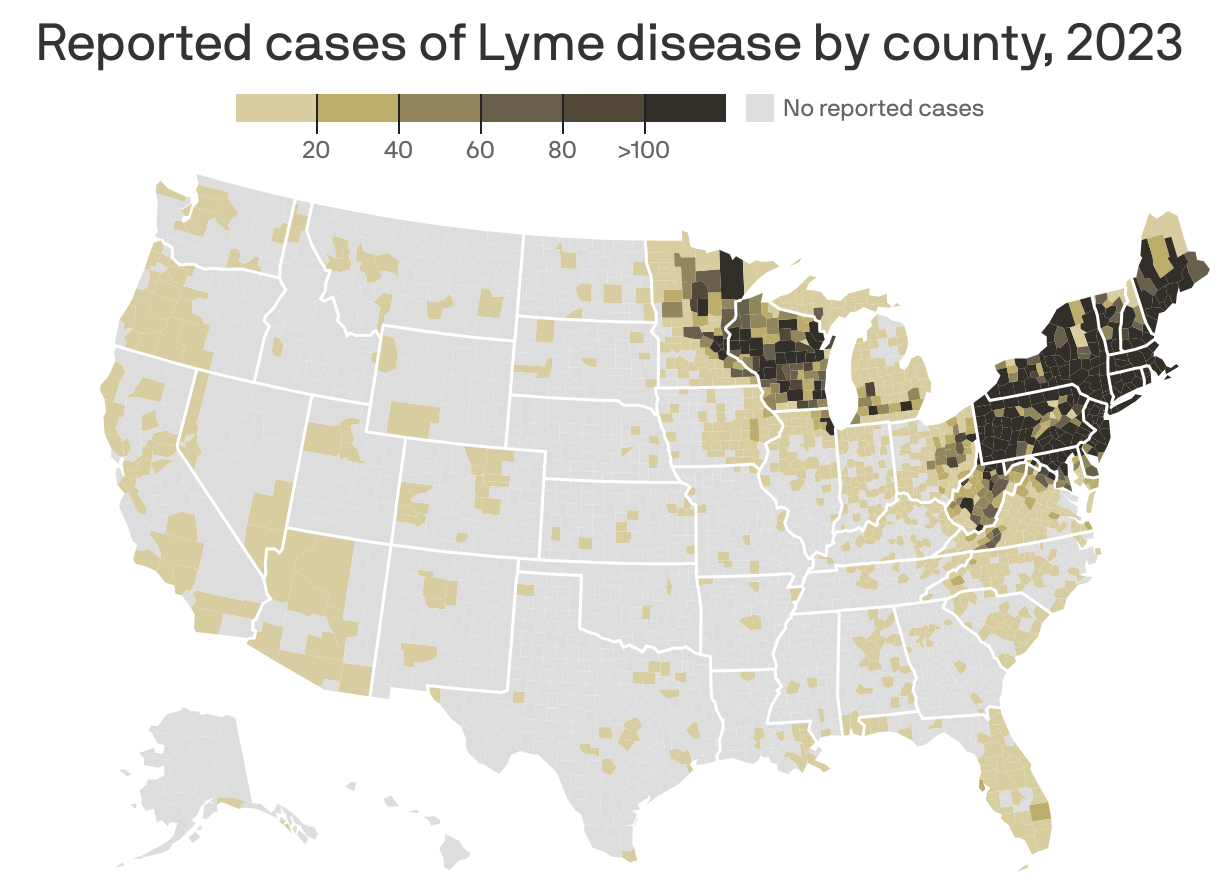
One silver lining: Only 3% of Ohio's cases in recent years have been recorded in Franklin County, making the local risk lower than in other areas.
To help curb severe cases, the OSU Extension opened a tick-testing laboratory this year that detects diseases for $50, with results in 72 hours.
Stay safe: Perform a "tick check" and shower after being outdoors, especially in the wooded or brushy areas, per the lab.
- Wear repellent, long sleeves, and pants tucked into your socks.
- If you find a tick attached to your body, remove it with tweezers — don't squish it — and flush it if you don't need to preserve it.