Timberlake's Lyme disease diagnosis spotlights tick-season risks


Add Axios as your preferred source to
see more of our stories on Google.
Justin Timberlake has put a spotlight on Lyme disease after revealing his diagnosis last week.
Why it matters: Especially during the most active tick season (April through October), it's important to be mindful of the tick-borne illness that — if left untreated — can lead to long-term neurological problems and body aches.
What he's saying: "If you've experienced this disease or know someone who has — then you're aware: living with this can be relentlessly debilitating, both mentally and physically," Timberlake wrote on Instagram after concluding his world tour.
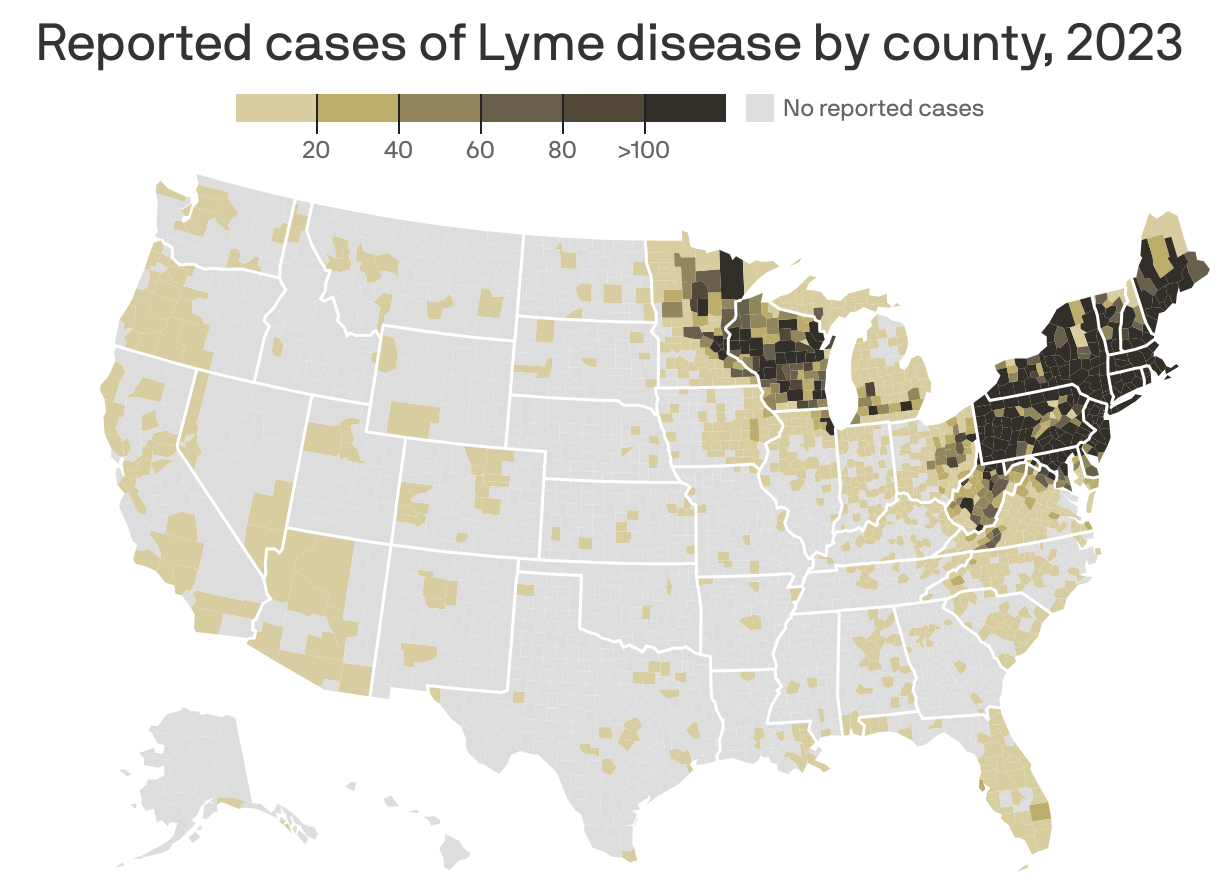
The big picture: More than 89,000 cases of Lyme disease were reported to the CDC in 2023, but the agency estimates that roughly 476,000 people are actually diagnosed and treated annually.
What's happening: Lyme disease is caused by the bite of a tick that carries a bacterium called Borrelia burgdorferi.
- In the U.S., mainly deer ticks (aka the blacklegged tick) spread this bacteria — they're most common in the Northeast, Upper Midwest and mid-Atlantic. Along the Pacific Coast, the western blacklegged tick can spread infection, according to the CDC.
Zoom in: Lyme disease can present with a rash or flu-like symptoms.
- People with late-stage infections may experience more severe issues, from facial paralysis to arthritis.
- Most Lyme cases caught early can be treated with antibiotics. But diagnosing the disease early can be difficult because not all infected people get rashes, and early testing can produce false negatives.
Stay safe: If you find a tick attached to your body, remove it with tweezers — don't squish it. And if you don't need to preserve it, flush it.
- When outdoors, "we recommend wearing white so the ticks are more visible, tick-checking yourself and your gear when you arrive home, and being vigilant to see a doctor if you have any symptoms," Bay Area Lyme Foundation executive director Linda Giampa told Axios via email.
Editor's note: This story has been corrected to reflect that western blacklegged ticks are found along the Pacific Coast (not deer ticks).
