Tick season is here — and it's worse than last year

Add Axios as your preferred source to
see more of our stories on Google.
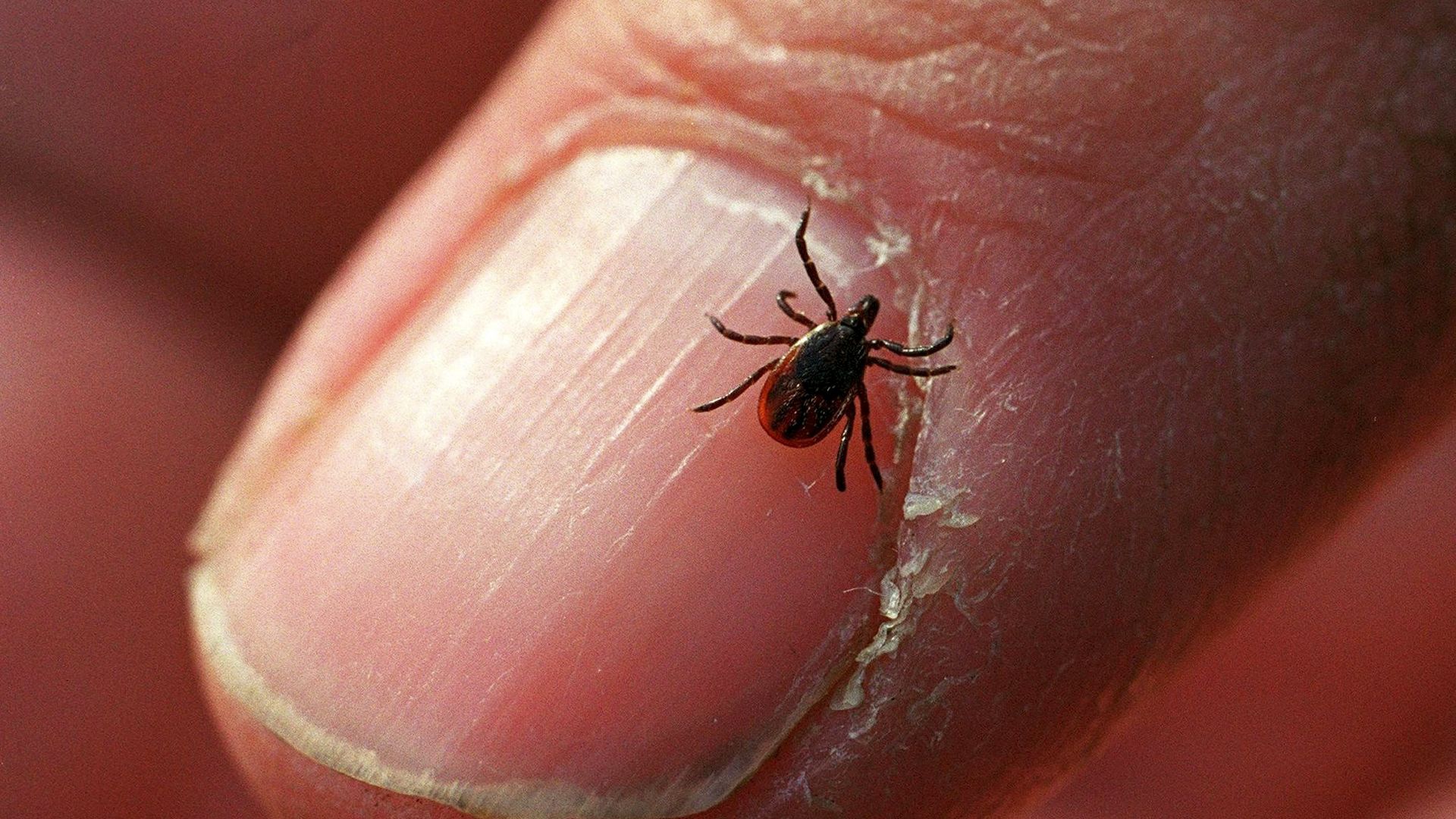
Ticks carry Lyme disease, which can be life-threatening if untreated. Photo: Bill Davis/Newsday RM via Getty Images
Summer is here, and that means tick frenzy is, too.
Why it matters: Ticks, which are most active in warmer seasons, transmit Lyme disease through bacteria in their bite. The disease causes rash, flu-like symptoms and joint pain — and can be fatal if untreated.
Driving the news: Tick densities on average are higher this year compared with last year, San Francisco State University biology professor Andrea Swei told Axios.
- At Swei's field sites in Marin and San Mateo counties, average nymph densities are up around 20% to 30% this year. Nymphs transmit diseases at higher rates than adult ticks.
- The Bay Area Lyme Foundation has recorded a similar increase in regional tick activity, particularly in chaparral areas, local parks and redwood forests.
Zoom in: On the West Coast, Lyme is spread by the Western black-legged tick, which has a three-year life cycle and is abundant along California's north coastal areas, according to Swei.
Caveat: While ticks are traditionally associated with grassy areas and bushes, a 2021 study found Lyme-carrying ticks in beach areas at equal rates to woodland habitats in some parts of northwestern California.
What they're saying: When outdoors, "we recommend wearing white so the ticks are more visible, tick-checking yourself and your gear when you arrive home and two days later, and being vigilant to see a doctor if you have any symptoms," Bay Area Lyme Foundation executive director Linda Giampa told Axios via email.
- They often first attach to pets.
- You can also treat clothing and gear with products containing 0.5% permethrin as a preventative measure, per the CDC.
What to expect: If you find a tick attached to your body, the best way to remove it is to position tweezers between your skin and the tick's mouth and tug gently to remove the whole thing.
- Don't squish it; flush it down the toilet.
- Ticks can spread disease within hours of attaching to a person.
The big picture: Most Lyme cases caught early can be treated with antibiotics, though they're not always effective.
- People with late-stage Lyme disease often experience symptoms ranging from paralysis and neurological problems to inflammation of the brain and heart.
What we're watching: Pfizer is leading development of the first new Lyme vaccine in more than two decades.