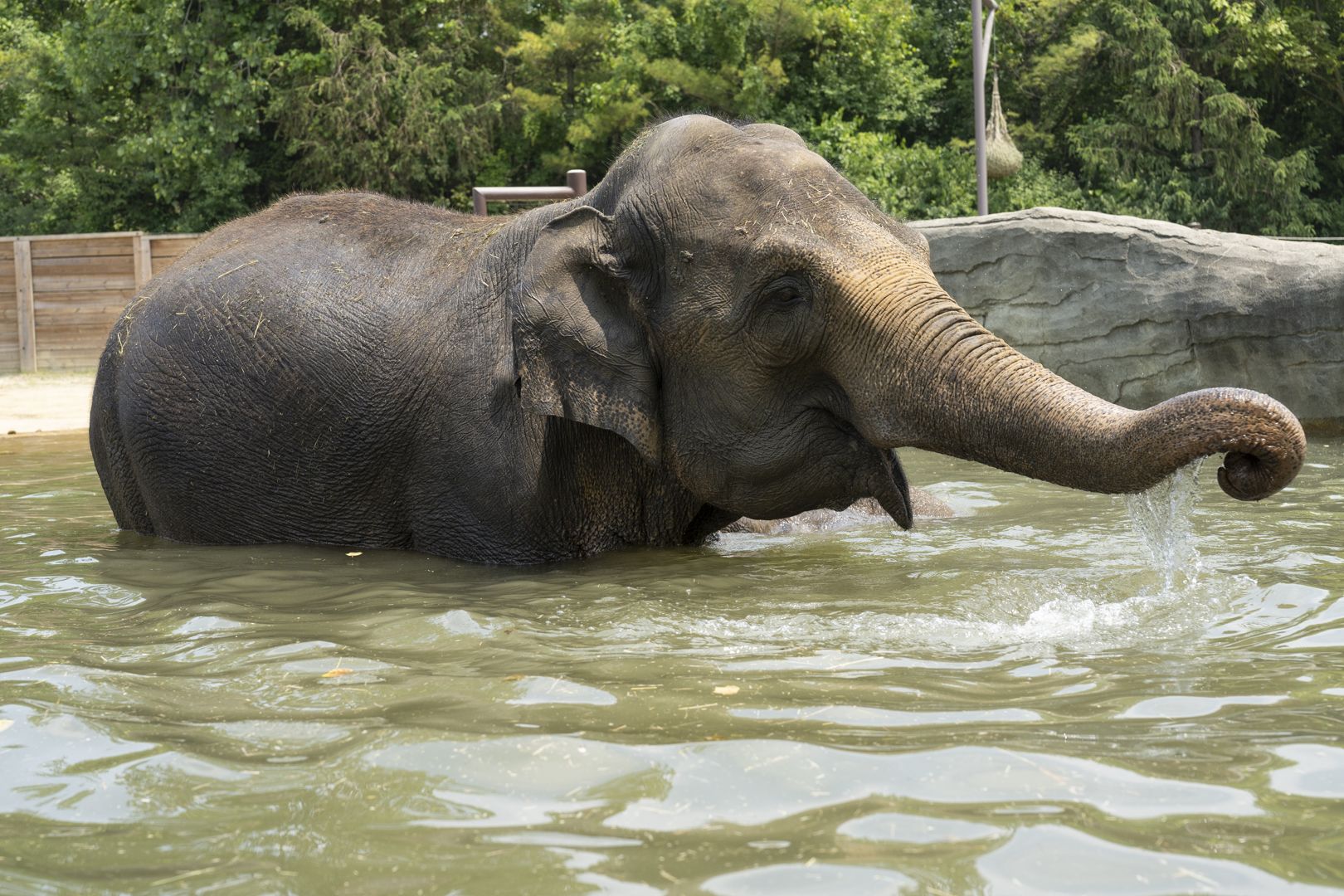
Columbus Zoo is on baby elephant watch

Add Axios as your preferred source to
see more of our stories on Google.
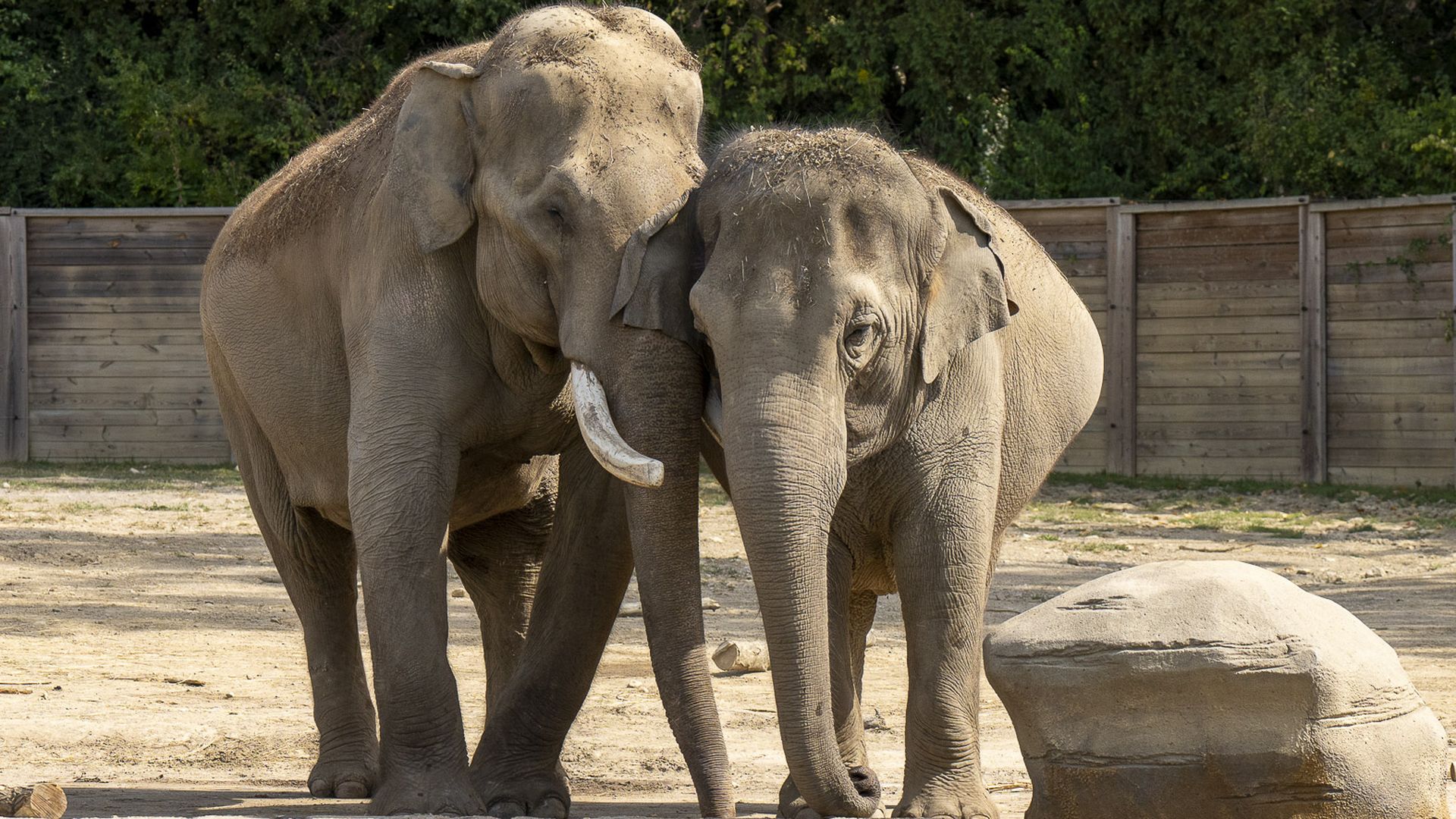
Sabu, left, is the father of two calves expected this year. Sunny, right, is a first-time mom. Photo: Amanda Carberry, courtesy of the Columbus Zoo and Aquarium
Talk about big news: For the first time in the Columbus Zoo and Aquarium's history, two Asian elephants are pregnant at the same time — and one is due any day now.
Why it matters: The species is endangered, and its population in accredited zoos is currently unsustainable due to dwindling numbers and a lack of genetic diversity, according to the Association of Zoos and Aquariums (AZA).
- The calves' father — Sabu, from the Cincinnati Zoo, who lived here temporarily — has no living offspring, so the births will bolster the gene pool.
The big picture: The news comes as some zoos are moving away from keeping elephants amid increasing care standards, which require lots of space and expense.
- Others, like Columbus, are investing more by expanding habitats, encouraging breeding, and working with global partners to conserve wild elephants.
- Advocates say keeping elephants is important for research and education. A 2023 AZA strategic plan calls for increased collaboration among zoos, including transferring animals for breeding.
Threat level: "If we don't do something as a group, we're not going to have elephants in 100 years," says Adam Felts, senior zoo curator and head of the AZA's Species Survival Plan.
- At last count, there were 157 Asian elephants in 27 AZA institutions.
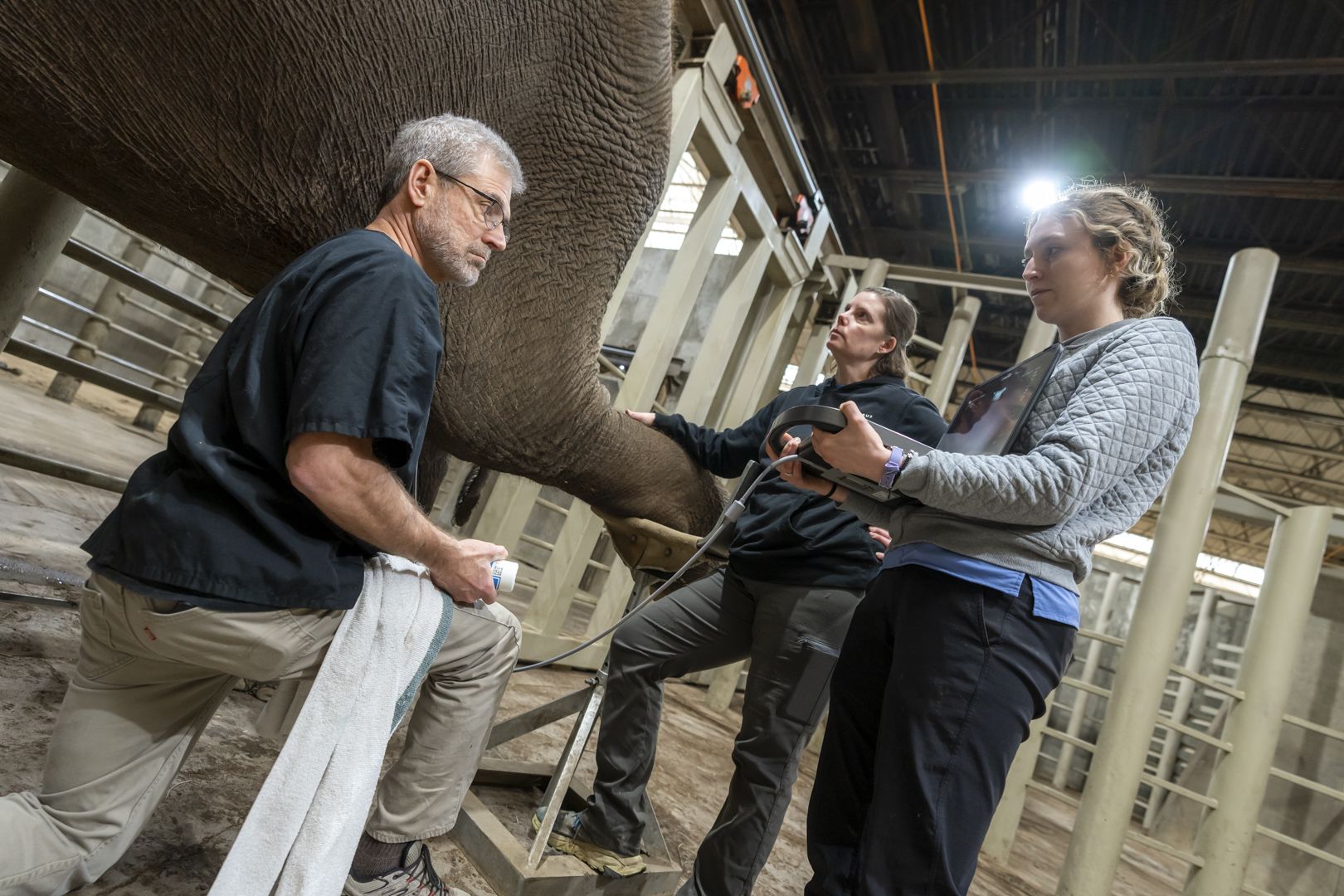
Zoom in: Felts took Axios behind the scenes to meet 38-year-old matriarch Phoebe, who is expecting her sixth calf.
- She's "all business," with a big appetite. The 7,400-pound pachyderm calmly used her trunk to funnel biscuits into her mouth while a veterinarian scanned her with an ultrasound probe.
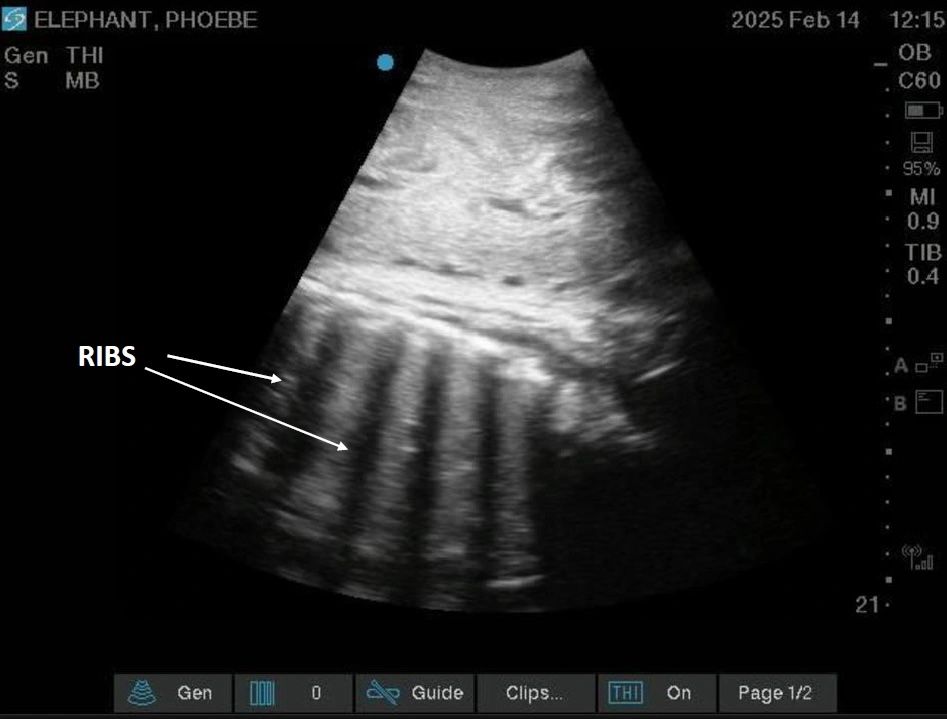
- Her calf is likely the size of a Great Dane. It's impossible to see the entire thing in one image, but vets can view ribs, a skull or a beating heart. All appear healthy.
Another elephant, 16-year-old Sunny, is due with her first calf between now and August, while Phoebe is due in the fall.
- Keepers hope the experienced mom will show Sunny the ropes. They're encouraged by her bond with Phoebe's 3-year-old calf, Frankie, who still lives at the zoo.
- The arrangement should mimic wild herd behaviors, in which females raise the young together and males are mostly solitary.
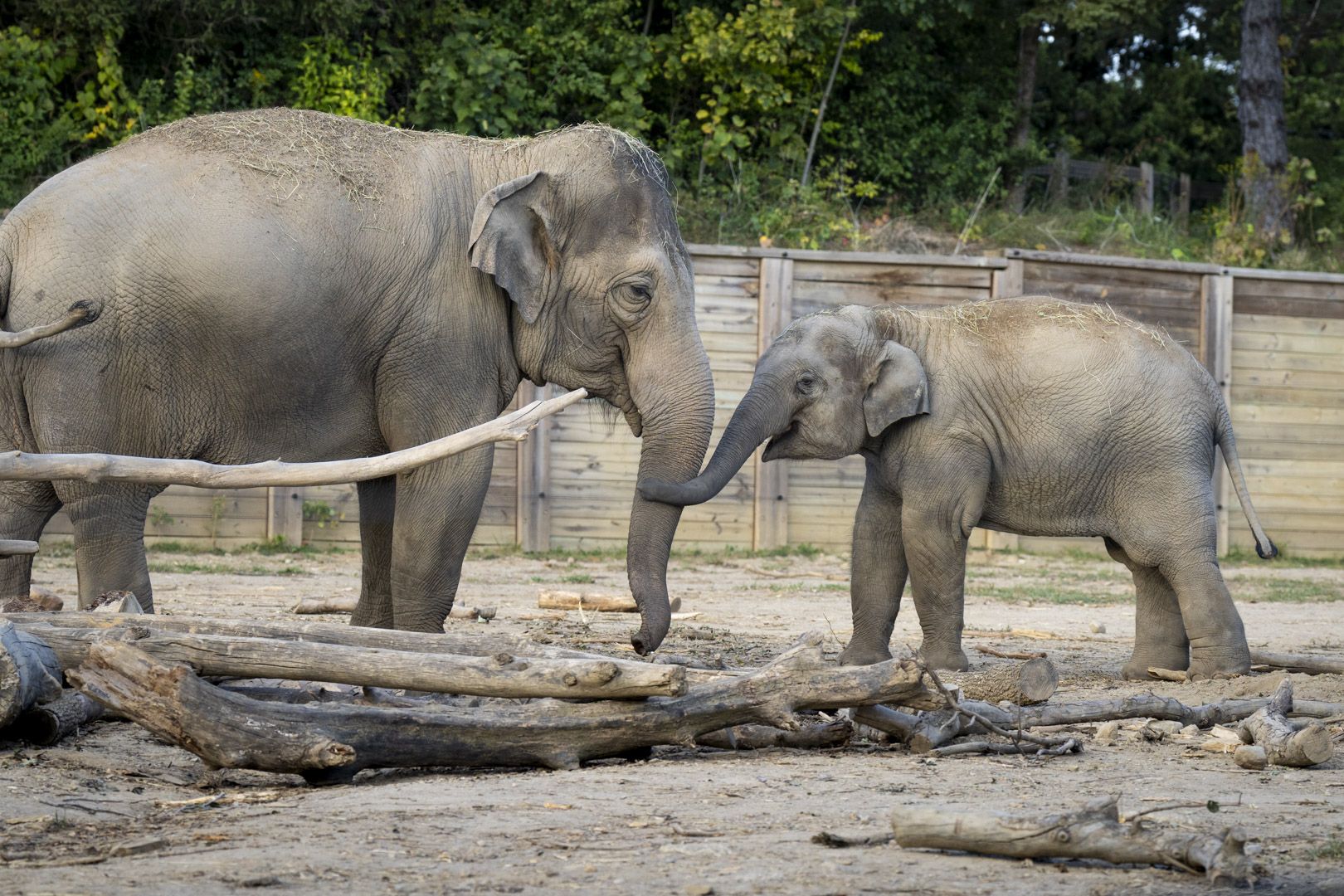
The intrigue: The new calves will make history in another way, as Columbus' first to be vaccinated for elephant endotheliotropic herpesvirus (EEHV).
- The devastating virus is the leading cause of death among AZA elephants, and calves are especially at risk. A vaccine became available last year.
What's next: Elephants are pregnant up to 22 months, so expect lots of fanfare when the 200-plus-pound bundles of joy finally arrive.
1 fun prenatal ritual: elephant yoga
Impress your friends with this fun fact: the Columbus Zoo's herd is trained in "elephant yoga."
How it works: The elephants follow a target and maneuver into various poses, such as stretching their feet and trunks, kneeling, and lying on the ground.
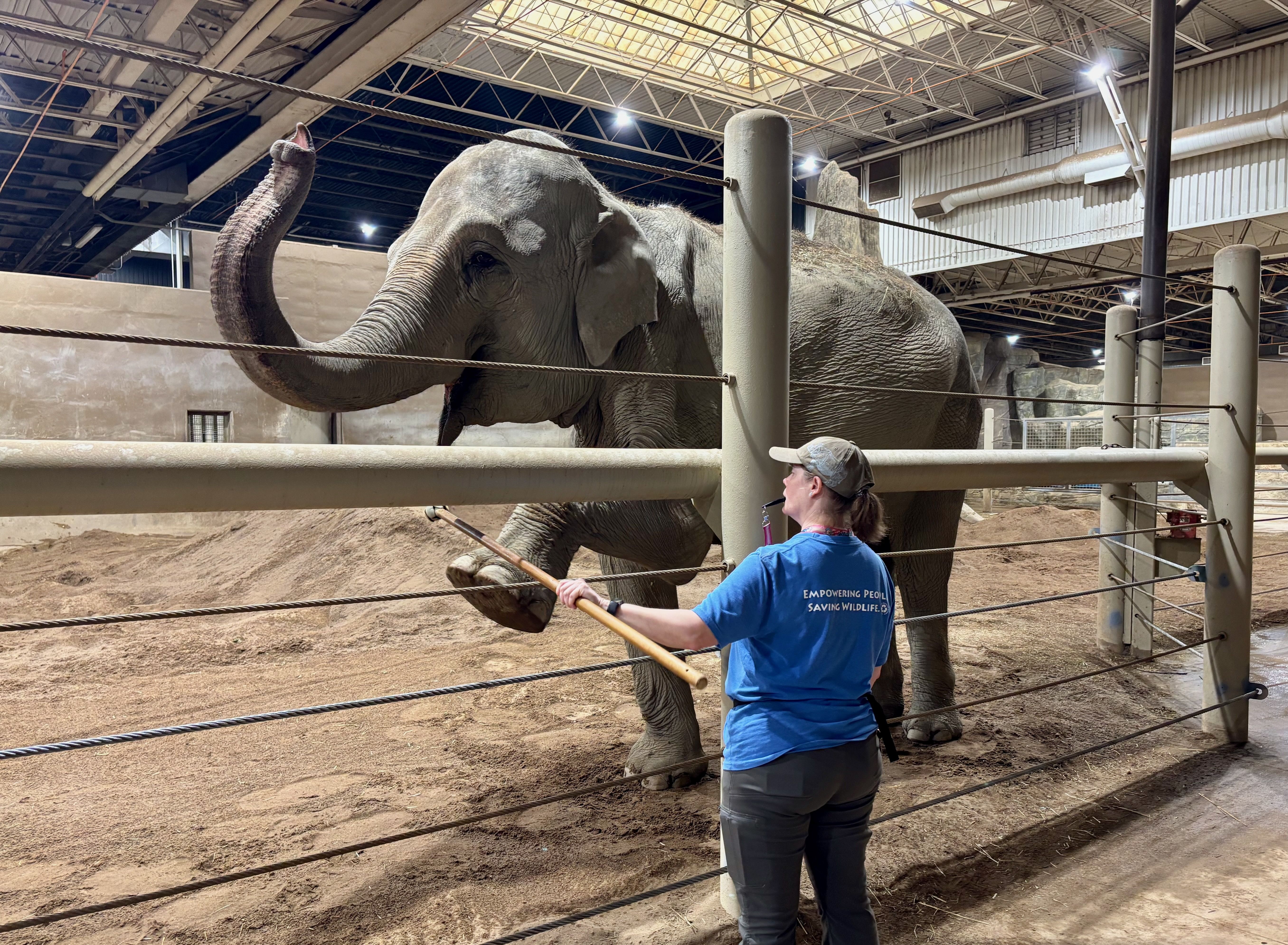
Between the lines: Keepers say practicing the moves keeps them limber and engaged.
- It also helps them learn to get into positions for routine health monitoring, such as blood draws, exams and ultrasounds.
😅 Alissa's thought bubble: I definitely couldn't move as gracefully during my pregnancy as 7,400-pound Phoebe does. Impressive.