How Ohio's child care costs compare nationwide

Add Axios as your preferred source to
see more of our stories on Google.
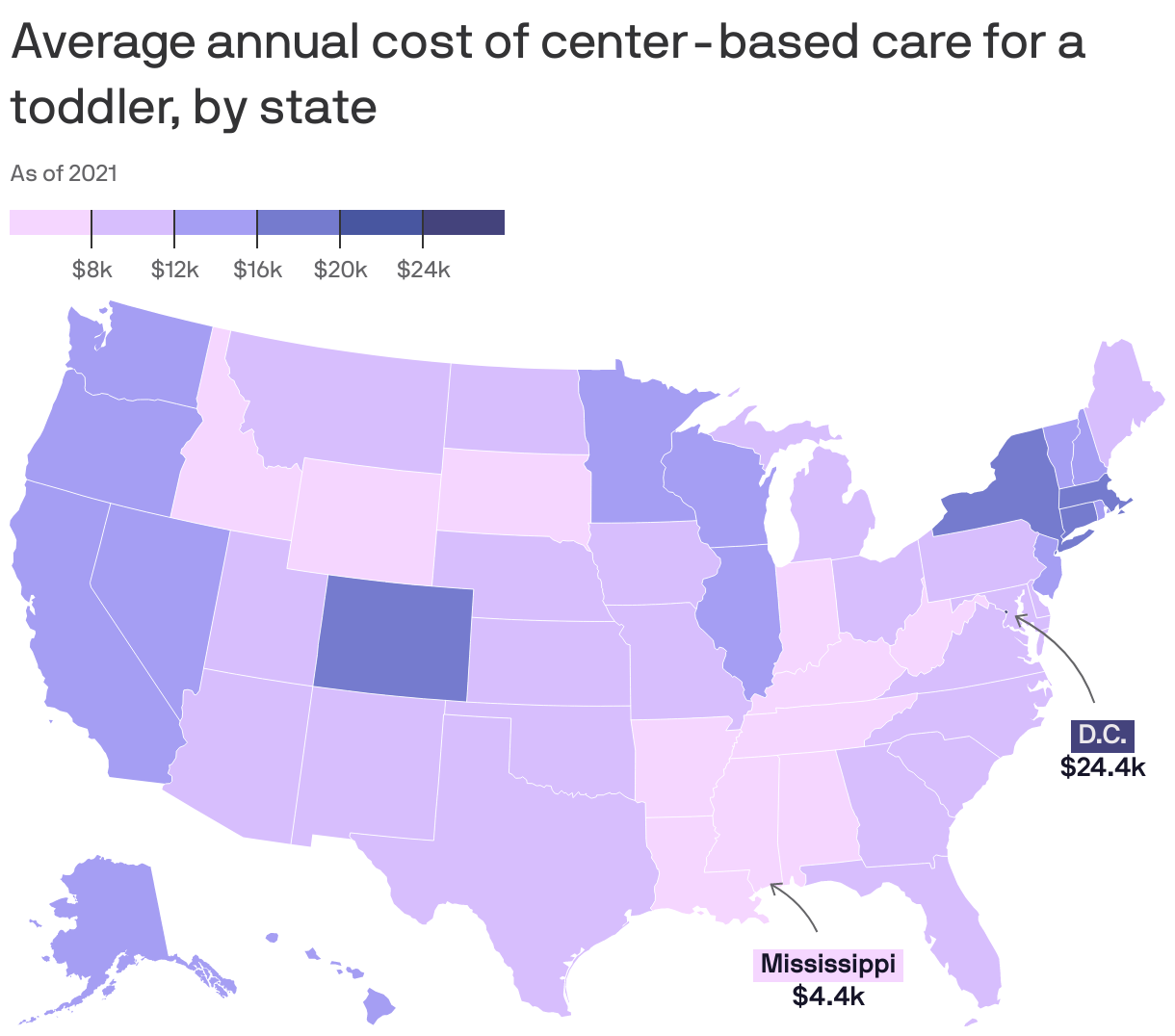
Ohio child care costs are among the nation's most expensive when compared to incomes, with the average single mother allocating about a third or more of her pay, per the latest report from the Annie E. Casey Foundation.
Why it matters: It's easier for parents to work full-time when they have access to affordable, high-quality child care.
- A lack of options is keeping workers — especially women, who typically earn less than men — out of an already tight labor market.
- Plus, early childhood programs support development for young kids.
Context: The pandemic has exacerbated the U.S. child care system's existing problems, including dwindling workers, low pay, high costs, waitlists and poor access.
By the numbers: In Ohio, $11,302 ($941 a month) was the average annual cost for center-based care for one toddler in 2022, per the report. That's 39% of a single mother's median income, or 11% for a married couple.
- Home-based care cost $8,761 ($730 a month), or 30% of a single mother's median income and 8% for a couple.
Of note: 36% of Ohio children lived in single-parent households in 2021, per Census data.
Zoom out: Just four states — Massachusetts, Connecticut, New York and Colorado — and Washington, D.C., have single mothers spending a larger percentage of their income on child care center costs.
Between the lines: 13% of Ohio children age 5 or younger had a parent change jobs due to child care problems between 2020-21, per the report.
- Single mothers, families in poverty and families of color are disproportionately affected.
👀 Eye-popping stats: Despite high costs for families, child care businesses operate on thin profit margins of typically less than 1%.
- Prices have risen 220% since 1990, significantly outpacing inflation.
- Yes, but: Child care workers — 94% of whom are women — make less than 98% of other U.S. professions, leading to staff turnover. Median annual pay is $28,520 ($13.71 hourly).
What's next: The report encourages greater investment from local, state and federal governments.
What we're watching: The Ohio Senate's state budget proposal has reduced how many families would qualify for public child care support, capping income eligibility at 145% of the federal poverty line.
- Gov. Mike DeWine and the House proposed expanding eligibility to 160%, up from a current 142%. DeWine must sign the budget by June 30.