Judge prohibited First Amendment defense in trial over naked Shrek image

Add Axios as your preferred source to
see more of our stories on Google.
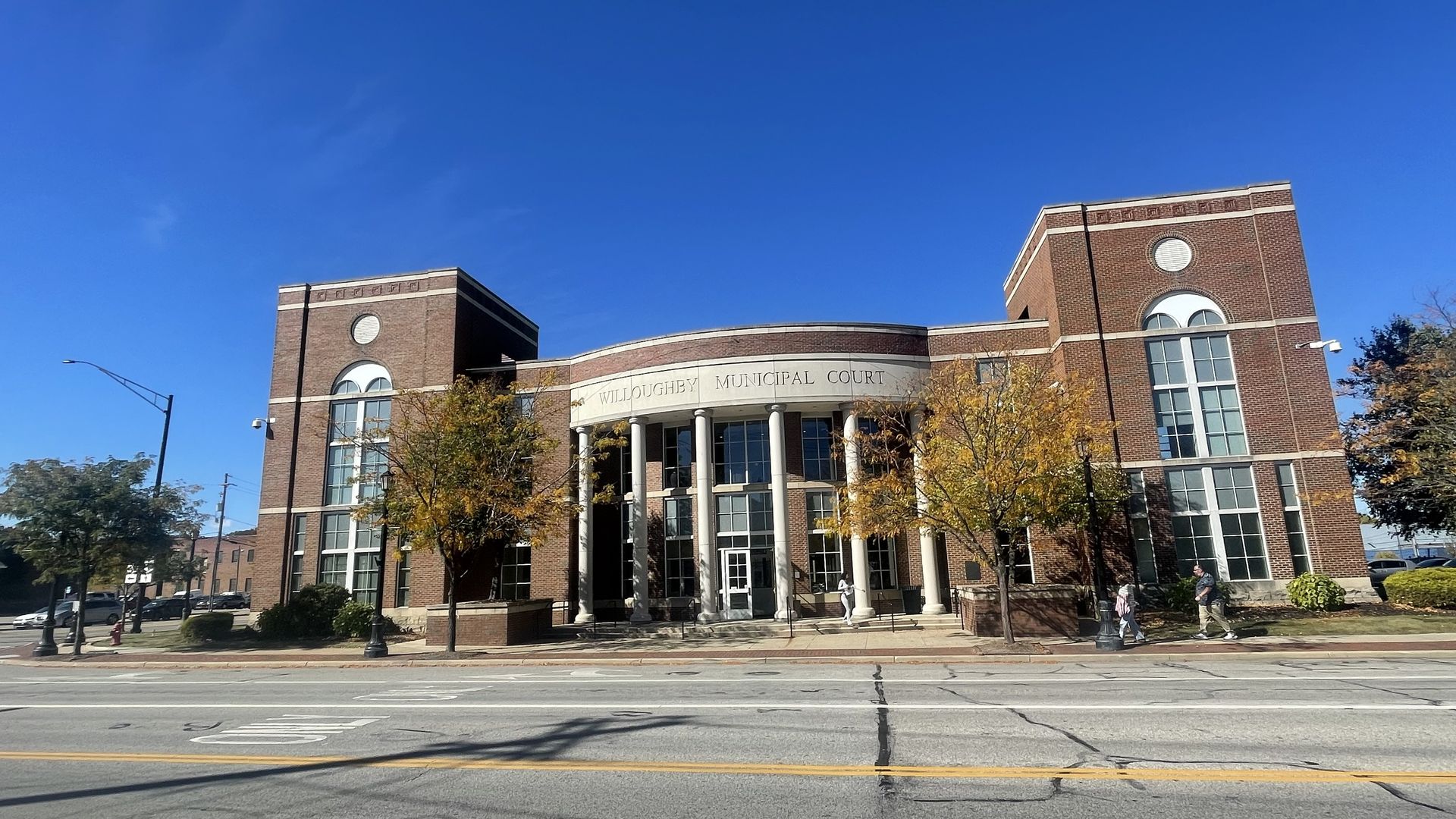
The Willoughby Municipal Court. Photo: Sam Allard/Axios
A judge barred Ohio political blogger D.J. Byrnes from raising a First Amendment defense in his telecommunications harassment trial, which resulted in a conviction last week.
Why it matters: The jury found Byrnes guilty of sending a sexually explicit Shrek image to state Sen. Jerry Cirino (R-Kirtland) without weighing what his attorneys argued was the central constitutional defense: that even vulgar, offensive mockery of elected officials is protected speech.
Catch up quick: Byrnes was sentenced Friday to $200 plus court costs.
- He has since confirmed plans to appeal the ruling.
Driving the news: His attorney, Michael Murray, confirmed to Axios that visiting Judge Michael Cicconetti sided with prosecutors during pretrial proceedings in ruling that the First Amendment did not apply to the case.
- "Furthermore, [Cicconetti] would sustain any objection if my lawyers raised it and instruct the jury to disregard it," Byrnes wrote Monday in The Rooster.
State of play: In proposed jury instructions filed Sept. 30, Byrnes' attorneys cited multiple U.S. and Ohio Supreme Court decisions establishing broad constitutional protections for political criticism, satire and caricature.
- They specifically cited "Hustler Magazine v. Falwell," the landmark 1988 ruling protecting outrageous satire of public figures, and New York Times v. Sullivan, which established heightened protections for criticism of public officials.
- The defense asked that jurors be instructed not to convict unless prosecutors proved beyond a reasonable doubt that Byrnes' texts fell outside First Amendment protections.
Yes, but: Those instructions were stricken, leaving the defense to argue that Byrnes' messages did not satisfy the statutory definition of harassment.
What they're saying: "Never in my years of dutiful study at Twitter Law University did I learn that a single judge could decide that my First Amendment rights didn't apply in this criminal case," Byrnes wrote, "especially when the charges were based on my speech aimed at a public official about his public work."
The other side: "This wasn't a free speech issue; this was a harassment statute that I believed he was in violation of," the Ohio Capital Journal quoted Cirino as saying after the verdict.