Ohio political blogger found guilty for sending naked Shrek image

Add Axios as your preferred source to
see more of our stories on Google.
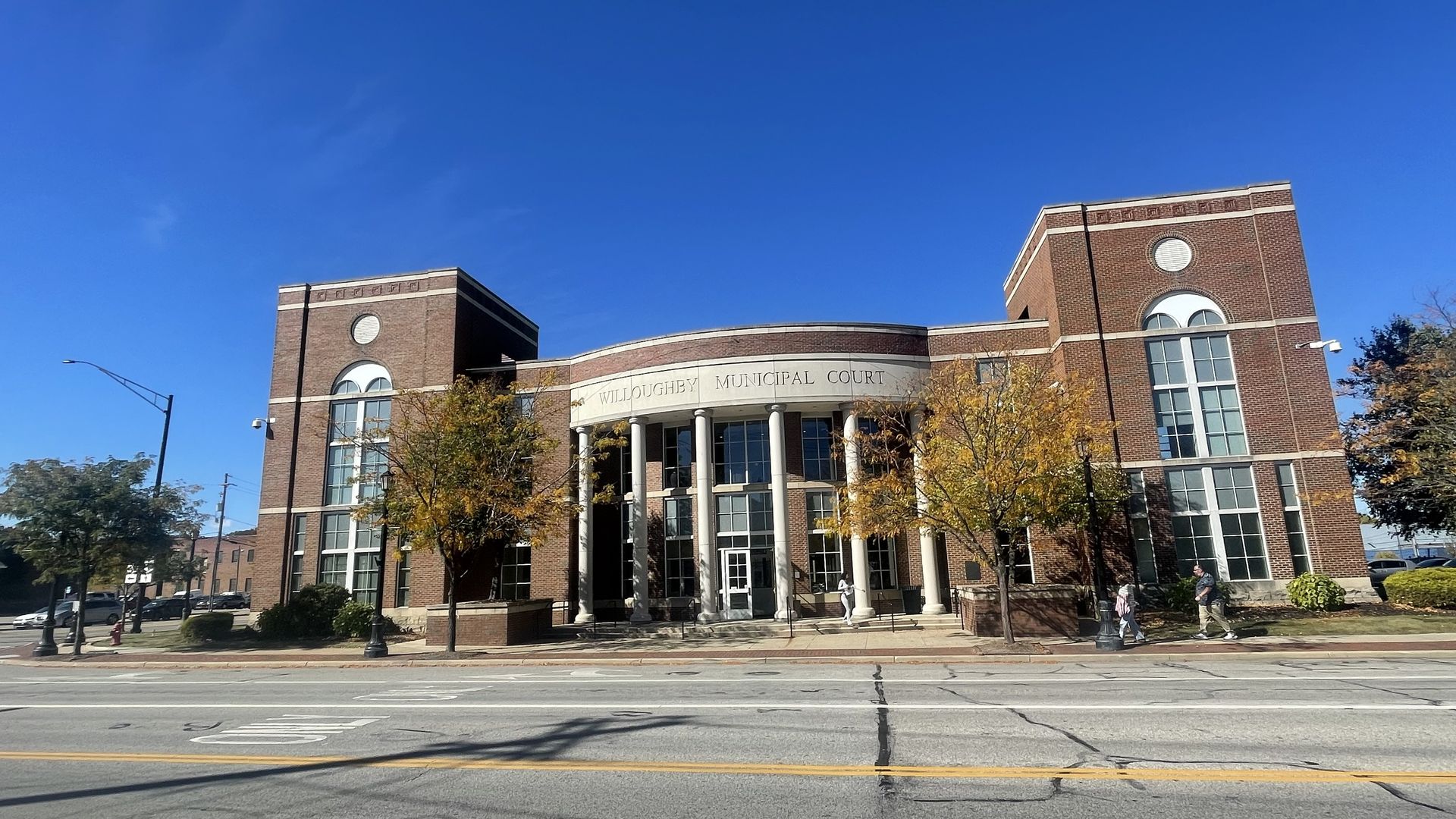
The Willoughby Municipal Court. Photo: Sam Allard/Axios
A jury in Willoughby found Ohio Statehouse political blogger D.J. Byrnes guilty of telecommunications harassment Friday for sending a sexually explicit image of Shrek to state Sen. Jerry Cirino (R-Kirtland).
Why it matters: The defense failed to persuade the jury that Byrnes' texts, which mocked Cirino for failing to secure the Ohio Senate presidency, are protected under the First Amendment.
State of play: Jurors ultimately agreed with prosecutor Matthew Lallo, who argued the texts "crossed a line."
- In closing arguments, he projected the naked image of Shrek on the courtroom wall and invited the jury to gaze upon it. "Tell me how that is not harassment!"
Inside the room: Byrnes was visibly baffled by the verdict.
- The first degree misdemeanor carried a maximum sentence of six months in jail, but Judge Michael Cicconetti sentenced Byrnes only to a small fine ($200 in court costs) — which he agreed to postpone, pending an appeal.
- Cirino asked for a no contact order, but the judge declined.
What they're saying: "This wasn't a free speech issue; this was a harassment statute that I believed he was in violation of," the Ohio Capital Journal quoted Cirino as saying after the verdict, while Byrnes declined to comment.
Zoom in: The case saw four witnesses total. The defense called lobbyist Bobby Ina and Byrnes' wife, Rachel Wenning, to provide testimony about Cirino's cell phone use and Byrnes' night in a Franklin County jail, respectively.
- Ina also revealed in Friday testimony that Cirino texted him Thursday after the trial's first day concluded, chastising him for sharing audio of a phone message from Cirino with Byrnes' legal team.
Between the lines: The defense sought to illustrate that Byrnes' texts did not meet the statutory standard for harassment because they emerged from a political context: the Rooster's adversarial coverage generally and his published opposition to Cirino's bid for the senate presidency specifically.
- They also argued that Byrnes' arrest and trial were retaliation from Cirino, who testified that the texts were "the last straw."
Yes, but: They did not make a sweeping First Amendment argument, i.e., that the ability to mock and ridicule elected leaders (as Byrnes does regularly) should be sacredly guarded on constitutional grounds.
The last word: "This case should have been dismissed before it ever got to trial," John Plecnik, a Lake County commissioner and CSU law professor, told Axios at the courthouse before the ruling.
- "The First Amendment protects speech you disagree with. That's the whole point."