Ohio adjusting to daylight saving time


Add Axios as your preferred source to
see more of our stories on Google.
The time change started at 2am Sunday and some of us are still recovering.
The intrigue: The shift from daylight saving to standard time can disrupt circadian rhythms, leading to poorer sleep, even if you gain an hour.
By the numbers: Average awake time in bed increased 2% in the week after last fall's shift to standard time for more than 76,000 Oura members, compared to the week prior, the smart ring company tells Axios.
- The users had a higher resting heart rate, more sedentary time and less sleep overall the week after the time change, per Oura.
Pro tips: To ease the time change transition, consider relying on environmental cues.
- Get sunlight first thing in the morning, ensure your regular meal and workout schedules are not too close to bedtime and make your bedroom dark and cool.
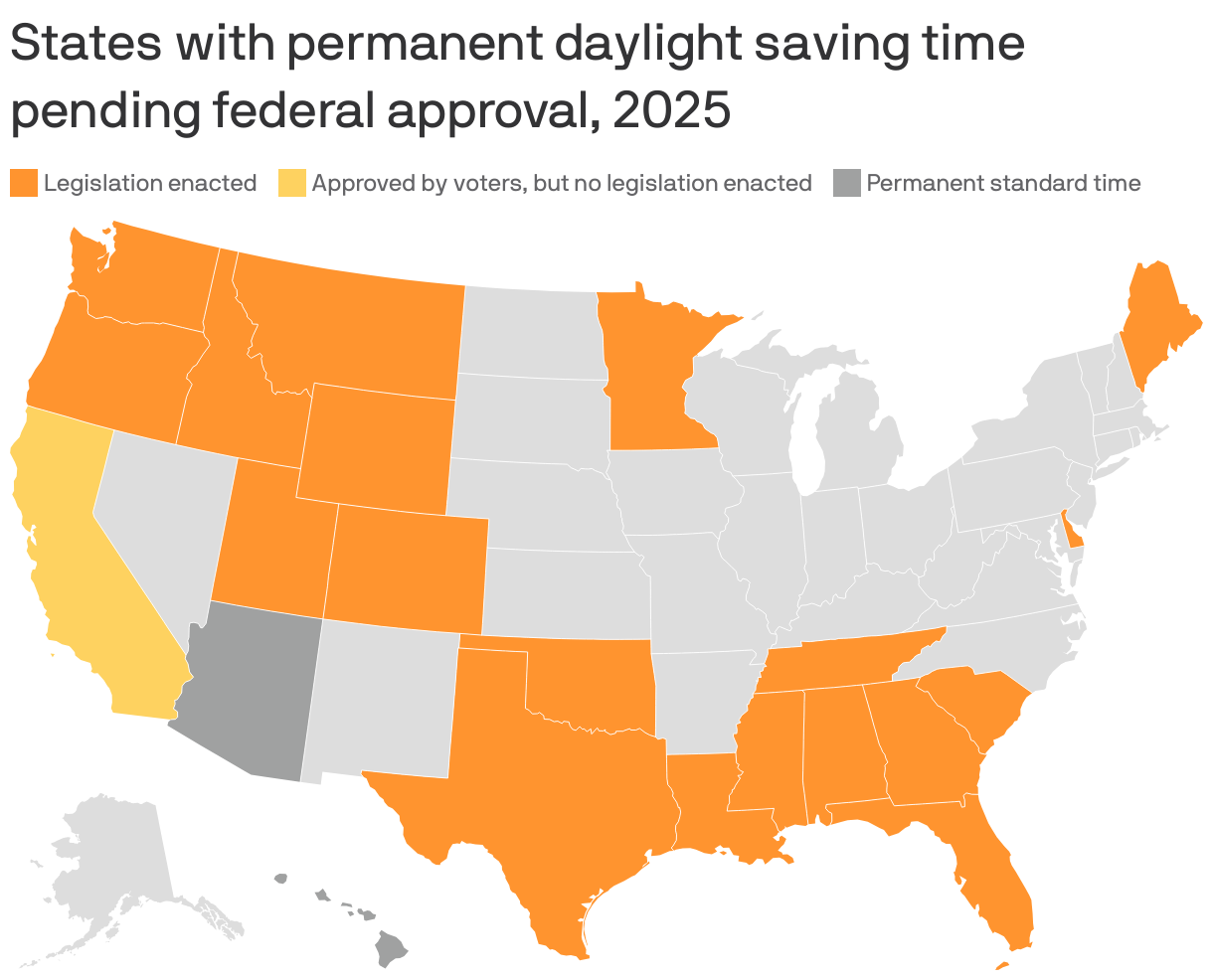
The big picture: Nineteen states have passed laws to make daylight saving time permanent, but those states can't act without Congress, where the efforts have stalled.
Zoom in: Ohio lawmakers have adopted resolutions urging Congress to make daylight saving time permanent.
- Yes, but: Ohio has not gone as far as passing a law.