North Carolina bill to eliminate parking minimums statewide passes House unanimously

Add Axios as your preferred source to
see more of our stories on Google.
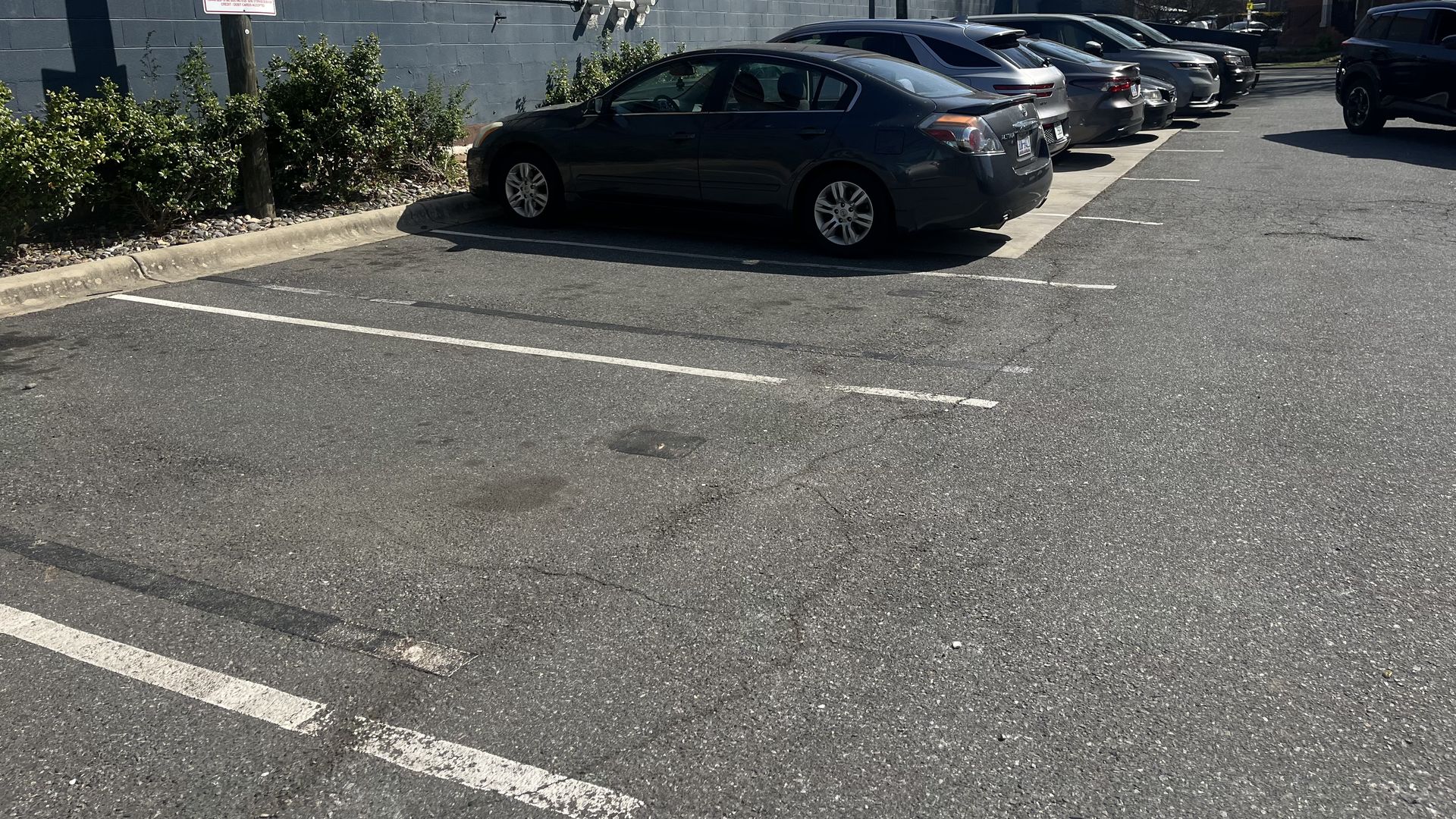
Photo: Alexandria Sands/Axios
The North Carolina House passed a bill unanimously Wednesday that would block local governments from forcing developers to build parking.
Why it matters: An issue that has been controversial in Charlotte received bipartisan support in Raleigh.
The big picture: With a starting price tag of about $5,000 per space, parking mandates add to the rising costs of new construction. Those expenses are then passed on to residents and businesses as higher rent.
- Removing excess pavement can reduce sprawl, car dependency, stormwater runoff and heat retention, while promoting economic revitalization, business activity and affordable housing.
Between the lines: Over 20 groups were pushing for the Parking Lot Reform and Modernization Act, or House Bill 369, says Catawba Riverkeeper policy director Ryan Carter.
- The bill's sponsors come from a range of industries, from construction to farming. They are Reps. Donnie Loftis (R-Gaston), Mark Brody (R-Anson, Union), Howard Penny Jr. (R-Harnett, Johnston) and Allison Dahle (D-Wake).
Zoom in: If it becomes law, the bill would override any local rules. Charlotte still requires parking for new developments. Even a newly built bar near the light rail needs to pave new spots to open.
- Raleigh, Durham and Gastonia have all removed parking minimums.
The other side: Some worry that removing parking minimums will result in insufficient parking, prompting drivers to park in quiet neighborhoods or wherever else they can. Carter argues that's a misconception, and the market will self-regulate.
- "If your community has parking minimums and people are still parking all over the place, then apparently your minimums aren't working," Carter says. "Sounds like your community needs more on-street parking regulations," like "no parking" signs.
- Charlotte has started piloting more on-street residential permit programs in neighborhoods near South End.
What's inside: The bill also strikes a law that prohibits local governments from strengthening runoff requirements in the redevelopment of structures built before modern practices.
- A provision in the bill that would have banned coal tar sealants didn't make it past committee.
What's next: The Parking Lot Reform and Modernization Act heads to the Senate.
- "The good news is that this bill has time," Carter said. "We still have a year and a half, but we do have a roadmap for friends in the Senate."