The long road ahead in 2025 for making Charlotte's transit dreams a reality

Add Axios as your preferred source to
see more of our stories on Google.
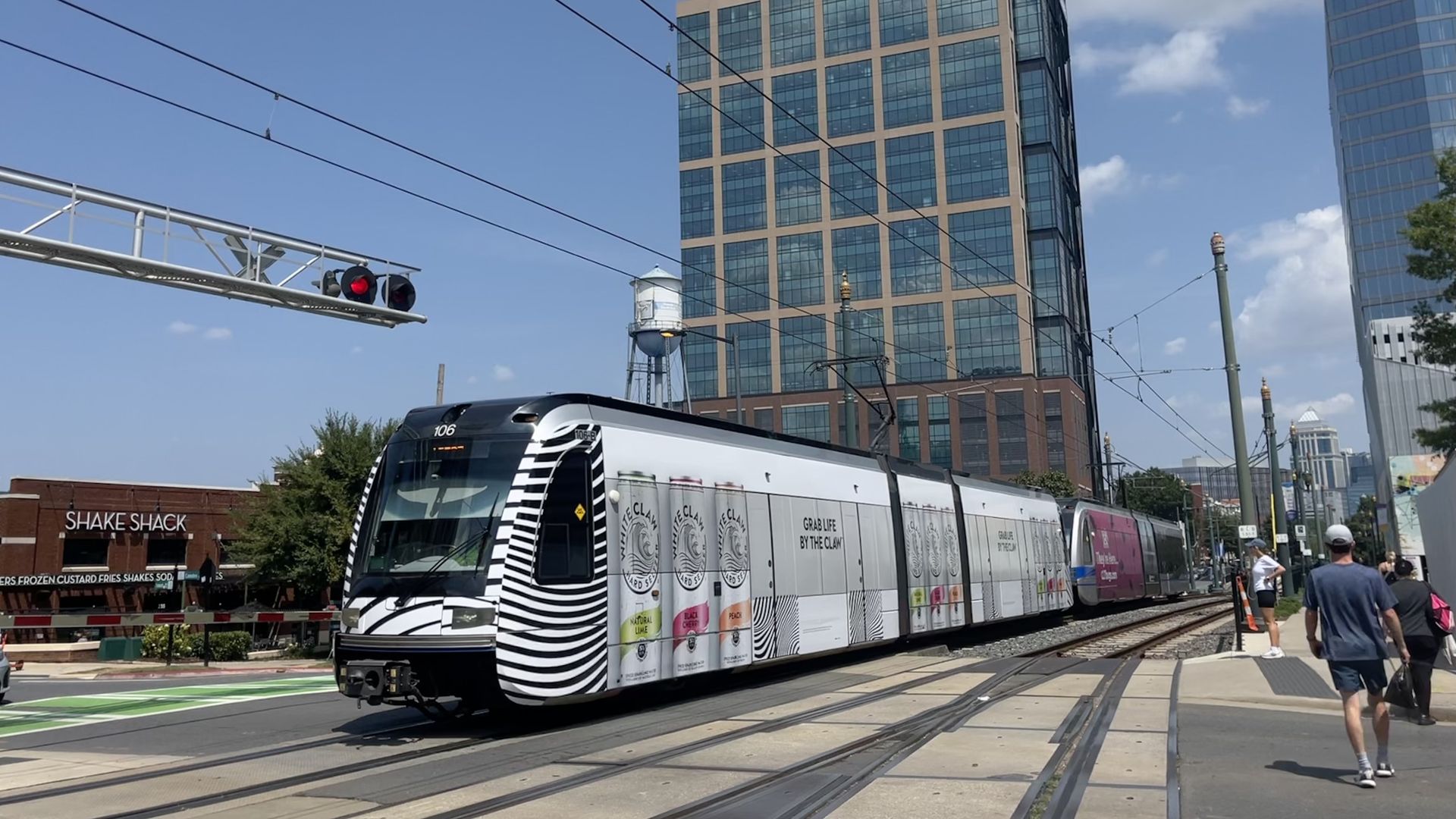
The Blue Line light rail in Charlotte's South End neighborhood. Photo: Alexandria Sands/Axios
There are nine months until the November elections — the next chance to put forth a referendum asking Mecklenburg County to vote for a 1-cent transit sales tax that could generate billions to fund ambitious transit plans, from rail to road improvements.
Why it matters: Before then, there's a lot of work to do. For starters, a state legislator has to agree to sponsor Charlotte's challenged transit bill.
- The General Assembly then has to pass said legislation, giving the county the greenlight to let the referendum move forward.
- Then the board of county commissioners has to agree to put the question on the ballot — a process that requires time to advertise and hold a public hearing.
- Plus, local leaders must convince residents to vote yes — a challenge amid high inflation and soaring housing costs.
What they're saying: "We need as much runway as possible to do that successfully," says Leigh Altman, vice chair of the Board of County Commissioners. "(I) hope that this will get attention as early as possible from the General Assembly."
- Legislators have said publicly in the media the bill would need to be addressed in the long session, which starts Jan. 29, according to a city spokesperson. The process could take several months.
Yes, but: It's unclear which state lawmaker would be the point person for the bill.
- Sen. Vickie Sawyer represents north Mecklenburg County and chairs the Senate Transportation Committee. Reached last week, she did not have an answer yet for who would sponsor the bill, but said she remains involved.
- She told Axios in August there were a hundred reasons why the bill "may not get off the ground."
Catch up quick: Over the summer, the City of Charlotte, Mecklenburg County and all surrounding municipalities except Matthews agreed to the draft legislation to allow the referendum.
- With a majority consensus, the City of Charlotte agreed to spend $91 million purchasing train tracks to build the future Red Line commuter rail from Uptown to the northern towns.
- The acquisition is a financial risk as the city expects to be reimbursed with revenue from the yet-to-be-approved tax.
Zoom out: Charlotte council member Malcolm Graham told reporters in December there's no "Plan B" if the legislation fails.
- "I think all our eggs are in one basket," he said.
Between the lines: Because Helene recovery is the focus for legislators heading into the 2025 session, they may deprioritize Charlotte's transit dreams.
- However, council member Ed Driggs — who chairs the city's transportation committee — thinks the state may be amenable to creating a new local revenue source when a lot of state money is going to storm efforts.
- The state has contributed considerably to past transportation projects. For example, the $1.1 billion Blue Line extension used $299 million in state dollars.
The big picture: A 1-cent sales tax increase could generate around $19 billion over 30 years. Local government officials estimate they'll be able to secure nearly $6 billion in matching dollars from the federal government.
- The money would first go to building out the Red Line.
- Other priorities are to extend the Blue Line to Ballantyne, extend the Gold Line in both directions and build the Silver Line west, toward the airport.
- While the General Assembly is considering the legislation, the local transit body — known as the Metropolitan Transit Commission — will discuss which projects are prioritized. Commissioner Altman says they expect to receive updated cost estimates at a meeting later in January.
- "If the projects that we all are interested in have a higher price tag than $24 billion, then that's where we start to work together as a community to figure out how to make the best of the situation and maximize the benefit to the residents who need transportation," Altman says.
Zoom in: The legislation would also establish a new regional transit authority. There may be a state-level debate over who can appoint members. Discussions over these types of edits may prolong the bill's passage.
- The draft legislation also sets up a spending framework that's driven controversy: Only 40% of the revenue could go toward rail. The rest is reserved for buses and split between the jurisdictions for road projects. Those could include lighting and sidewalks.
- The funds may not afford the full Silver Line light rail because it caps spending on rail. Matthews has opposed the bill for this reason.
What's next: If the legislation passes the General Assembly, the county commissioners must adopt a resolution directing the Board of Elections to conduct the referendum.
- Mecklenburg County staff say they plan to "pursue these steps as quickly as possible" once (and if) the General Assembly approves the legislation.
- Michael Dickerson, the director of the county Board of Elections, says he needs finalized wording by mid-September to print the referendum on the ballot in time for the election.
Go deeper: Transit sales tax would boost bus funding by about 50% annually
- What's inside Mecklenburg County managers' draft bill for a transit tax increase
- Everything to know about the Red Line
- Gold Line streetcar extension advances
This story was updated to clarify the city was referring to public statements in the media in regards to when legislators would address the bill, not direct conversations between lawmakers and the city.