Transit sales tax would boost bus funding by about 50% annually

Add Axios as your preferred source to
see more of our stories on Google.
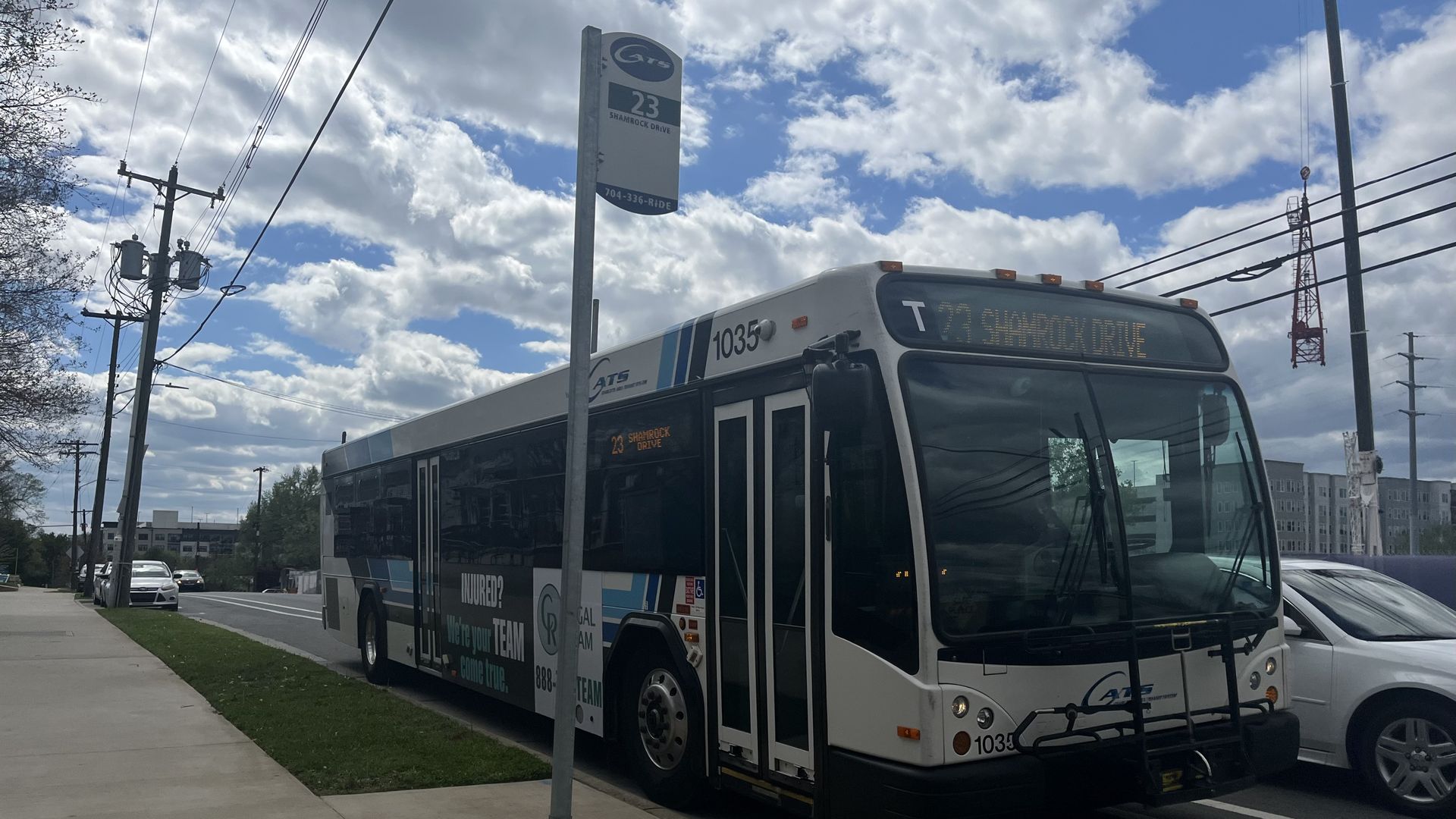
Photo: Alexandria Sands/Axios
While much of the attention around Mecklenburg County's proposed 1-cent transit sales tax has centered on rail and roads, the local bus system would also get a huge revenue boost that would drastically improve service.
Why it matters: Bus is the "backbone" of the transit system, as Brent Cagle, the interim CEO of Charlotte Area Transit System, often puts it.
- Without buses, people who rely on transit often wouldn't have a way to reach rail stops.
Catch up quick: Mecklenburg County and most of its municipalities are seeking a 1-cent sales tax increase for long-desired transit and road projects.
- The General Assembly first has to pass a bill, and then residents will vote on a referendum in 2025.
By the numbers: Per the drafted legislation, the local bus system would receive 20% of the tax revenue.
- That adds up to about $69 million annually or $3.8 billion over 30 years.
- It's about a 50% increase in annual funding for improving the system.
- Under the proposal, the other 40% of the tax revenue would go to rail and 40% to roads.
That amount of money for the bus system would make a "measurable difference," Cagle says, in CATS' ability to up frequencies and expand other modes, such as microtransit.
- Microtransit is an Uber-like service that people call for rides to bus stops, rail stations and other destinations.
The big picture: Many Charlotteans depend on buses to get to their jobs and schooling and improve their economic standing.
- In April, CATS' local bus routes provided more than 740,000 passenger trips — an 18% increase from the year prior.
- CATS provided more than 4.6 million trips in fiscal year 2023 and had reported 5.7 million for fiscal year 2024, as of April.
Zoom out: City leaders are touting the 40/40/20 breakdown, which was largely forced on them by the state's top lawmakers, as unique.
- "There's certainly no community in the state that is thinking about transportation funding from this broad, multimode perspective," says Ed McKinney, who oversees strategic mobility for the city.
- Cornelius leaders praised the spending framework because of its "game-changing" investment in roads. The tax would generate $7.8 billion for roads over three decades, per the city's numbers.
The other side: The 40% cap on rail may not provide enough money to accomplish all of the community's desired rail projects. Specifically, the Silver Line light rail segment between Uptown and Matthews is uncertain. Bus rapid transit has been pitched as a cheaper alternative.
- That portion through east Charlotte would cost about $6 billion, Cagle said.
- Per the city's presentation, the tax would generate only $7.8 billion for rail over 30 years.