A third of CATS bus stops are just signs

Add Axios as your preferred source to
see more of our stories on Google.
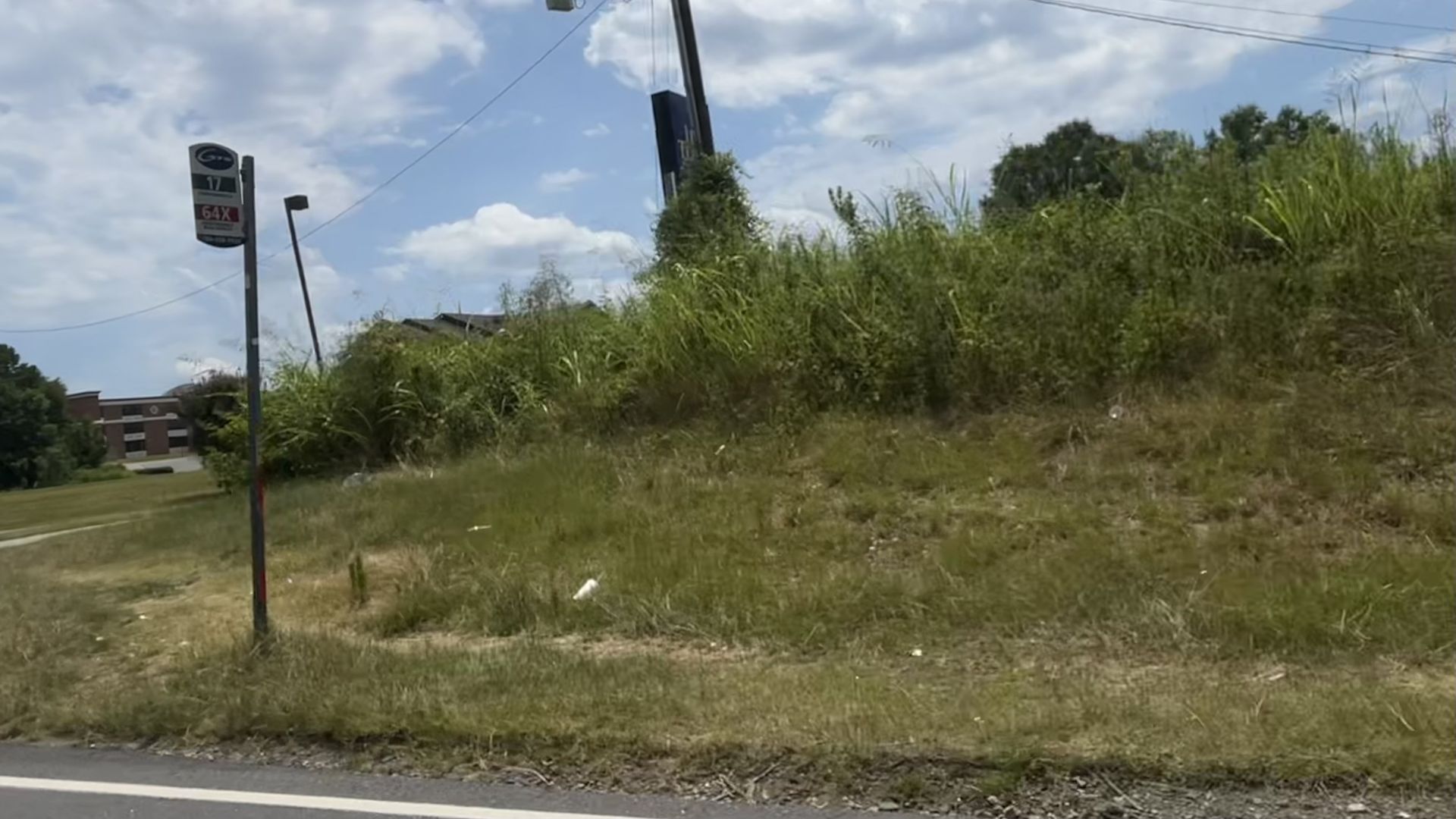
Photo: Alexandria Sands/Axios
Failure to make bus stops nicer is one of the biggest criticisms of the Charlotte Area Transit System, but leaders say it's a top issue to address.
Why it matters: It pours, it freezes, it's record hot. Curbs are tight, and too close to fast-moving cars for comfort. But people who rely on transit have no choice but to wait in these places for long durations.
State of play: Advocacy group Charlotte Urbanists has taken it upon itself to raise money and place hand-built benches at stops. You'll also see riders leave makeshift chairs (and even hay bales) next to bus signs.
By the numbers: Of CATS' more than 3,000 bus stops, there are:
- 268 with shelters
- 201 with a bench or seats
- 1,486 with an Americans with Disabilities Act pad
- 1,063 with no boarding area, meaning it's just a sign or marker. That's about 35%.
Caveat: Some stops with a pad still need work to bring them up to full ADA compliance.
What they're saying: CATS interim CEO Brent Cagle has said it is expensive to improve bus stops because once a bench or concrete pad is added, it must be ADA-compliant. That may require adding sidewalks or crosswalks.
- The costs could add up to another $30,000 to a simple $5,000 stop, a CATS spokesperson says.
- "It sounds counterintuitive. Having a sign in the dirt next to a road doesn't violate ADA. Having a pad with no ADA improvements and accessibility does violate ADA," Cagle explained during a presentation to business leaders in the spring.
The other side: Chris Hodgson with Disability Rights North Carolina says transit agencies should compare the cost of ADA stops to the money spent on Paratransit — a "segregated" system. It's more cost-efficient to ensure everyone can ride the standard buses, he says.
- "A lot of cities still have fixed systems that are inaccessible, and they don't have plans in place to make it effective over time," he says.
Case in point: In Greenville in eastern North Carolina, a man was convicted for impeding traffic while riding his wheelchair on the road in protest of inaccessible bus stops, WITN reported.
Yes, but: CATS plans to start running microtransit, a low-cost transit service comparable to Uber or Lyft. Like Paratransit, it will carry single passengers in smaller cars. Some of the 3,000 bus stops may not be needed after that.