Charlotte City Council supports sending transportation bill to Raleigh, despite Silver Line strife

Add Axios as your preferred source to
see more of our stories on Google.
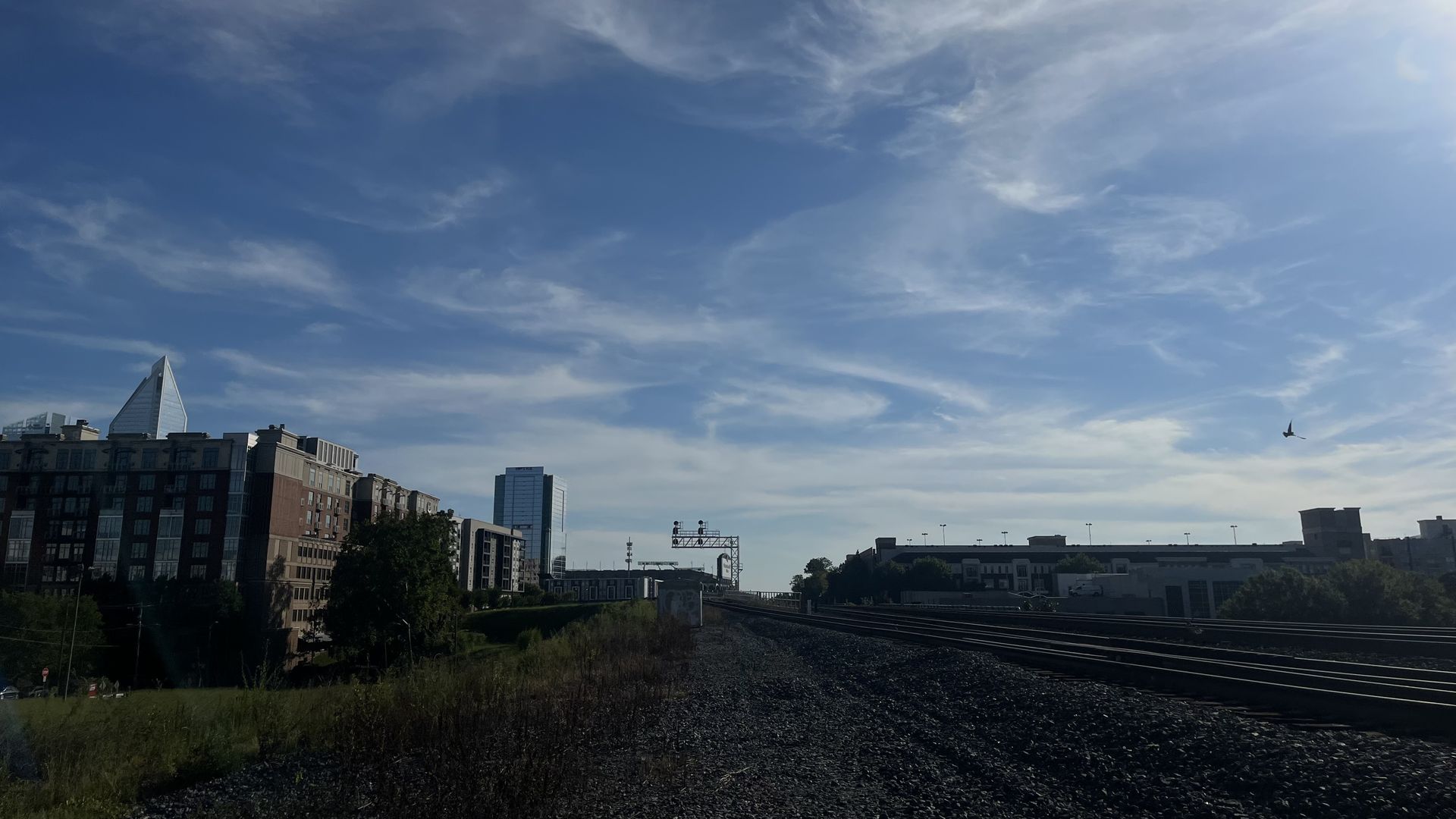
Tracks off West 7th Street. Photo: Alexandria Sands/Axios
For most of Charlotte City Council, the overall benefits of a new transit tax outweigh the likely axing of a southeastern light rail. That sentiment was clear Tuesday night as elected officials voted 10-1 to support the drafted bill for a referendum.
- Council also voted to purchase tracks from Norfolk Southern for $91 million, clearing a decades-old obstacle to running a Red Line commuter rail to northern towns.
Why it matters: Geographically and figuratively, Charlotte ended up in the middle of a debate over the regional transit vision.
- While northern Mecklenburg County towns will support the proposed legislation because it ensures the Red Line is built, southeastern leaders say the plan won't afford part of the Silver Line light rail.
- Some Charlotte council members suggested they created "winners" and "losers," but still ultimately chose to move forward with the bill.
The latest: Council members adopted a resolution to support sending the draft bill to the North Carolina General Assembly. The legislation seeks the legislature's permission to put a 1-cent transit sales tax increase referendum on an upcoming election ballot in Mecklenburg County, possibly as early as 2025.
- Only 40% of the revenue could go toward rail. The rest is reserved for buses and, to appease state lawmakers, roads.
- Realistically, that doesn't leave enough funding for all desired rail projects. Instead, the east side could get bus rapid transit.
- But the Red Line, between Uptown and the northern county line, will be an indisputable priority.
Between the lines: The Red Line purchase is a financial risk for the city, which expects to be reimbursed with tax revenue.
- If the tax doesn't pass, the city may be stuck with the corridor, without the revenue source to build the commuter rail.
What they're saying: Council member Marjorie Molina, who represents east Charlotte, supported the bill even though it means her constituents might not get light rail. She clarified her vote was not for a bus rapid transit alternative.
- She explained she wants to see other transit investments in underserved communities. A large percentage of the city's transit-dependent population lives in her district, Molina says. Yet, there are still areas without sidewalks and streetlights, she noted.
- Bus operator Arthur Walker spoke before council in favor of the transit plan. He said the Charlotte Area Transit System's fleet is aging.
- "Every time a bus breaks down, I can't help but think of the passenger that's late for work and losing pay," he said. "I can't stop thinking of the passenger who has grocery bags full of frozen food or ... perishable refrigerated items that are getting warmer by the minute."
The other side: Council member Tariq Bokhari was the sole "no" vote, citing concerns about the transit authority's governance structure, among other hesitations.
What's next: Many hurdles to clear. The General Assembly has the power to pass the bill in another form — or ignore it entirely.
- The future regional transit authority, once set up, is expected to finalize a plan for how the revenue will be spent. The Red Line takes precedence over other rail projects, but city leaders also hope to someday extend the Gold Line streetcar and Blue Line light rail.
- Plus, they'll likely need to figure out a more affordable option for Matthews and east Charlotte than light rail.
The bottom line: Mecklenburg County voters ultimately decide on the transit referendum.