Driving more than we did before

Add Axios as your preferred source to
see more of our stories on Google.
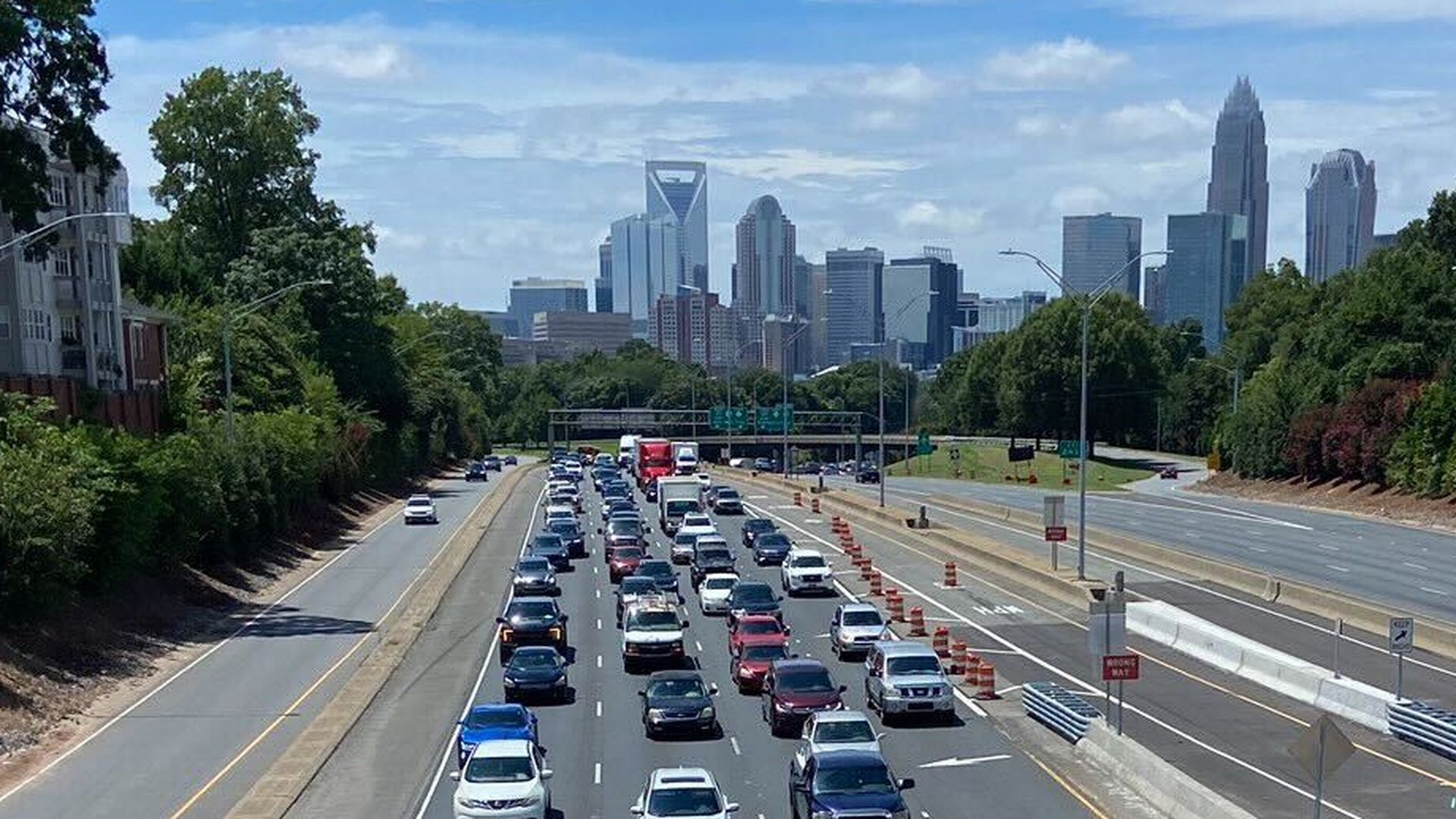
We're driving even more in Charlotte than we did before COVID, a new analysis finds.
Why it matters: The data doesn't bode well for a city with rapid transit striving to lower emissions and become more walkable and bikeable.
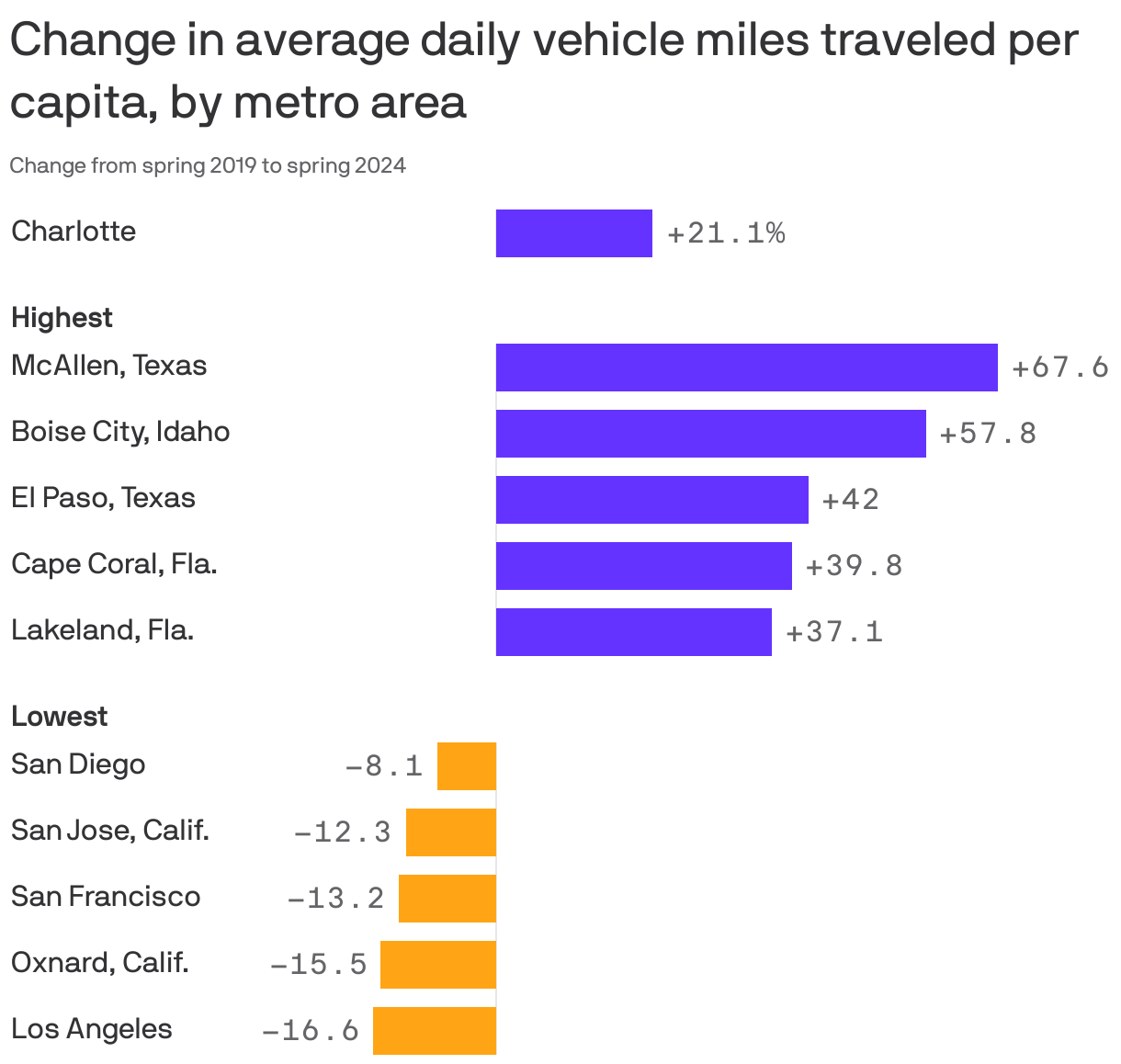
By the numbers: Average daily vehicle miles traveled (VMT) per capita increased 12.3% across the 100 biggest U.S. metro areas this past spring compared with the same period in 2019, per a report from StreetLight Data, a transportation analytics firm.
- VMT rose 21.1% in Charlotte and 26.6% in Raleigh.
The bottom line: "It's not just that [VMT] is back up, but we're actually seeing a bit of an acceleration compared to the previous couple of years," Emily Adler, director of content at StreetLight, tells Axios.
- "So that suggests that we're not peaking, that whatever efforts we've strived for to keep VMT down, they're not quite working — or they're not working yet."