Biotech's next leap is AI-driven, and Greater Seattle is ready

A message from: Greater Seattle Partners
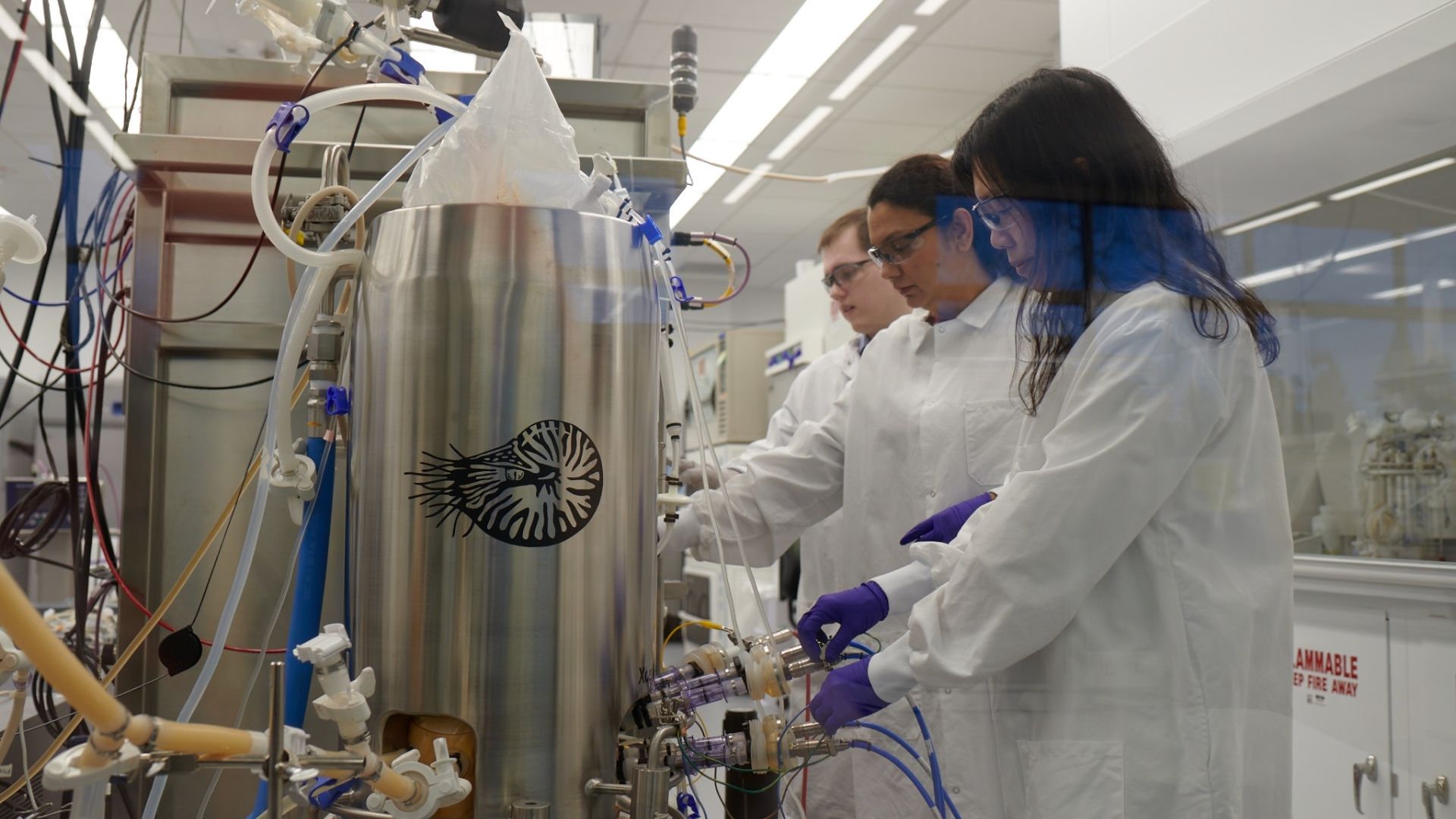
AI and advanced computing are increasingly driving breakthroughs in life sciences, and Greater Seattle is accelerating that shift.
Why it's important: Regions that integrate scientific research with advanced software infrastructure can bring therapies closer to clinical use more quickly.
The background: Seattle already sits at the intersection of life sciences and advanced technology.
- The city's strength in cloud computing and AI, anchored by leading tech companies, allows researchers to process large datasets at scale.
Unlike legacy clusters designed around density alone, Greater Seattle's ecosystem is built to foster integration, connecting biology to strong data infrastructure from the start.
- With R&D and manufacturing located in the same ecosystem, researchers can move from early discovery to viable therapeutic candidates quickly and more efficiently.
The proof: Back-to-back Nobel Prizes highlight the region's leadership in two critical areas shaping the field.
- In 2024, University of Washington scientist David Baker earned the Nobel Prize in Chemistry for computational protein design, enabling researchers to create new proteins for therapeutics and vaccines.
- In 2025, Seattle-based scientist Mary E. Brunkow and collaborators were recognized for discoveries in regulatory T cells and the FOXP3 gene, advancing how scientists understand and control immune responses.
Together, these breakthroughs point to faster, more precise ways to design therapies at the molecular and cellular level, enabled by the region's expertise in AI-modeling and advanced computing.
The strategy: Seattle's advantage is structural as much as it is scientific.
- Cross-disciplinary talent: A depth of expertise across disciplines allows teams to build models and refine therapies in parallel.
- End-to-end capabilities: Greater Seattle supports both R&D and biomanufacturing, with research anchored in Seattle and production capacity concentrated in areas like Bothell and Everett, allowing companies to move from discovery to production without leaving the region.
- An integrated ecosystem: More than 1,100 companies work alongside institutions like the University of Washington, Fred Hutchinson Cancer Center and the Allen Institute, helping move discoveries out of the lab and into commercial pipelines more efficiently.
- A scalable growth environment: Washington does not have a state income tax, giving companies more room to invest in research and talent than in legacy hubs like Boston and San Francisco.
What this means: For operators and investors, that translates into shorter development cycles and a faster path from discovery to viable therapies.
- For companies expanding in the U.S., Greater Seattle offers a point of entry where scientific research, talent and technical infrastructure are already integrated, reducing the time and complexity needed to scale.
Key numbers: Growth in the region is steady and measurable, reflecting a pipeline that continues to produce new companies and technologies.
- Nearly 180 life science startups launched between 2016 and 2025, raising about $6.9 billion.
- The sector supports more than 42,000 jobs and generated $13.7 billion in gross regional product in 2025.
- Employment grew 18% from 2020 to 2025 and is projected to grow another 9% through 2030.
The takeaway: Greater Seattle offers a model built for the next phase of life sciences.
- By combining scientific research with technology infrastructure, the region is enabling faster iteration and more efficient paths to real-world applications.