Question 3: Yes raises $7.8M from big donors, outraising No side 25 to 1

Add Axios as your preferred source to
see more of our stories on Google.
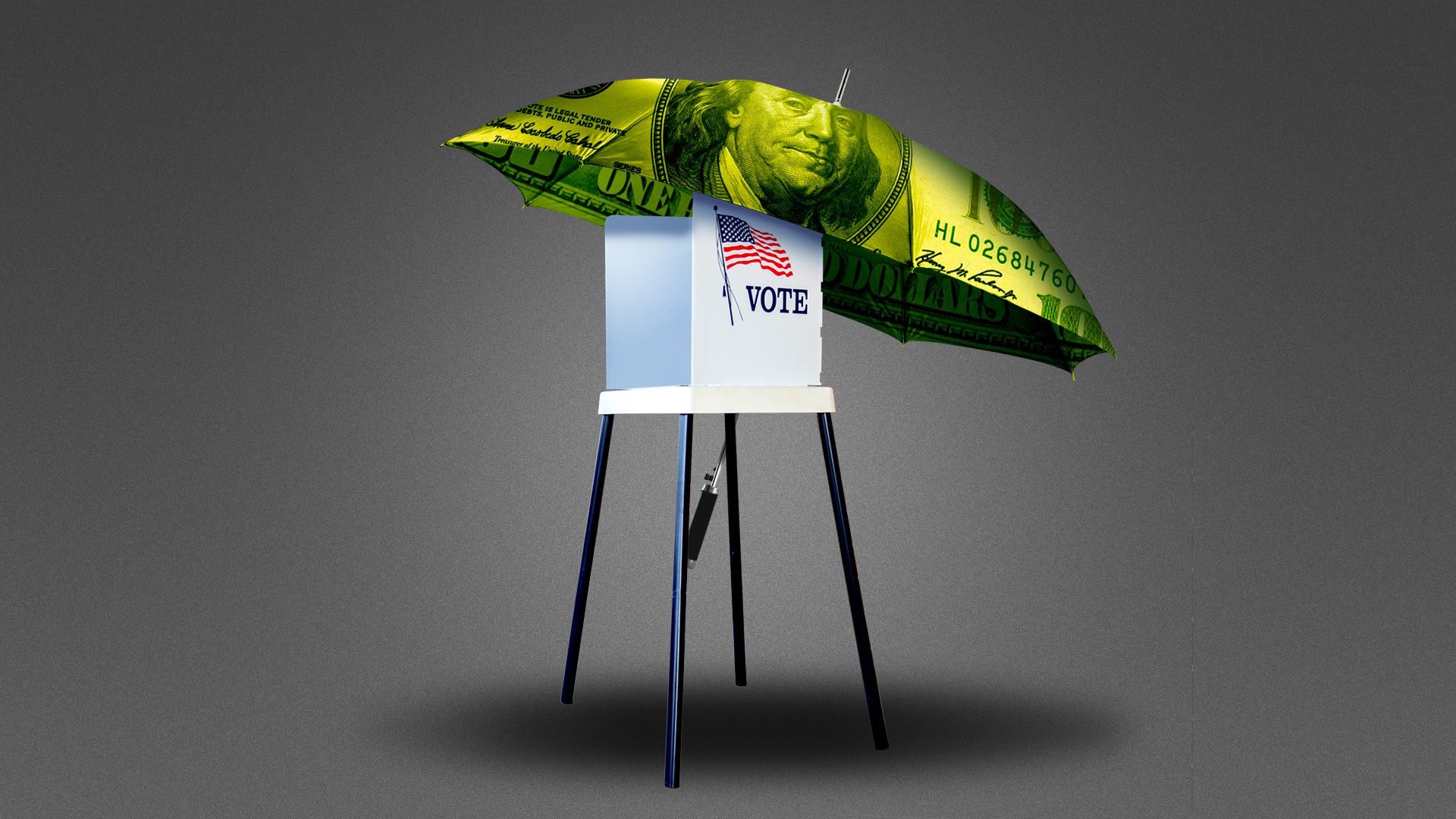
Illustration: Sarah Grillo/Axios
Question 3 drew about $5.2 million in combined spending as of Oct. 19, the most of any question this cycle.
Why it matters: The "Yes" side has outraised the "No" side about 25 to 1, according to state filings.
- The campaign to ditch party primaries has raised about $7.8 million, compared to around $317,000 for the campaign to keep them, according to campaign finance records.
- About 23 donors gave $100,000 or more to the "Yes" campaign, roughly 79% of the total. The top 10 account for about 58%.
- Small-dollar donations are minimal, with only 244 donors giving $1,000 or less for a total of around $30,000.
Yes, but: The "Yes" money is local. Over 90% of donations came from Massachusetts addresses.
The intrigue: The largest donors are David Peeler of Berkshire Partners (about $1.05 million), Andrew Balson of Cove Hill Partners ($790,000), Mark Nunnelly (about $650,000, listed as not employed) and Joshua Bekenstein of Bain Capital ($500,000).
- Nine donors listing Bain Capital as their employer gave about $1.1 million, and at least six listing Berkshire Partners gave about $1.5 million.
Of note: The "Yes" committee also supports Question 1 on this year's ballot, so its fundraising total isn't exclusively focused on the party primary topic.
The other side is mostly organized labor.
- Voter Rights MA, the "No" group, reported $316,822. $245,000 was from unions and union-affiliated committees.
- The largest donors are 1199 SEIU's Massachusetts PAC ($100,000), the Massachusetts Teachers Association (about $97,700) and the Massachusetts Democratic State Committee (about $63,300 in cash and in-kind).
Between the lines: Both sides are pointing fingers at the other's donors.
- The "No" side argues wealthy interests would gain influence under a top-two system. Just look at who's donating.
- The "Yes" campaign says party organizations, incumbents and their loyal labor unions hold too much power.