As states ban political deepfakes, Mass. lags behind


Add Axios as your preferred source to
see more of our stories on Google.
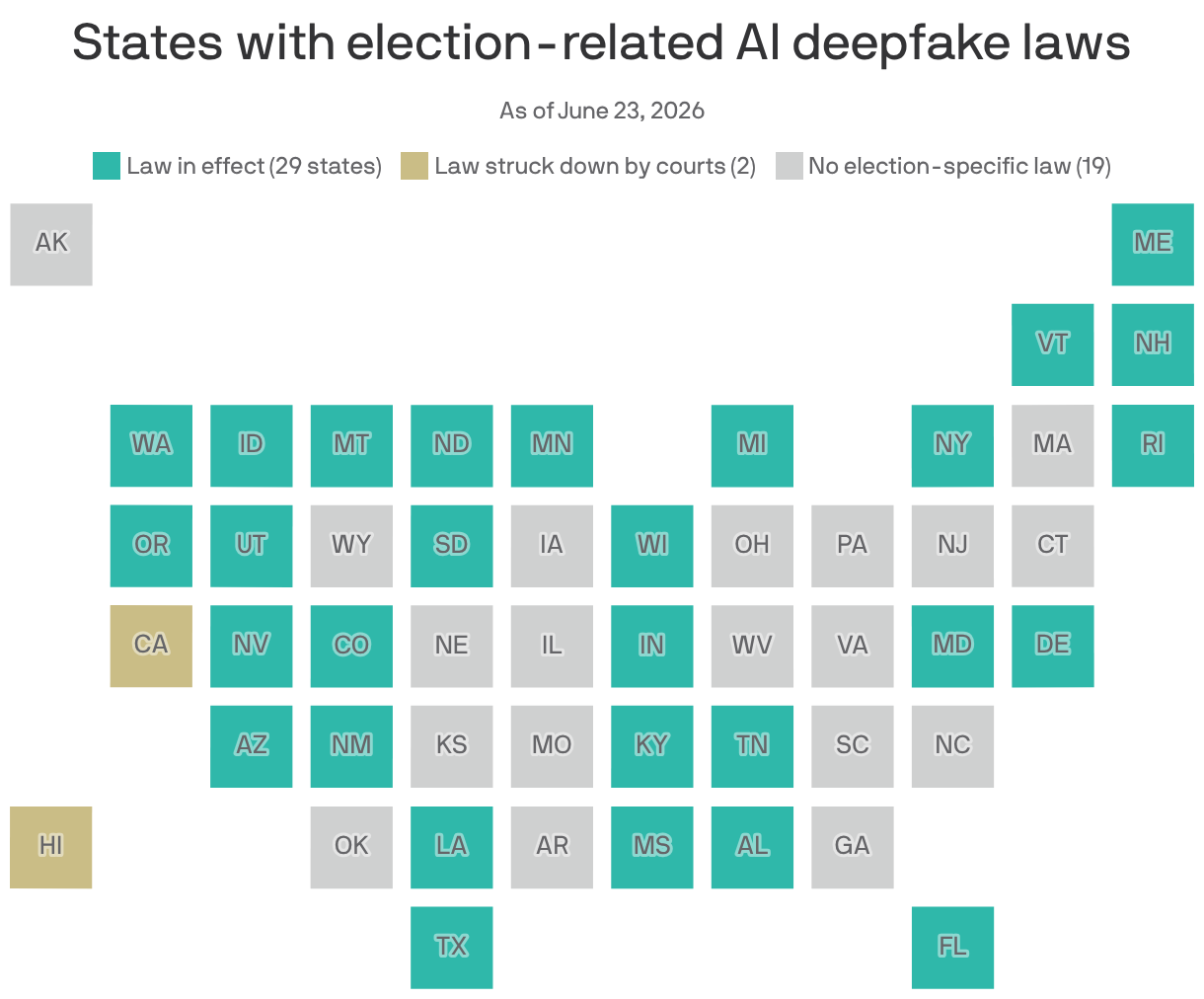
Americans across the country could have very different experiences with AI deepfakes leading up to Election Day, thanks to a patchwork of state rules.
Why it matters: AI-generated attack ads and campaign content are rampant leading up to the midterms as candidates across the political spectrum usethe technology.
Zoom in: Massachusetts is among the states lagging behind, and likely won't have a political deepfake law on the books by Election Day.
State of play: Twenty-nine states have AI election deepfake laws in effect, while two others — California and Hawaii — have had their laws struck down on First Amendment grounds, according to the National Conference of State Legislatures.
- Minnesota and Texas prohibit political deepfakes for a certain number of days before an election. Maryland's ban is year-round.
- The other states require disclosures when AI is used in political ads. Some states like Colorado and Utah require more detailed disclosures, such as the deepfake's creator, when it was created and how it was edited.
The latest: The Mass. House passed two bills in February with near-unanimous support: one banning maliciously deceptive campaign media within 90 days of an election, another requiring disclosure labels on AI-generated political ads.
- Both bills have sat in the Senate since.
- The gap was already tested this year, when an AI-cloned version of Gov. Maura Healey's voice appeared in a Republican rival's Instagram ad.
The big picture: At the federal level, lawmakers have yet to establish a baseline standard for election AI deepfakes.
Zoom out: Congress' first AI deepfakes law addressed a different issue.
- The Take It Down Act, which took effect in May, marked Congress' first attempt at tackling nonconsensual intimate imagery — an issue that has collided with election ads targeting women lawmakers.
- Passing the law was one thing. Implementing it effectively is another, advocates say, citing inconsistent content removal processes and predicting litigation will be needed to secure strong enforcement.
- Lawmakers are also seeking to build on that first step, with House Democrats planning to push legislation next year specifically targeting election deepfakes if they regain power.
The bottom line: Proposals to tackle AI in elections have been floated in Congress for years, but states have moved faster — creating different realities for voters depending on where they live.
- But Massachusetts heads into the midterms with no deepfake media rules for campaigns.