Was this Boston's "best summer ever"? It depends on who you ask

Add Axios as your preferred source to
see more of our stories on Google.
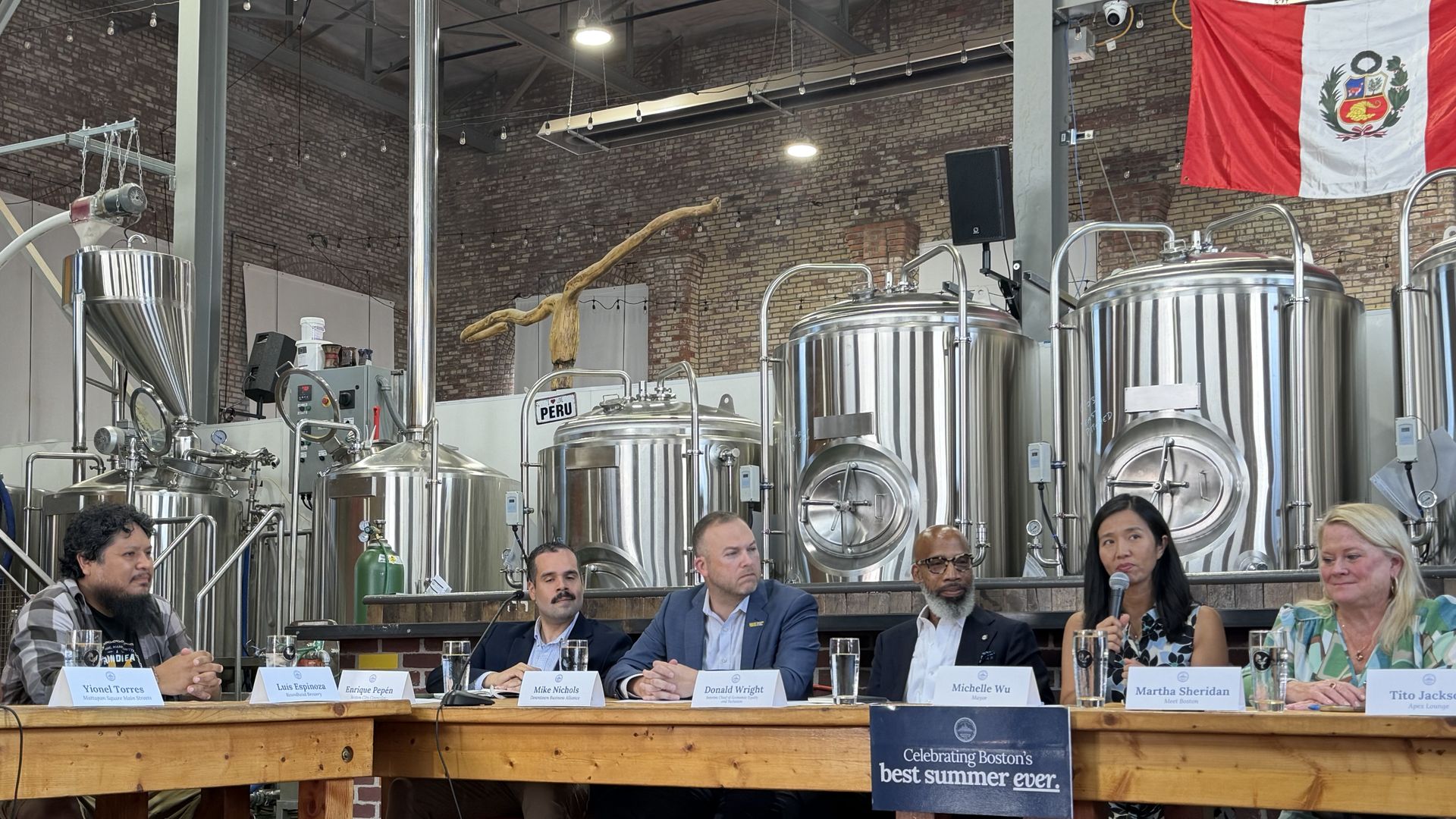
Mayor Michelle Wu speaks with elected officials and business leaders about the "best summer ever." Photo: Steph Solis/Axios
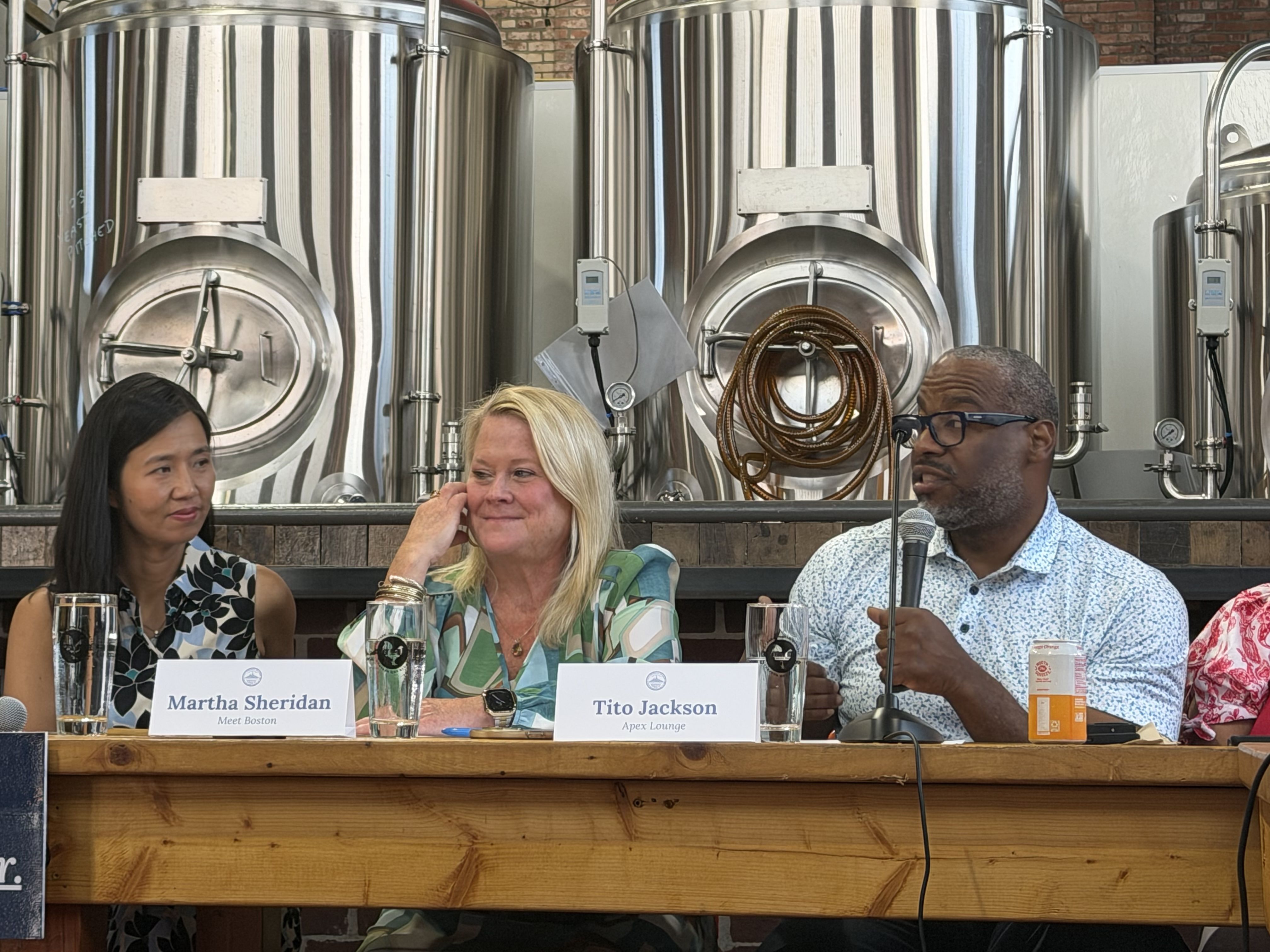
Seven miles south of City Hall, Mayor Michelle Wu convened 17 city officials, business leaders and entrepreneurs in a brewery for a victory lap.
- A blue sign hanging at the center of the U-shaped table summed it up: "Celebrating Boston's best summer ever."
The big picture: A trio of events this summer brought new life — and, for many downtown, higher revenues — to the Boston area, but the economic boost never materialized for some businesses based in Roxbury, Hyde Park and other neighborhoods.
- Some business leaders say those missed opportunities will likely continue if event organizers don't cast wider nets months, or even years, in advance.
State of play: Nine business owners told Axios they jumped on the chance to host watch parties and other World Cup-related festivities.
- Seven of them reported higher revenues in June and July compared with the same period in 2025, with some raking in tens of thousands of extra dollars.
What they're saying: "We certainly had enough press and online presence to really cement the Haven in being a destination for the World Cup," says Jason Waddleton, who owns the Scottish pub the Haven, in Jamaica Plain.
- Others beyond downtown saw a revenue boost, from Roundhead Brewing and Las Delicias Colombianas in Hyde Park to La Hacienda in East Boston.
By the numbers: The city's preliminary data suggests an overall boost for businesses across Boston's 23 neighborhoods.
- In an initial survey of 54 businesses, more than half said they saw more customers compared with last summer.
- More than half saw an increase in revenue, too.
- Most of the respondents who were eligible for later hours said they saw a positive impact and would like to see the option return.
Reality check: This summer didn't pay off for everyone.
- Suya Joint invested in its food truck, permitting, staffing and other expenses to host watch parties and vend at offsite events, chef Cecilia Lizotte told Axios.
- She poured some of the restaurant's operating funds into the World Cup, but she never saw the business materialize.
- "The distress is real enough that we are having conversations about whether we can continue operating and whether we may ultimately have to close our doors," she said.
Follow the money: The Black Economic Council of Massachusetts (BECMA) didn't receive public funding for summer 2026 events, so it spent $155,138 of its own funds to offer grants, devices, training and other services to its members.
- Some 87 members collectively generated up to $7.15 million in net new economic activity and 358 job and work opportunities, per a report BECMA released Thursday. The overall feedback, though, has been mixed.
- "We're really proud of the impact that we were able to help generate," says Nicole Obi, BECMA's president and CEO. "Just imagine if somebody had helped us and put more in; it would have been even better."
- Obi credits Lt. Gov. Kim Driscoll with helping drum up support weeks before kickoff, which led to a series of Lawn on D watch parties with the Mass Convention Center Authority.
Still, Boston still doesn't know the full economic impact of this summer's event.
- The city isn't done collecting survey responses from small businesses.
- The biggest organizer of its July Fourth festivities, the Boston Symphony Orchestra, has yet to share any data on how it used the $2.5 million in public funding it received and what came of it.
- A spokesperson said in an email the BSO doesn't have any data to share at this time and didn't respond to follow-up questions.

"Widening the table"
It's easy to blame FIFA. Its rigid restrictions on what kind of sponsors local host committees could get and what brands vendors could sell, combined with a lack of transparency, hampered local organizers.
- FIFA's response (or lack thereof) to the Trump administration's massive fees and visa restrictions that kept Haitians, Ghanaians, Cape Verdeans and others from visiting cities like Boston didn't help, either.
Yes, but: Business owners and leaders say Boston can do better, especially when it comes to including business owners who aren't downtown or well-connected to power players.
- "This is an amazing opportunity for Boston to be on the world stage, so I'm grateful for that," Collin Knight, who runs Live Like a Local tours, told Wu and later Axios. "But what I'll say from my business, as a local tour company, I didn't see any of that."
What's next: Wu and other city officials met recently to discuss plans Boston's 400th anniversary in 2030.
- Knight said he hopes the city also prepares to bring in business partners for local events in between.
The bottom line: Mike Nichols, executive director of the Downtown Business Alliance, calls it "widening the table," something he saw at least one other host city accomplish.
- "There are so many organizations that would lend their voice, their energy to solving a problem that we can anticipate is coming," he told Wu at the roundtable.
- "This is, I think, not classically the fault of the city, but the city may ultimately be in the best position to help us through it."
Beyond the 18-hour city
When asked what worked, business owners repeatedly gave one answer: the state's experiment loosening liquor laws.
Catch up quick: Boston businesses jumped at the chance to extend alcohol service by an hour under the temporary state law that extended last call and allowed public drinking districts.
- 211 restaurants across the city's 23 neighborhoods got approved to extend their alcohol service hours by an hour this summer.
- 140 got the green light to operate until 3am.
Friction point: Modernizing the liquor laws isn't up to Wu.
- She needs the Legislature to pass a home rule petition allowing it, or a statewide bill letting cities opt in.
- Boston also needs later MBTA service to make later hours work, business owners say.
- Corean Reynolds, the city's nightlife czar, said she has met with MBTA leadership over the years and has seen more flexibility in hours for special circumstances, like during the June 13 World Cup match.
Meanwhile, the city is expanding its nightlife resources where it can, Reynolds says.
- Boston made permanent its late-night food truck pilot, permitting food sales in at least a half-dozen neighborhoods from 10pm to 3am.
- The Office of Nightlife Economy hasn't issued nightlife programming grants since 2024, but it has organized events at City Hall Plaza, including a comedy night, queer friend speed dating and a pajama party.
- Its 2024 social district pilot on Temple Place helped the city prepare for this summer's public drinking districts when they were active on Temple and Union Street.
What they're saying: "My goal is to ensure that folks feel as if nightlife in Boston represents them," Reynolds says.