Boston author resurrects the race Detroit tried to erase

Add Axios as your preferred source to
see more of our stories on Google.
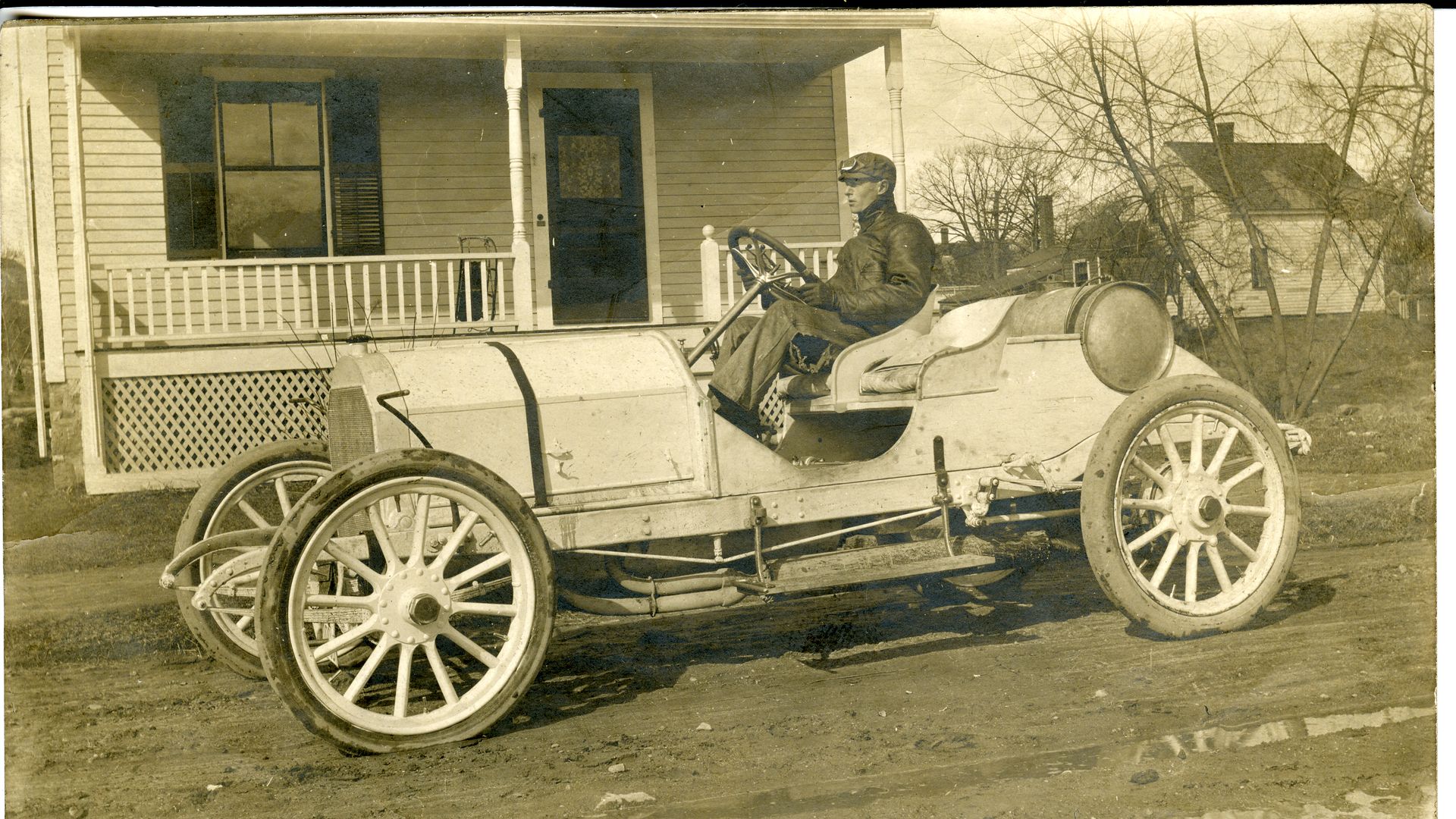
Mechanic Earle Chapin in a Shawmut roadster in Stoneham, the same car modified to compete in the coast-to-coast race. Photo from the collection of grandson Bruce Chaplin.
Boston-based journalist Eric Moskowitz spent years digging into a forgotten 1909 cross-country car race.
- He found a hometown company that won the race, only to get written out of history.
Why it matters: Moskowitz's new book, "The Hardest, Longest Race," argues that Massachusetts had a chance to become America's auto capital before a factory fire, political sabotage and Henry Ford's relentless Detroit PR machine buried the truth.
The big picture: Stoneham-based Shawmut Motor Company battled Ford's Model T across primitive American roads, mud pikes and mountain passes on the route from New York to Seattle.
- It was the first true transcontinental auto race.
The intrigue: The Model T crossed the finish line first, but Ford was later disqualified for swapping parts illegally in Wyoming.
- The trophy went to Shawmut, but the Ford Company moved quickly to squash coverage of the cheating scandal.
The aftermath: Ford's company spent decades minimizing the disqualification, including in a 1959 campaign on the 50th anniversary of the race.
- Shawmut driver Arthur Pettengill's son told Ford representatives in the '50s "it's not open to debate... you guys cheated, you got caught cheating," according to the book.
Zoom in: Shawmut was backed by Boston Brahmin money, including from Quincy Adams Shaw Jr. and Elliot Cabot Lee.
- They built cars with imported German steel rather than mass-produced parts to create rugged vehicles capable of handling a coast-to-coast trip.
- Moskowitz, a self-described "historically terrible driver," told Axios he was drawn less to the auto machinery than to the human stakes at play in the race. His research was a journey in itself.
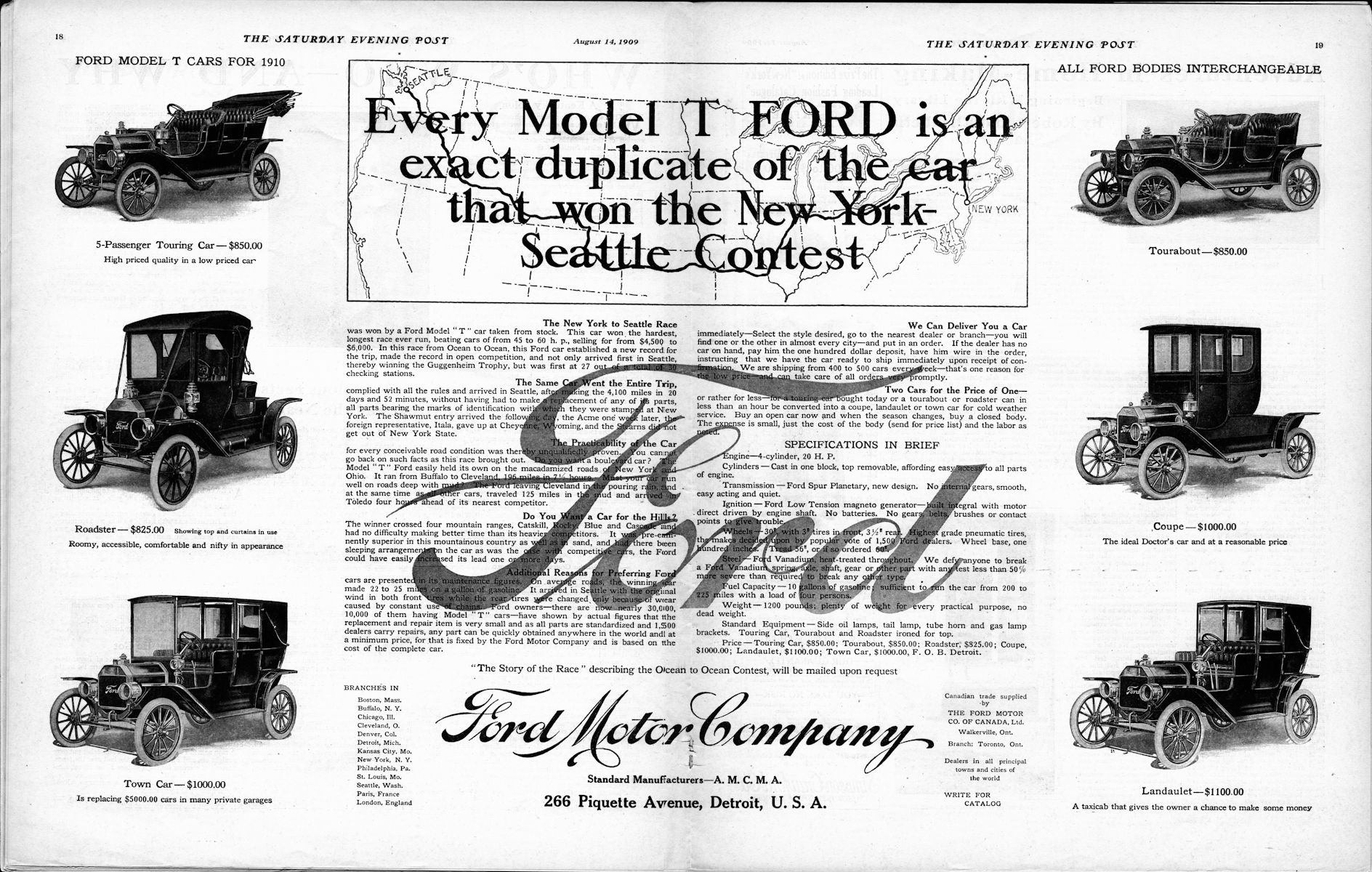
Not satisfied to rely solely on digitized archives, Moskowitz scanned microfilm from small-town papers along the entire 4,100-mile route.
- He turned up local journalism from over a century ago as reporters covered the racers blowing through town.
- He also tracked down the grandson of Shawmut mechanic Earle Chapin, uncovering a cache of 1909 letters between Chapin and his wife sent from the race course.
- The letters turned Chapin from a historical figure to a fully realized character in the narrative and gave the book an emotional core.
The other side: Even The Henry Ford museum in Dearborn, Mich., concedes the manufacturer switched out critical parts during the race.
The bottom line: Though the cover-up isn't nearly the worst thing Henry Ford and his company were accused of in the 20th century, Moskowitz says his research shows how easily corporate PR can rewrite history when few are left to challenge it.