Mass. economy could shrink by 2030 without more immigration

Add Axios as your preferred source to
see more of our stories on Google.
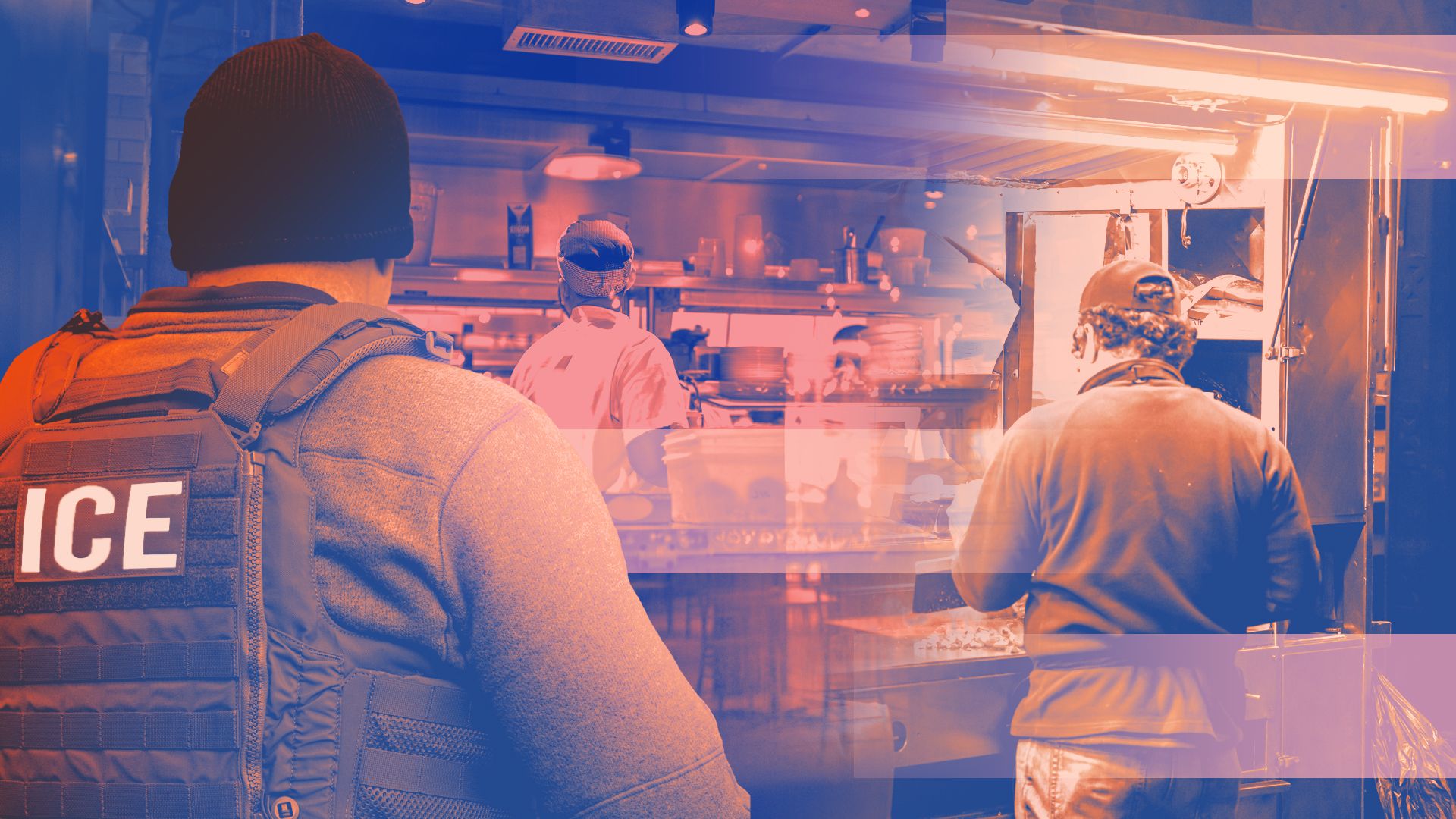
Photo illustration: Sarah Grillo/Axios. Photo: Christopher Dilts/Bloomberg via Getty Images
Massachusetts needs at least another 60,000 new immigrants by 2030 to prevent the economy from shrinking, a new report says.
Why it matters: Massachusetts already risks losing its lead in life sciences, health care and other industries amid rising costs, an immigration crackdown and competition from other U.S. tech hubs and China.
State of play: The report, authored by Boston Indicators and the MassINC Policy Center, warns that U.S. immigration levels could dip 90% by mid-2026 compared with their peak in 2024.
- Massachusetts' net international migration fell by more than half in the first six months of President Trump's second term, per the report.
- If the trend continues, the health care, higher education and construction industries will lose workers crucial to their work, with ripple effects across the state's economy, researchers predict.
Threat level: The report suggests that losing new immigrants would dampen state spending.
- Immigrant heads of households generated $50.5 billion in spending power in 2024 and billions more in state, local and federal taxes, per the report.
What they're saying: "This report illustrates in stark terms how policies to shut down or restrict immigration pathways will have significant negative impact for our overall population and labor force," said Lee Pelton, the Boston Foundation's president and CEO.
The other side: Republicans, including Gov. Maura Healey's rivals in the governor's race, have hammered the Healey administration over rising outmigration and its efforts to retain immigrants, regardless of legal status, arguing they are detrimental to public safety.
Here are some of the costs projected in the report:
🎓 A $1.4 billion loss in economic contributions could hit Mass. the next academic year if international student enrollment continues to decline.
- Denials of H-1B visas for foreign-born workers, including some graduating from U.S. institutions, could prompt companies to send thousands of jobs overseas.
🩺 Health care, an industry already struggling with worker shortages and burnout, could lose some of its immigrant workers, who by one estimate make up 40% of employees in nursing homes alone.
- The Supreme Court's impending decision on whether Trump can end Temporary Protected Status (TPS) could upend the lives of thousands of Haitian workers here.
🏗️ Construction companies still hire undocumented workers, even in a powerful union-labor market.
- Losing them could mean delays and rising price tags to finish construction projects amid high interest rates and rising materials costs.
- Yes, but: Immigration hardliners note that undocumented workers are typically paid under the table, avoiding income taxes.
What we're watching: The Supreme Court could issue its ruling on TPS, one of several immigration fights affecting the Bay State, as early as late June.