Why Mass. is committing $25M in taxpayer funds to MIT's quantum lab

Add Axios as your preferred source to
see more of our stories on Google.
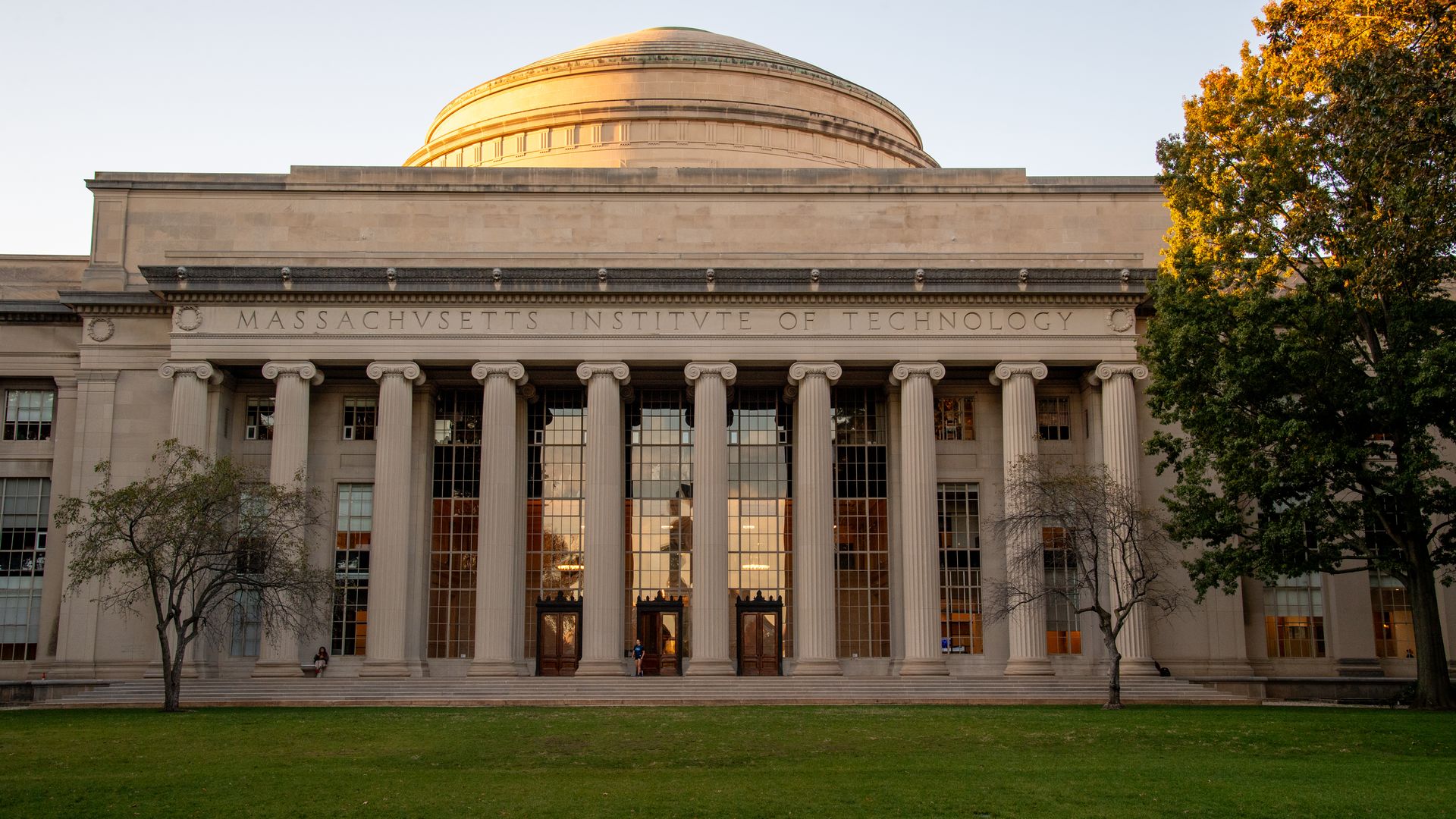
MIT. Photo: Erica Denhoff/Icon Sportswire via Getty Images
MIT plans to build a 90,000-square-foot quantum research campus in Cambridge, with help from Massachusetts taxpayers.
Why it matters: State and business leaders want to turn Greater Boston into the nation's leading quantum mechanics hub at a time when the state is seeing its lead shorten in biotech, AI and other areas of tech.
Driving the news: The Healey administration pledged $25 million in taxpayer dollars to help fund the Quantum Systems Laboratory (QSL), which MIT announced Thursday.
- The project will require extensive upgrades to MIT's Building 39, MIT President Sally Kornbluth said.
- Officials expect most of the construction to be done by December 2027.
- Gov. Maura Healey said the work will add 164 construction jobs and over 220 permanent jobs once the lab is up and running, with access potentially open to researchers across New England.
What they're saying: "It's impossible to estimate just the way a decade ago we wouldn't have known how many jobs AI would create or impact," Kornbluth said.
- "We're talking about a revolution in the technological workforce."
Follow the money: The Healey administration used funding generated from interest collecting in the state's rainy day fund, which stands at over $8 billion.
- The state's $25 million matches $25 million in funding expected from the federal government, as part of the state's federal matching and debt reduction fund.
- MIT and private donors also committed an undisclosed amount.
How it works: Quantum computers process information and complete complex math algorithms and equations faster than any supercomputer.
Between the lines: The QSL would host teams focused on using quantum mechanics for life sciences and defense research, but what would set the MIT project apart from existing labs is its ability to power direct communication among multiple quantum computers.
- MIT researchers developed a device last year to enable direct communication among the computers (until recently, the computers relied on a series of transfers that would produce errors).
Zoom out: Researchers worldwide want to use it to supercharge drug discovery, cybersecurity advancements, AI and other work undertaken by Boston's business sectors.
- Healey and MIT want leading researchers to make Cambridge their home base.
Yes, but: So do officials in Phoenix, Chicago and Boulder, Colorado.
What's next: Construction is set to start this summer.