Healey proposes restricting social media access for teens under 16

Add Axios as your preferred source to
see more of our stories on Google.
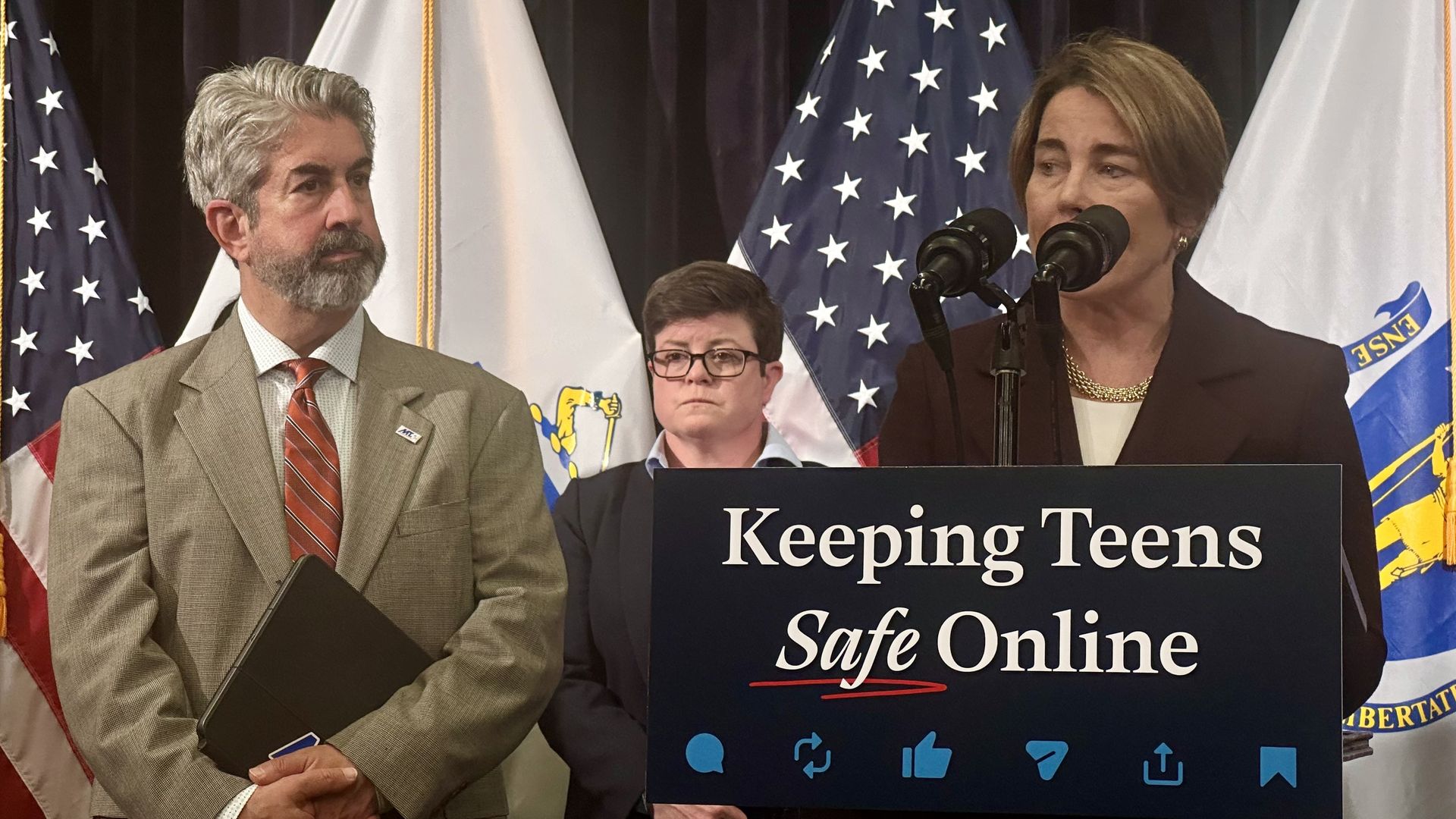
From left in foreground, MTA president Max Page and Gov. Maura Healey. Photo: Steph Solis/Axios
Gov. Maura Healey unveiled her own proposal to limit social media use among teens under age 16.
Why it matters: That makes three major competing bills reining in youth social media use on Beacon Hill, with just over three months to hash out a compromise.
Driving the news: Healey's supplemental spending bill includes legislation limiting teens under 16 to two hours of social media apps a day, citing mental health risks.
- The bill wouldn't ban social media for teens altogether, but it would deactivate features like "infinite scroll" and "autoplay," turn off location tracking and block notifications overnight and during school hours.
What they're saying: Healey told reporters Tuesday that social media platforms "have already shown over the last decade that they are not responsible caretakers or protectors of our young people."
- "So I want to take the power away from social media platforms and big tech companies, and put it back in the hands of our young people and our families."
- The proposal would require parental consent to change default settings for users under age 16.
Yes, but: Healey didn't explain how the state expects Meta, TikTok and other social media giants to create these default settings and verify that children are of age to use their apps.
Context: Public scrutiny of social media use among teens — and the platforms' role in promoting activity — has increased in recent years.
- Less than a month ago, a jury in California found that Meta and YouTube harmed a 20-year-old user with addictive design features that led to anxiety and depression.
- Meta must pay $4.2 million in damages, and YouTube must pay $1.8 million, The New York Times reported.
- The Massachusetts Supreme Judicial Court last week let Attorney General Andrea Campbell's lawsuit against Meta over its impact on youth proceed.
Friction point: Healey and lawmakers all want to rein in social media use among teens, but they have different blueprints on how to do that.
- The Senate passed a school cellphone ban in July.
- The House voted last week to ban social media entirely for children under age 14, while letting 14- and 15-year-olds use social media with parental consent.
- Asked why she's doing this now, Healey said she sees her bill as "a further contribution to the important discussion going on in the legislature."
- A spokesperson for House Speaker Ron Mariano said lawmakers look forward to working with the Senate in conference committee and sending Healey a strong bill protecting children against social media risks.
- A spokesperson for Senate President Karen Spilka said that while its bill focused on data privacy and cellphone-free schools, Spilka "also recognizes the potential harms of social media for kids" and will review the governor's proposal.
What we're watching: Lawmakers will have to decide whether to finalize legislation on social media and cellphone use as part of the upcoming supplemental budget debate or negotiate a compromise bill later.