32BJ, airport workers sue Trump admin. for revoking security clearances

Add Axios as your preferred source to
see more of our stories on Google.
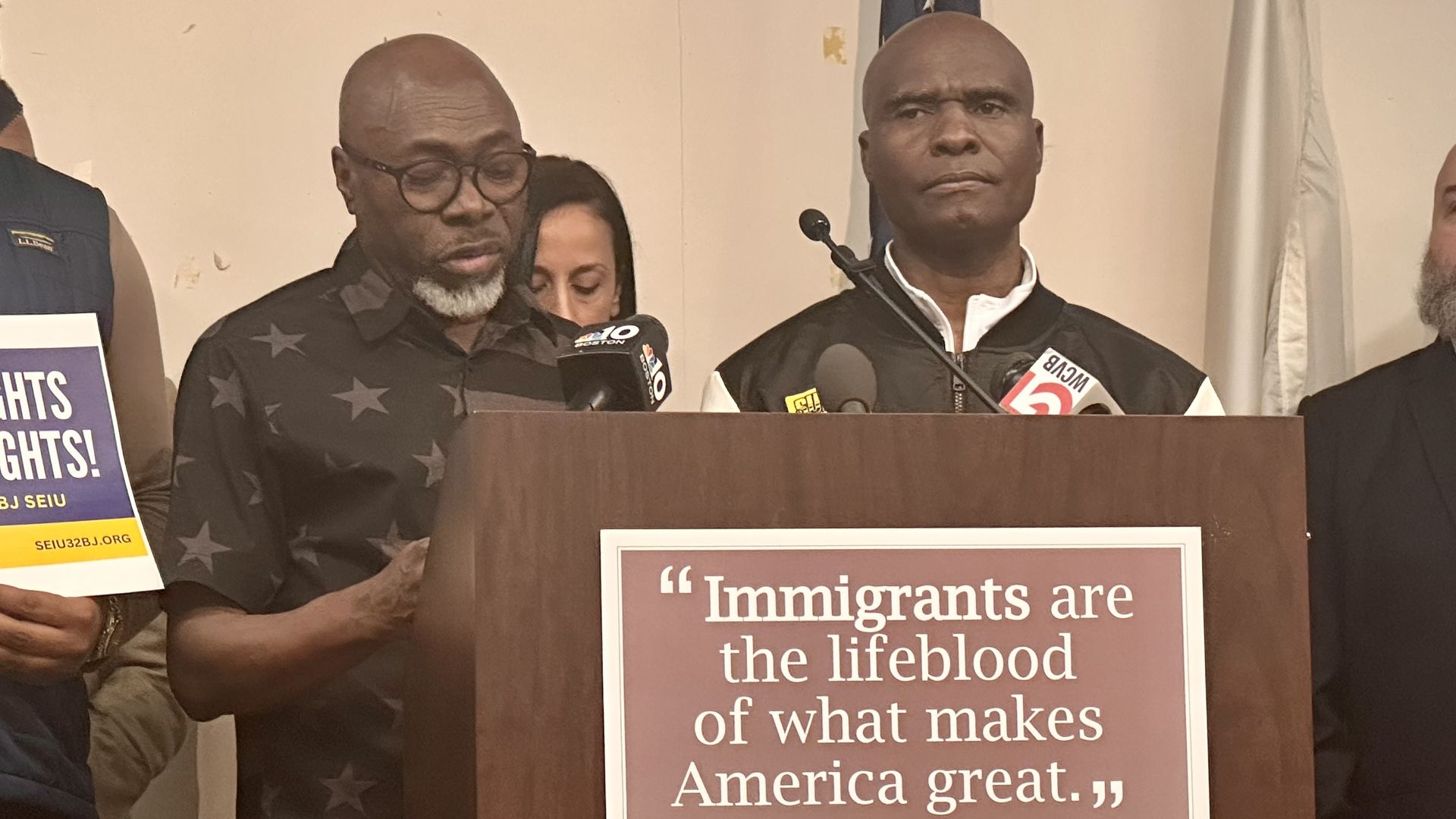
Saint Paul Paul, a Haitian TPS holder who worked at Logan Airport until last year, is part of the lawsuit. Photo: Steph Solis/Axios
The union 32BJ SEIU is suing U.S. Customs and Border Protection after workers with temporary immigration protections were kicked off their jobs at Boston's Logan International Airport.
Why it matters: Union leaders say the Trump administration is ostracizing foreign-born workers with legal permission to work in the U.S.
Driving the news: 32BJ and four union workers filed a lawsuit in Boston federal court Friday, saying CBP has erroneously revoked security clearances for 80 workers since last April.
- The move targeted Temporary Protected Status holders, asylum seekers and green card applicants, though CBP said the workers violated U.S. immigration laws.
- The employees, who clean planes and transport passengers in wheelchairs, lost their jobs at Logan.
Zoom out: The change has led to similar job losses at airports in San Francisco, New York and Orlando, Florida.
What they're saying: "They're using flimsy arguments to violate... agreed-upon rules in order to take the jobs of immigrant workers," said Kevin Brown, the union's executive vice president, at a news conference Friday.
- Axios reached out to the Department of Homeland Security for comment.
Between the lines: President Trump's efforts to drastically reshape the nation's immigration laws are complicated by laws and regulations that protect the very programs and designations he wants to end.
- Even Haitian TPS workers, whom the Trump administration prepared to deport starting last month, still have work permits and protections from deportation while a federal lawsuit challenging their removal plays out, a judge recently ruled.
Zoom in: Saint Paul Paul, a TPS holder from Haiti, joined the lawsuit after getting his security clearance revoked last summer.
- The father of six in Dorchester, who was an accountant in Haiti, said through a translator that he submitted his fingerprints and waited nearly a month for clearance to work as an airplane cleaner at Logan.
- Paul worked the union job for nearly three years when CBP sent him a letter stating, "Although you may possess a valid Employment Authorization Document that grants you permission to work in the United States, it does not confer authorized residency status."
How it works: For decades, CBP would issue customs seals for certain airport workers as long as the employer attested to running them through a background check.
- CBP could also require the employee in question to submit fingerprints, a photo or "[p]roof of citizenship or authorized residency," per the lawsuit.
- The agency's port director could also deny a seal if someone poses an "unacceptable risk" to public health, national security or aviation safety.
- The regulations, which date back to 1986, state that workers can appeal these decisions.
The feds have narrowed these regulations since 2001, though SEIU and the workers claim it has never been used to shut out immigrants with temporary protections and work permits, per the lawsuit.
Editor's note: This story has been updated to include an interview with Saint Paul Paul, a plaintiff in the lawsuit.