How Boston's coworking hub has survived

Add Axios as your preferred source to
see more of our stories on Google.
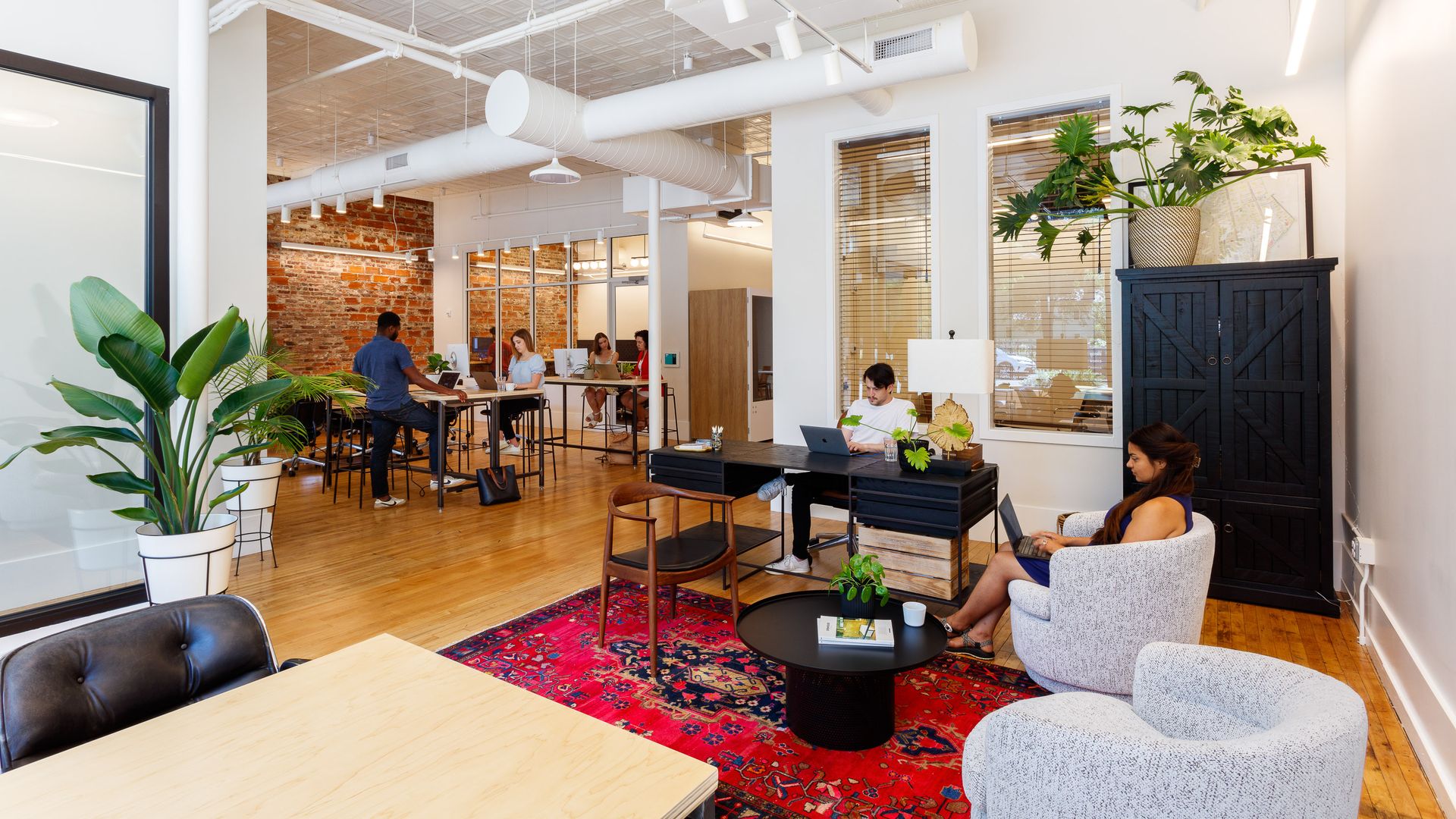
Village Works in Jamaica Plain. Photo: Courtesy of Josh Kuchinsky Photography/Village Works
The coworking chains that filled downtown Boston in the 2010s are long gone, yet some of their locally owned competitors have stood the test of time.
Why it matters: Homegrown coworking spaces have tried to build community in Boston's neighborhoods, and the last decade has tested their ability to do that.
State of play: Boston is one of the nation's busiest coworking hubs, with 249 coworking spaces spanning 5.2 million square feet across the region.
- The largest ones are chains like Regus and WorkBar.
- The Malin, a New York-based coworking chain, plans to open in the Seaport this spring.
- Beyond those are local spaces in Jamaica Plain, Dorchester and Roslindale that have cornered the market on those who want to eat, work and play close to home.
Zoom in: The Village Works in Brookline Village has survived the rise and fall of the WeWork craze, pandemic-era closures and the push to send workers back to the office.
- Today, the company has a second location in Jamaica Plain with common spaces, meeting rooms and a cafe with allergen-free snacks.
- Then there are the amenities that reflect the Village Works' values, like fair trade coffee and the company's municipal green energy purchasing plan, says co-founder Melissa Tapper Goldman.
What they're saying: "We do all the work to make it the place that people want to be in," Goldman tells Axios.
- "All they have to do is spend a relatively small amount of money for an organization."
Yes, but: Surviving has required coworking space owners to get creative about their memberships, revenue streams and the spaces themselves.
- The region had several more neighborhood coworking spaces that didn't survive the pandemic and the aftermath.
Goldman said she couldn't give a "straightforward answer" on the Village Works' profitability due to pandemic-related loans and other factors.
- "We are hitting our projections right now," she said. "We are where we want to be."
The Substation in Roslindale, which includes the coworking space WorkHub, makes more money from its private events and other revenue sources than from coworking nowadays.
The Fields Corner Business Lab, which launched 11 years ago, has capitalized on being the area's only coworking space.
- The Lab has more than doubled its membership, serving at least 220 teams and people, manager Sarah Riddle says.
- It doesn't hurt that one of the founders owns its building.
- Even then, the lab keeps things simple to manage costs, Riddle says. No fancy snacks or games — just a clean, safe space with flexible pricing.
The longest-lasting coworking spaces have mastered a niche, whether it's geographic or industry-related, and kept their budgets tight.
- There are shared lab spaces like Grentown Labs, Labshares and the nonprofit LabCentral, and maker spaces like Artisan Asylum in Allston.
What we're watching: The latest test for coworking spaces may come in 2026 as more nonprofits and small companies navigate budget cuts and economic uncertainty.
- For now, local owners say, they're managing and finding flexible pricing options for struggling tenants.