iRobot bankruptcy: Bedford's Roomba maker sold to Chinese company

Add Axios as your preferred source to
see more of our stories on Google.
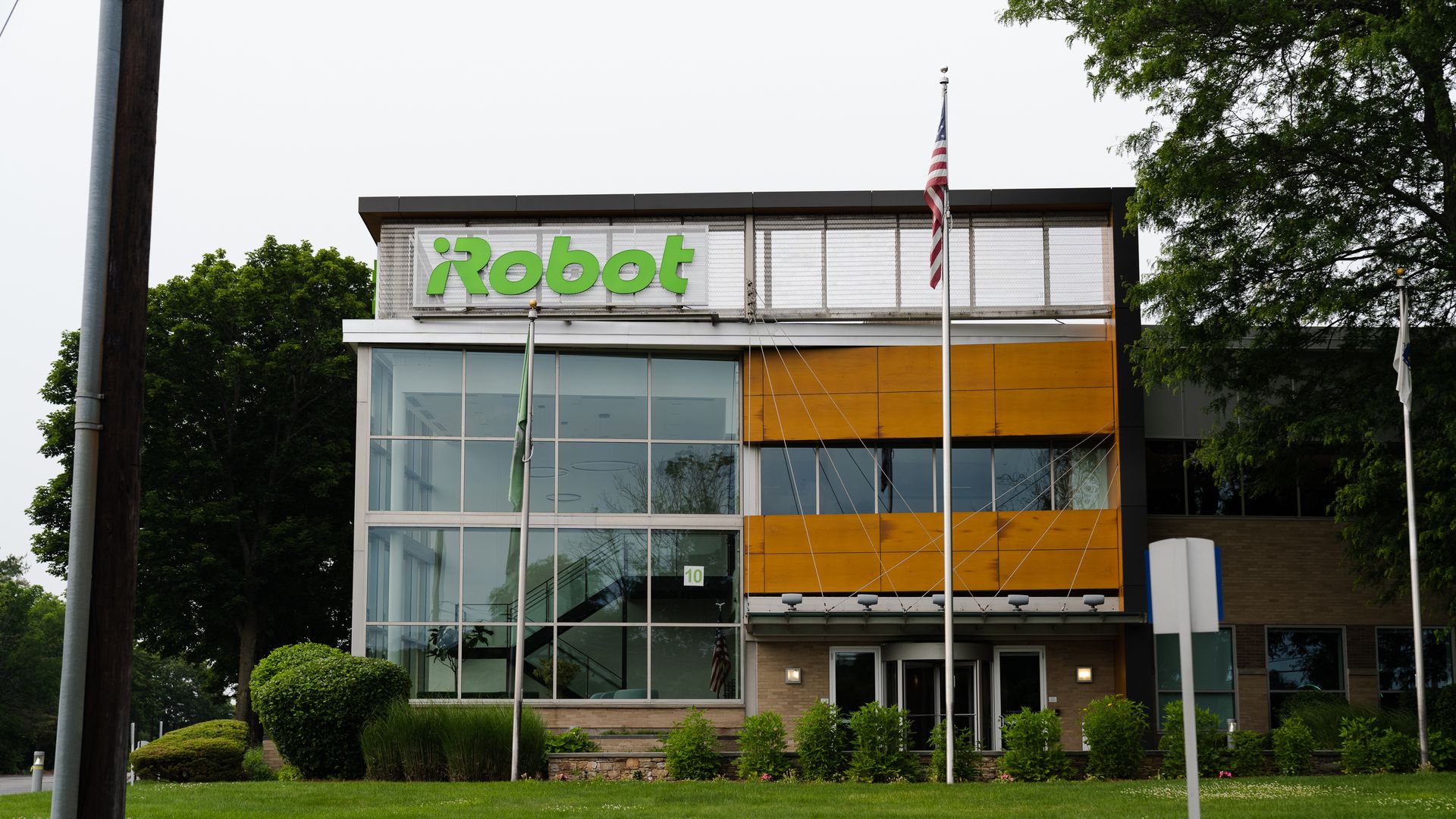
The iRobot HQ in Bedford, MA. Photo: Sophie Park/Getty Images
Bedford-based Roomba manufacturer iRobot filed for Chapter 11 bankruptcy on Sunday.
Why it matters: The fall of iRobot ends a Massachusetts tech story that began 35 years ago in an MIT lab.
The latest: Chinese company Picea Robotics will acquire iRobot's equity through a court-supervised restructuring.
- The bankruptcy process will wipe out shareholder value entirely.
The big picture: One of the Bay State's most recognizable consumer brands, iRobot collapsed under mounting debt and competition from Chinese manufacturers.
- The company never recovered from Amazon's failed $1.4 billion acquisition bid.
By the numbers: The company had $480 million in total debt as of June 2025.
- It took in $682 million in revenue in 2024, down sharply from pandemic highs.
- 274 employees remain from roughly 320 last year.
- The Roomba brand and other iRobot products had a 42% U.S. market share and 65% in Japan for robotic vacuums.
Between the lines: The BBJ reports the bankruptcy was telegraphed weeks ago when an undisclosed buyer dropped out, leaving Picea as the only option after acquiring nearly $200 million of iRobot's debt.
State of play: New 46% U.S. tariffs on Vietnamese imports from the company's plants added $23 million in costs this year.
- Price-cutting to compete with Chinese rivals like Ecovacs further squeezed margins and the local robot makers couldn't keep up.
What's next: The bankruptcy process is set to close by February 2026, with operations continuing normally.
- Stockholders will receive nothing if the court approves the Chapter 11 plan.
The bottom line: Founded by MIT scientists in 1990 and valued at over $3 billion at its peak during the pandemic, iRobot is the latest Massachusetts tech company unable to withstand overseas competition.