Proposal targets parking rules blamed for rising Boston housing prices

Add Axios as your preferred source to
see more of our stories on Google.
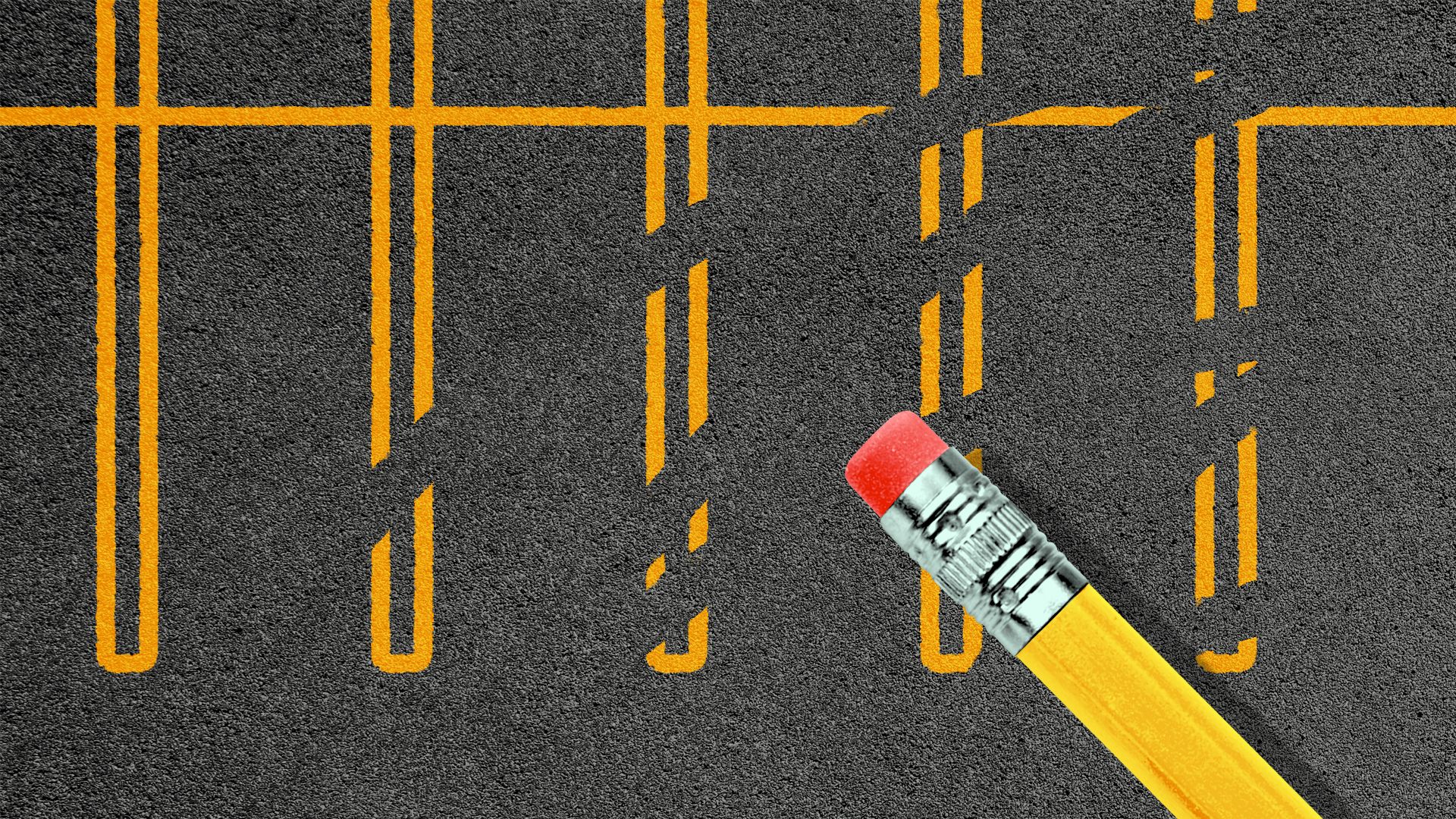
Illustration: Brendan Lynch / Axios
The Boston City Council wants to spur housing construction by eliminating minimum parking mandates for new residential buildings.
- Why it matters: Removing these barriers to speedy construction is a growing trend around the region, with the goal of boosting housing supply and cutting costs.
Follow the money: Parking requirements can add up to $50,000 per unit to the construction cost, according to state findings.
- Advocates who want to build more, denser housing say the mandates worsen the housing affordability crisis and encourage automobile dependency.
The big picture: The proposal from Councilor Sharon Durkan would let developers, the open market and public demand determine parking needs.
Yes, but: Plenty of Boston drivers — or more accurately, Boston parkers — worry about the effect that ending parking mandates would have on street congestion.
- The fear is that residents of a new parking-less building will still have personal cars and will take too many of the city's precious few on-street spots.
- District 2 Councilor Ed Flynn has questioned what the impact will be on workers who need to drive for work.
What they're saying: "[Constituents] tell me, Hey, Ed, I have no problem with the new development, but please keep the parking in the building so I'm not driving around 45 minutes for a spot in my neighborhood of South Boston," Flynn said at a City Hall hearing Tuesday.
Catch up quick: In 2023 alone, Boston approved developments with parking for over 8,000 cars.
- Registered vehicles in Boston increased by nearly 14,000 since early 2022, according to RMV data.
- Boston did away with parking minimums for affordable housing developments in 2021.
Durkan, the cosponsor of the measure, said most of her council colleagues agree with removing the mandate, but it'll take political will to make the change happen.
- "The real question is whether we will have the political leadership to actually get it done," Durkan said at the hearing.
Zoom out: Cambridge repealed parking minimums in 2022 and Somerville followed suit in 2024. Both cities report that the policy is working and parking disruption has been minimal.
- In Cambridge, a walkable community served by the MBTA, the number of registered vehicles declined by 759 at the same time Boston's total increased.
What's next: The Council will mull over Durkan's proposal and could take action next year if they decide to put the bill before Mayor Michelle Wu.