Massachusetts leads in lung cancer treatment, but faces racial disparities


Add Axios as your preferred source to
see more of our stories on Google.
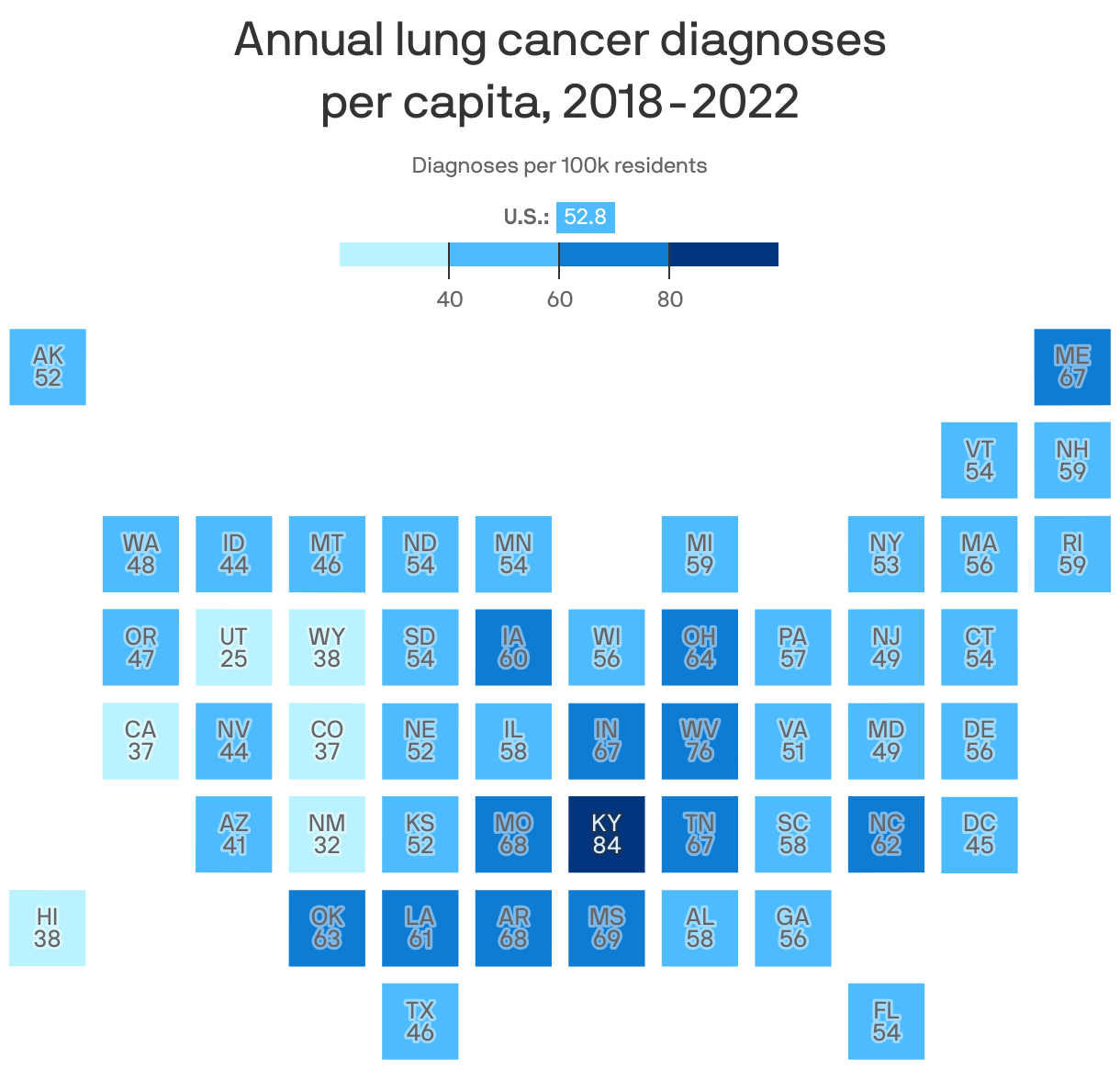
Massachusetts has some of the best diagnosis and treatment rates for lung cancer, but those early responses don't always reach Black and Asian residents.
Why it matters: The state is home to arguably the best health care hubs in the nation, but still grapples with racial health disparities that could cost some patients their lives.
State of play: Roughly 56 out of every 100,000 people in Massachusetts were diagnosed with lung cancer between 2018 and 2022, landing the state in the middle of the pack for diagnosis rates, according to the 2025 State of Lung Cancer report.
By the numbers: Massachusetts stood out as having the lowest share of residents who didn't get treatment (13.2%) and the highest share of residents who could undergo surgery as their primary treatment option (31.9%).
- That suggests the state was able to diagnose residents early enough that they were viable candidates to tackle their cancer through surgery, researchers say.
Yes, but: Asian and Pacific Islander residents were the least likely group to be diagnosed early in Massachusetts.
- The report doesn't delve into the reasons for later diagnoses, which could range from lack of health care access to other factors leading to delays.
- While the state's share of patients who underwent surgery was nearly one-third, the percentage dropped to 26.5% among Black residents.
What they're saying: Lung Association president and CEO Harold Wimmer lamented recent cuts to the U.S.'s public health infrastructure at a time when the nation has made progress against lung cancer.
- "(The Centers for Disease Control and Prevention) is critical in helping to prevent lung cancer by funding programs to prevent tobacco use and help people quit, and the research done at (the National Institutes of Health) has led to 73 new treatments for lung cancer in the last decade alone," Wimmer said.
- "The cuts to programs and research are devastating. Lives hang in the balance — we must keep up the momentum."