What the Mass. DOC's $6.7M prison settlement means

Add Axios as your preferred source to
see more of our stories on Google.
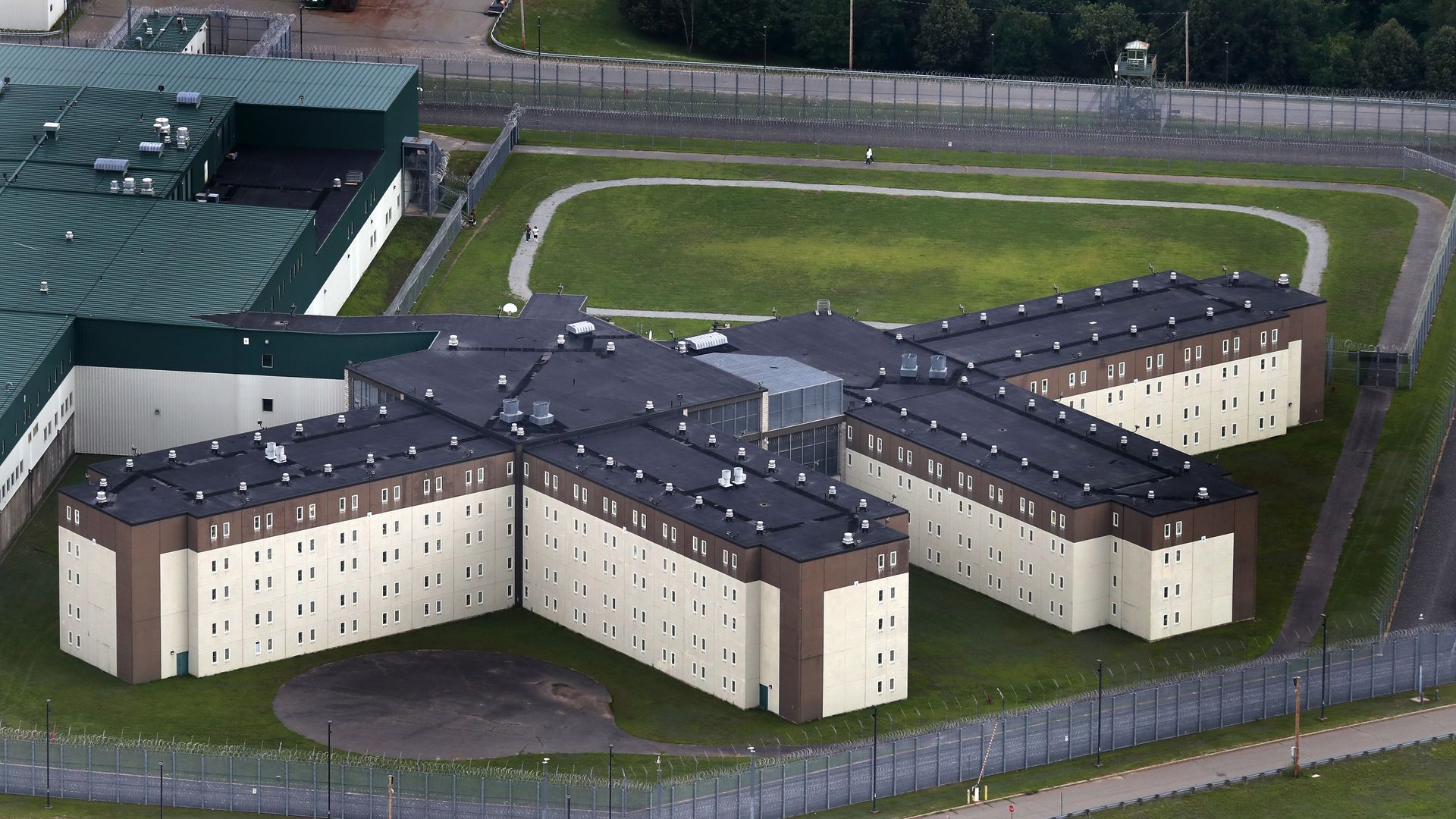
Souza-Baranowski Correctional Center in Lancaster. Photo: David L. Ryan/The Boston Globe via Getty Images
A new settlement agreement between the state and prisoners at Souza-Baranowski Correctional Center has advocates cautiously hopeful that they'll see reform at the prison.
Why it matters: The agreement ended a four-year legal battle in which prisoners alleged state-sanctioned violence and even more brutal mistreatment of Black and brown prisoners in a January 2020 incident.
The big picture: Legal experts and an attorney representing the prisoners say the agreement is a step in the right direction — and an opportunity to build a rehabilitation-focused environment.
- While Massachusetts has one of the lowest imprisonment rates in the country, it incarcerates five times as many Black residents compared to white residents, per 2024 data from the Sentencing Project.
Flashback: Souza-Baranowski made headlines in early 2020 when reports surfaced of a broad retaliatory campaign following an attack on two prison officers.
- Prisoners said officers from a special operations unit beat and dragged them, pepper-sprayed them and, in some cases, forced them to kneel before locking them in solitary confinement without toilet paper rolls.
Catch up quick: A federal judge recently approved the agreement, in which the DOC committed to paying prisoners $6.75 million.
- $1 million is covering legal fees incurred by Prisoners' Legal Services. The rest is going to at least 140 prisoners who sued.
- Prisoners get an average of $38,591, depending on the type of harm they suffered.
State of play: The Massachusetts Department of Correction admitted no wrongdoing but committed to improved use-of-force practices.
- The DOC referred Axios to a statement in May and declined further comment.
Reality check: It's "extremely common" in settlement agreements for defendants not to admit liability, says Judith Resnik, a legal scholar and professor at Yale University.
- What's important about a settlement is the kind of relief offered, "and this is a proposal to provide both monetary relief and structural changes to the system," she tells Axios.
Zoom in: James Jacks has been out of prison for three years, working a union job and reconnecting with his family, but he still recalls the day he was shot five times with a pebble gun and thrown into solitary confinement with no toilet paper.
- He lost some of his most treasured belongings: legal paperwork, family photos and obituaries for his mother and aunt, who died while he was locked up.
- The settlement offers some relief, he said, but it also feels like a "cheap victory" because the DOC never admitted wrongdoing.
The fine print: The reforms range from limiting use of dogs to implicit bias training to creating an anonymous tip line so employees can report misconduct.
- The DOC also agreed to bar officers who use excessive force from joining the special unit for three years.
- The agency had already been implementing some reforms proposed by the prisoners' attorney, including the activation of a video response team whenever the special operations unit is deployed.
The bottom line: The settlement may test how willing and prepared the DOC is to reform one of its most infamous prisons.