Goodbye, ugly white flexposts. Hello, Zebra barriers.

Add Axios as your preferred source to
see more of our stories on Google.
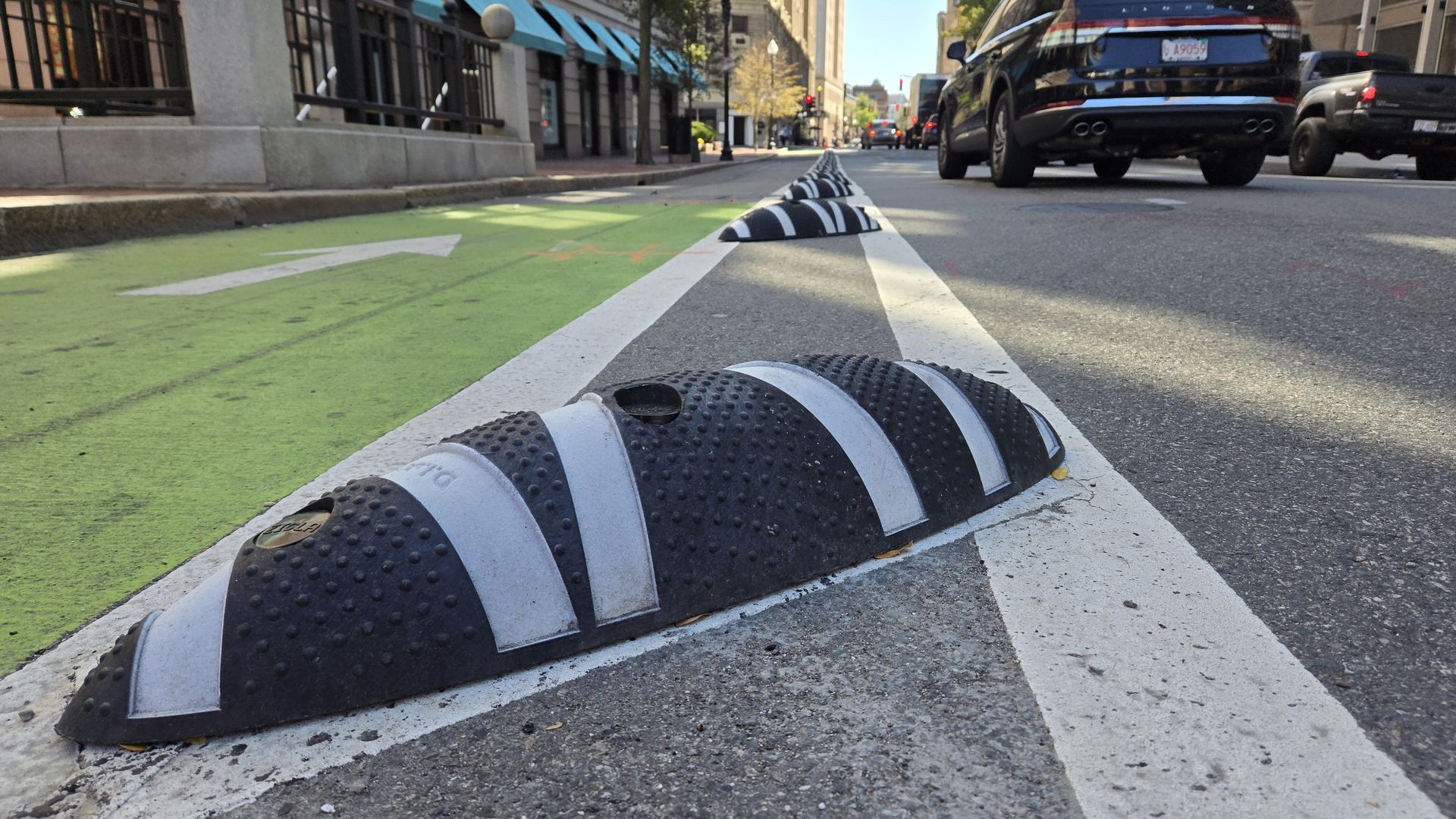
Photo: Mike Deehan/Axios
Boston is getting rid of the flexible plastic posts that separate bike lanes from car traffic and switching to more durable alternatives.
Why it matters: Ditching the nasty white posts is a rare middle ground for both activist cyclists and vocal drivers. Both groups tend to dislike the current flexposts that break and bend too easily.
State of play: Installation of the new barriers began last week on Arlington Street in the Back Bay.
- City crews are installing Zicla Zebra barriers: small molded plastic humps with reflective stripes designed to withstand damage from vehicles and the elements.
What they're saying: Flexposts are "uniquely a piece of infrastructure that is disliked by everyone who encounters them," Boston chief of streets Jascha Franklin-Hodge told StreetsblogMASS.
- He says the ubiquitous white posts have improved safety but are too costly to maintain.
The big picture: Franklin-Hodge says the goal is to replace all the flexposts with better materials while maintaining access to the bike lanes for emergency vehicles.
- More permanent cast-in-place concrete curbs are set to be installed on Boylston Street's bike lanes this fall.
- The method doesn't require weeks of excavation and can be installed in a day using poured concrete reinforced by rebar.
- More concrete barriers are planned for lanes in Dorchester, Brighton and Jamaica Plain.
What's next: The city says it'll track how the new "zebra barriers" perform on Arlington Street before deploying them elsewhere.
- Expect to see more concrete installations for bike lanes, crosswalks and traffic-slowing structures.
Bottom line: Boston wants to move away from the unsightly white poles toward more permanent — and cheaper — infrastructure to protect road users.