Boston-area residents, ecologists fight black swallow-wort spread

Add Axios as your preferred source to
see more of our stories on Google.
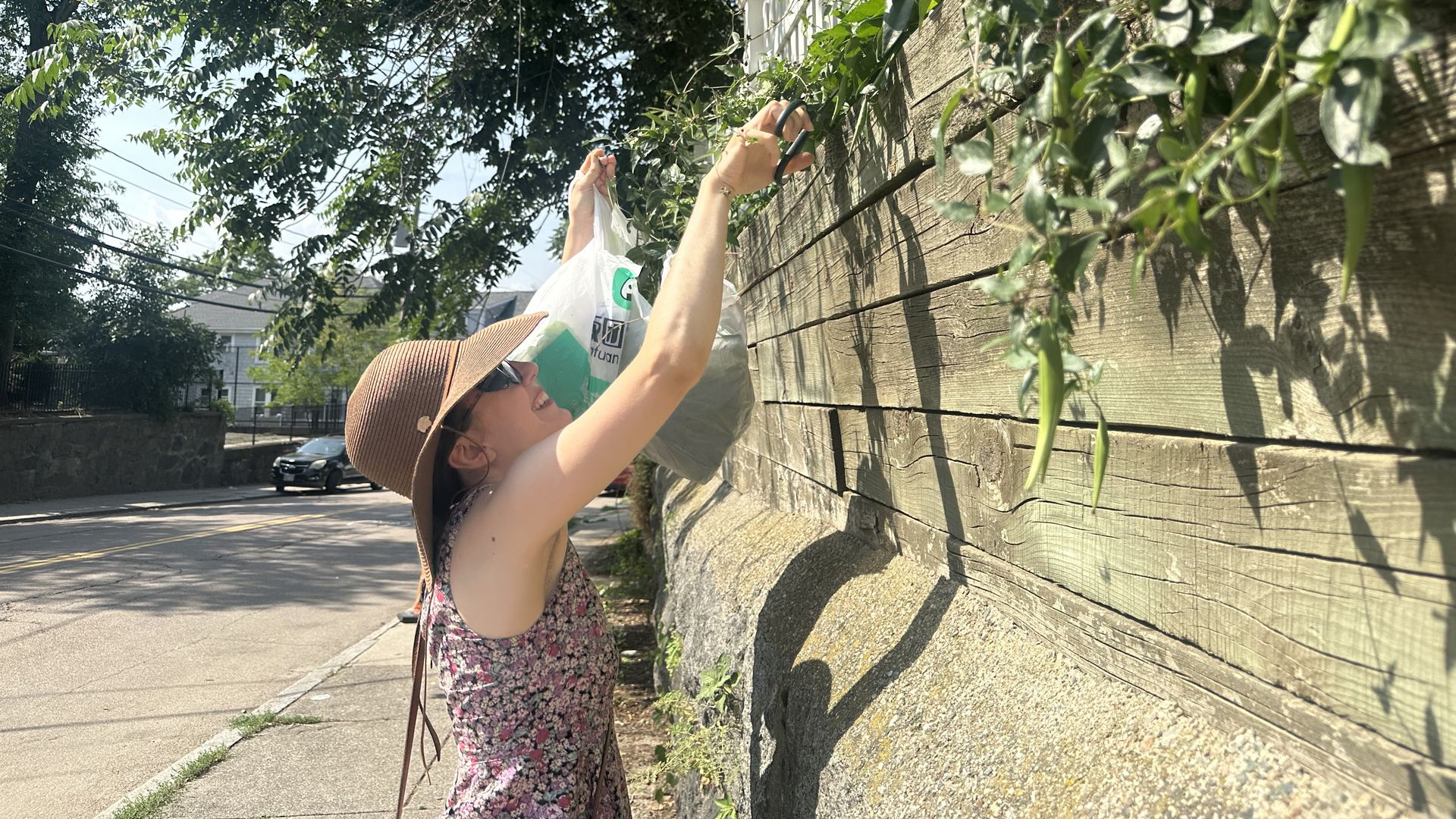
JP resident Amy Collier snips at black swallow-wort vines spilling over a neighbor's wall. Photo: Steph Solis/Axios
Armed with a pair of scissors, Amy Collier slashes long pod-bearing vines that encroach on Jamaica Plain sidewalks and parks while out walking.
- Workers near the Boston Nature Center and the Bell Isle March have embarked on the same mission— to stop the invasion of the black swallow-wort.
Why it matters: Boston-area conservationists and residents have declared war on the invasive plant, which takes over yards and kills monarch butterfly eggs.
Flashback: The black swallow-wort is a textbook case of an invasive plant getting loose and colonizing its new home.
- Ecologists say the black swallow-wort was brought overseas from Europe to a botanical garden in Ipswich in the 19th century and soon escaped the garden.
- Today, two kinds of swallow-wort have spread across the north U.S. — the pale swallow-wart, spreading as far west as Minnesota, and the black swallow-wort in Eastern Massachusetts and New York, says Antonio DiTommaso, an ecologist professor at Cornell University.
Threat level: The black swallow-wort spreads both through resilient vines underground and through the seeds carried by the wind or eaten and then excreted by birds.
- It smothers native plants in its way and tricks monarch butterflies into thinking they're laying eggs on native milkweed, before killing the larvae.
- The longer growing seasons driven by climate change mean they have more time to spread their seed.
State of play: The black swallow-wort has made hunters out of concerned neighbors in JP and Somerville, as well as city plant workers and conservationists from East Boston to the Boston suburbs.
What they're saying: "I'm not sure many people know what it is or know how to look for it," Collier tells Axios.
- "The vine is kind of nondescript at first, until it starts growing."
- So she warns neighbors on Facebook groups or while walking, when she fills up trash bags with broken vines.
Francis Nimick, a Somerville resident, has helped neighbors take out black swallow-wort, Japanese knotweed and other invasive plants.
- He encourages all neighbors to rip them up, even renters whose landlords won't dig up the roots.
- "If you just rip it with your hands and put it in the trash, that is a huge service to the entire neighborhood."
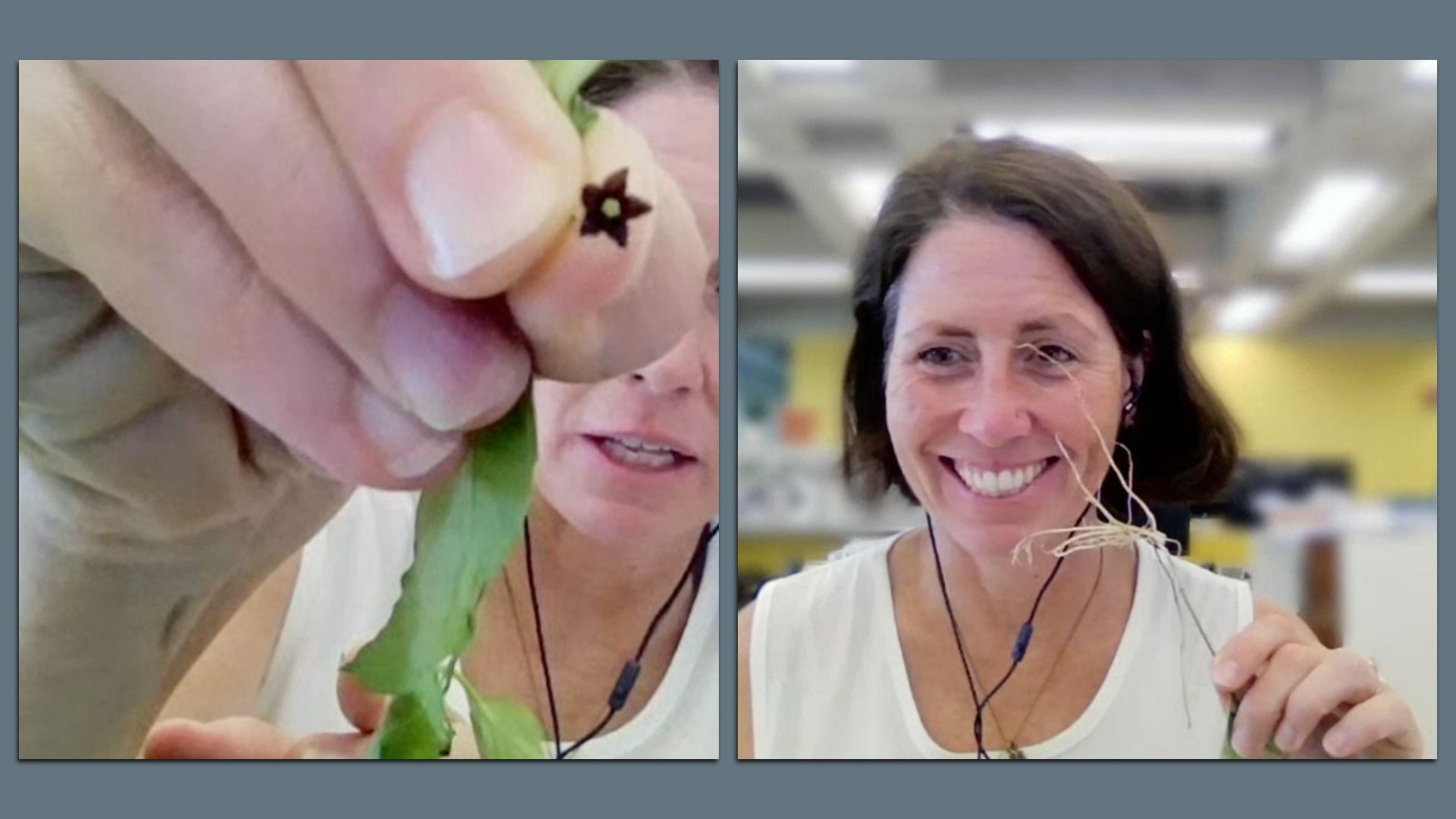
There's still time to stop them from flowering, which accelerates the spread.
- Alice Brown, Boston's director of environmental quality, suggests ripping what you see on the streets and sidewalks.
- Homeowners can dig up the roots and rip them up to limit the spread.
- A targeted shot of herbicide, where allowed, could also help kill them, but be careful not to spray other native plants.
- And homeowners living near waterways should get permission from the Boston Conservation Commission before spraying herbicide in their yards, Brown says.
Be smart: Don't start cutting down vines in a neighbor's yard unless you get permission first.
- Once you do collect it, put it in the trash. Composting it could enable it to keep spreading.
The bottom line: Only a community-wide campaign, and perhaps carefully applied herbicides, could come close to eradicating the black swallow-wort, but these efforts can certainly contain them, says DiTommaso, the ecology professor.