How the MBTA is going to handle World Cup crowds

Add Axios as your preferred source to
see more of our stories on Google.
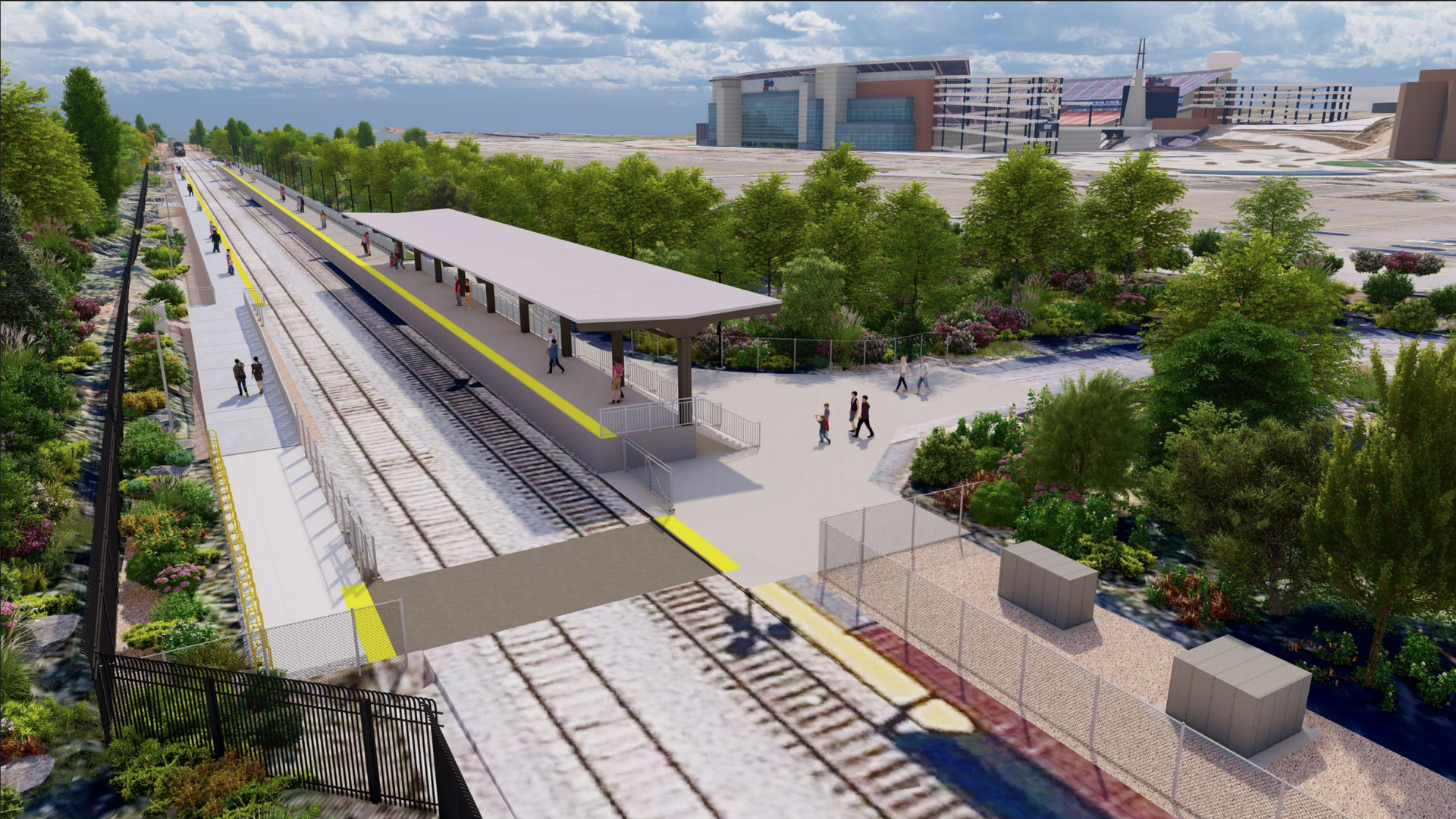
The Foxborough MBTA station will become a popular place next summer. Rendering: MBTA
MBTA managers say they're committed to moving 20,000 passengers per game to and from Foxborough during Massachusetts' seven World Cup matches next summer.
Why it matters: "Boston" is hosting World Cup games, but the actual stadium is 23 miles away in Foxborough.
- Foxboro is the farthest from a major city center among all 11 American venues hosting World Cup games.
- Getting thousands of international fans to and from Gillette Stadium will be a huge undertaking for the rebuilding MBTA.
Zoom in: A World Cup fan festival is planned for downtown Boston for the duration of the Massachusetts portion of the tournament.
- Thousands of fans will fly into Logan, stay at Boston hotels and patronize the usual tourist spots between games.
- The T has to make the added Foxborough trains run like clockwork to satisfy the international crowds.
So far, the T has taken a few steps to make sure fans can get to the World Cup games, including:
- Setting up a construction blackout period for the tournament.
- Identifying additional funds for buses, subway and ferry travel.
- Expanding languages for signs, apps and other services.
- Streamlining ticketing for international travelers.
Yes, but: Service planning is ongoing for getting 20,000 passengers to the Foxboro station located within walking distance from Gillette.
By the numbers: Gillette Stadium will host seven matches from June 13-July 9, 2026, including one quarterfinal match.
- Six of the seven games are scheduled for weekdays.
- FIFA is considering 12 pm, 4 pm, 6 pm or 9 pm start times, according to the MBTA's planning documents.
- The stadium has around 65,000 total seats. The capacity record, 71,723, was set by an Ed Sheeran concert in 2023.
The bottom line: The MBTA — the same transit agency that frustrates New England commuters every day — wants to position itself as essential infrastructure for one of the world's largest sporting events.