What's behind the rise of urban food forests around Boston

Add Axios as your preferred source to
see more of our stories on Google.
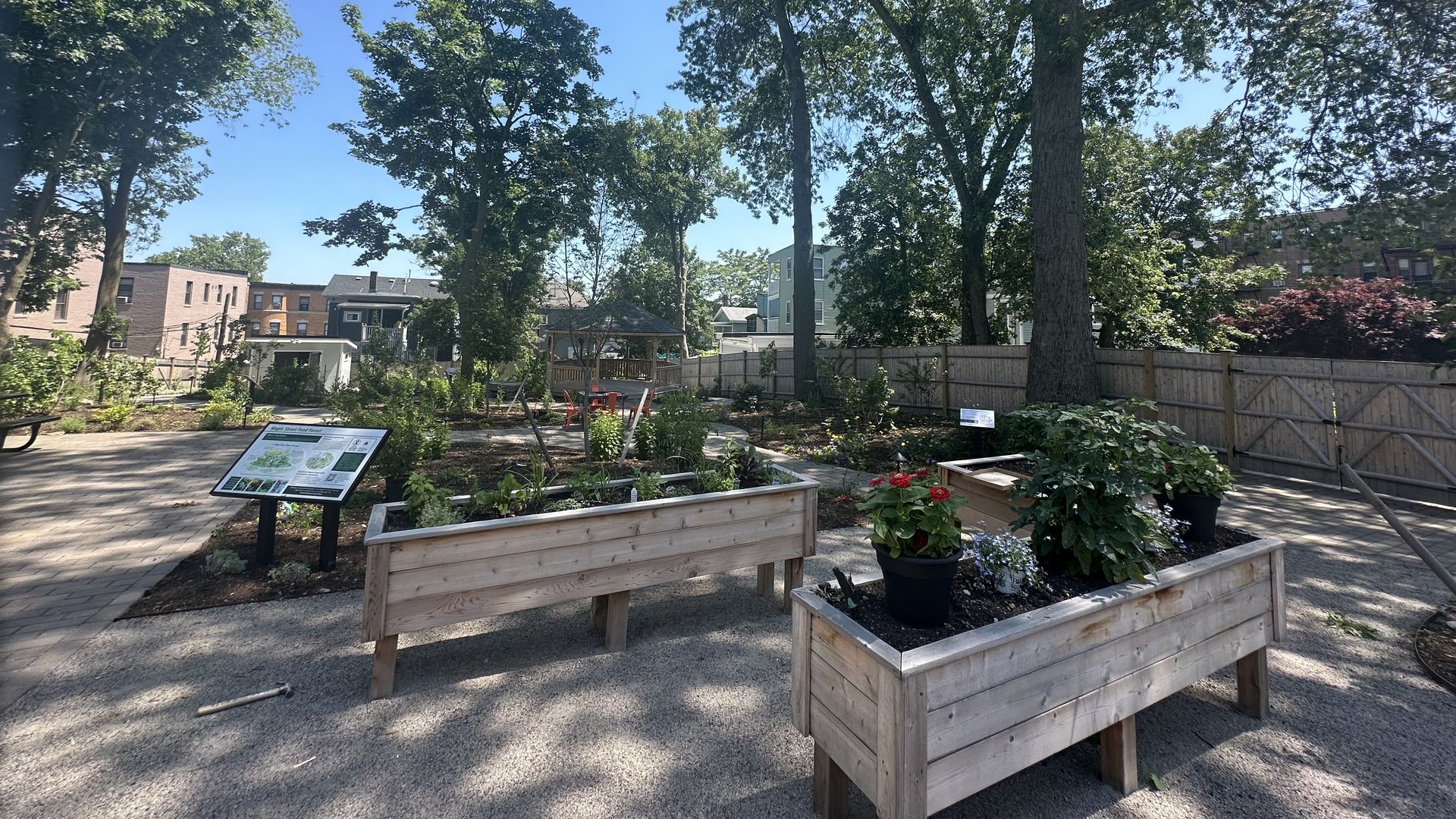
The Maple Street Food Forest in Boston's Dorchester neighborhood opens June 28. Photo: Steph Solis/Axios
Boston-area residents are bringing parks with trees, herbs and fruit to some of the most concrete-heavy corners of the metro area.
Why it matters: The parks, known as food forests, are one way locals are combating extreme heat that clusters in several Boston neighborhoods.
State of play: The Boston Food Forest Coalition, working with the Sonoma Maple Schuyler Tenant Association, will unveil a new food forest Saturday at 44 Maple St. in Dorchester.
- It's the 13th urban food forest the coalition has helped build in the Boston area, toward a goal of creating 30 food forests by 2030, Orion Kriegman, the founding executive director, tells Axios.
How it works: An urban food forest may include new and old trees, seasonal foods, shrubs and other greenery that mimics the local ecosystem.
- The coalition has been transforming vacant lots into green spaces with help from neighbors for more than a decade.
- Then it trains volunteers to tend to the land.
Flashback: The coalition formed after volunteers turned a vacant lot with trash and used needles into what's now known as the Egleston Community Orchard, a community-owned food forest, Kriegman says.
- The project had begun as locals were mourning a man who had been shot and killed nearby.
- Volunteers planted a blueberry bush in his memory, Kriegman recalls.
"For me, a light bulb went off," Kriegman says. "We're growing so much more than food here."
- "We're growing relationships between ourselves and the land, ourselves and our diets, but also across race and class."
Between the lines: Extreme heat is hitting majority-Black and brown neighborhoods in the Boston area hardest, per multiple reports.
- The heat clusters concentrate in communities of color and low-income communities in Chinatown, Dorchester, East Boston, Mattapan and Roxbury.
What's next: The coalition is working with more than nine neighborhood groups to design new food forests in their communities.
Inside Maple Street's transformation
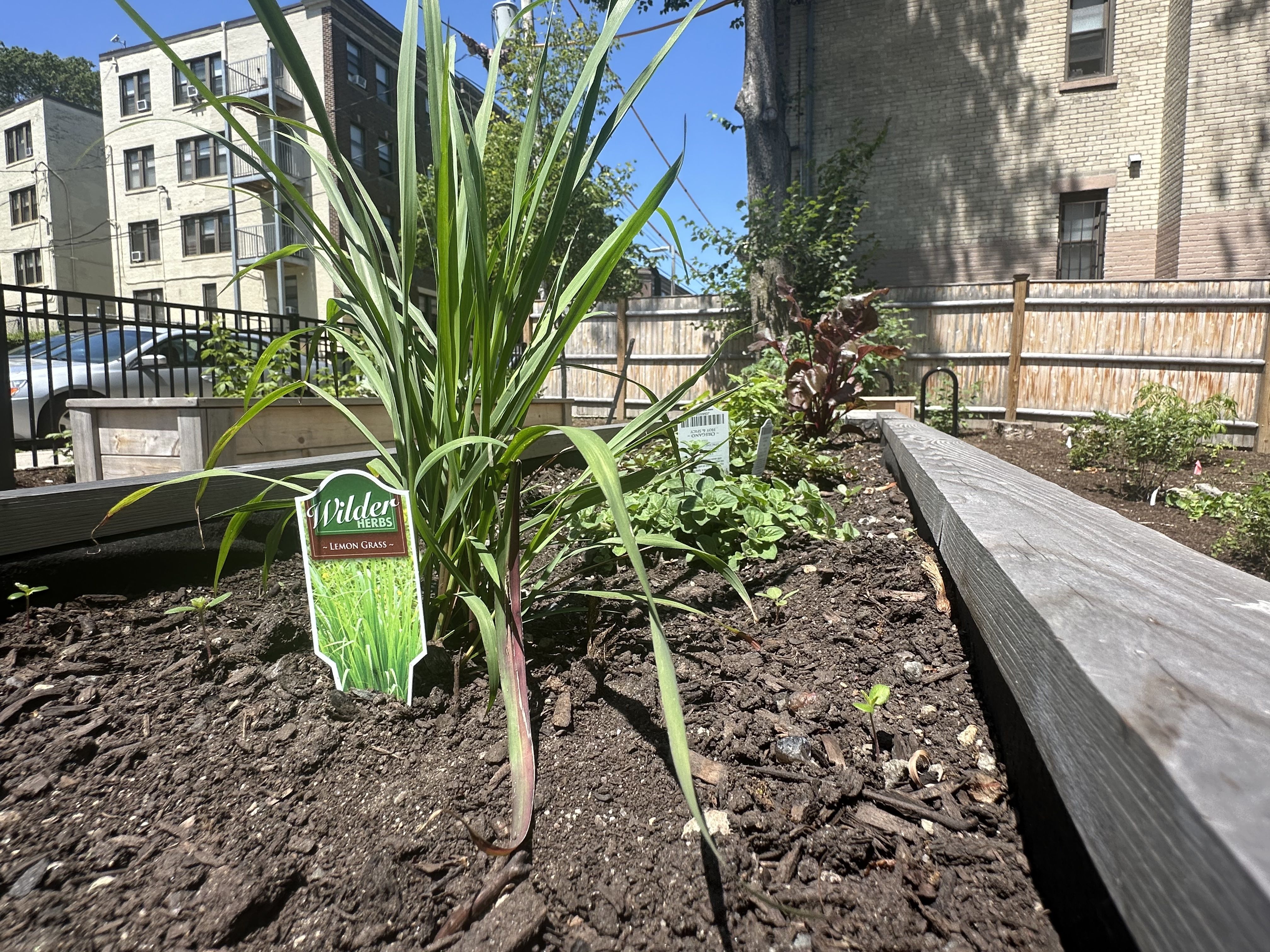
Maple Street residents will have a place to collect lettuce samplings, get their steps in and play dominoes in the shade once their food forest park opens Saturday.
Zoom in: The space went from a vacant lot with overgrown grass to a park with walkways, flowers and fruit trees, says Chris Geer, resident services coordinator for the Sonoma Maple Schuyler Tenant Association.
- He says he hopes neighbors of all ages walk through the park, sit under the shade and learn about the vegetation.
- "We don't want the teenagers or the young adults to think that they're pushed out, that it's only [for] the adults," he tells Axios.
Liz Luc Clowes, engagement and construction director with the Boston Food Forest Coalition, said the food forest will host workshops and other events once it's open.
What they're saying: "It is climate justice, and it is also strawberries in the afternoon and wonderful workshops and composting and neighbors running into each other in these spaces," she says.
- "It's all of the above."