Terminated NIH grants must be restored, judge orders

Add Axios as your preferred source to
see more of our stories on Google.
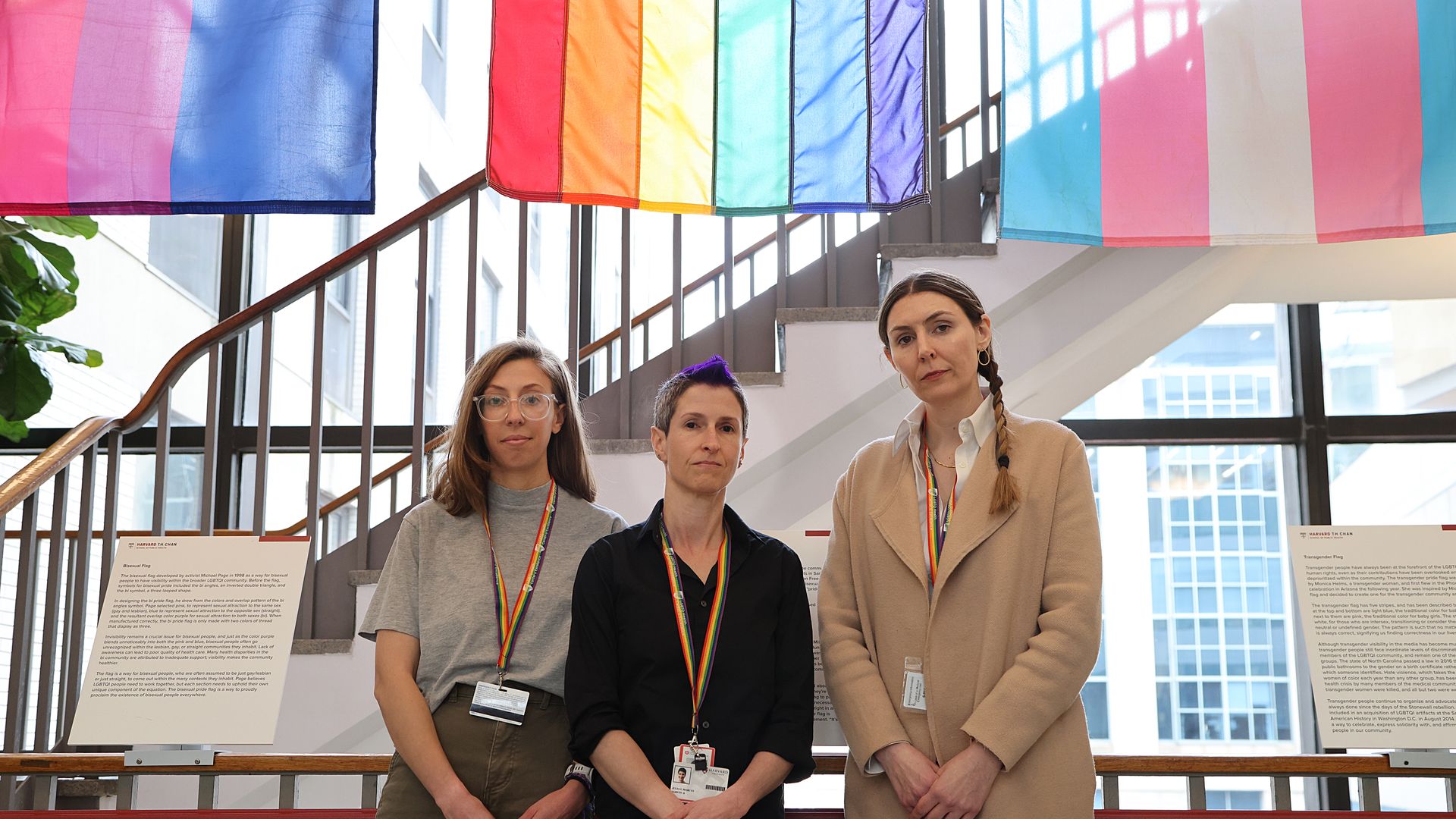
Instructors at the LGBTQ Health Center of Excellence at the Harvard T.H. Chan School of Public Health all had their NIH funding terminated. Photo: Suzanne Kreiter/The Boston Globe via Getty Images
A federal judge Monday ordered the National Institutes of Health to restore grants that the agency cut based on gender ideology or diversity, equity and inclusion, calling the terminations illegal.
Why it matters: Hundreds of millions of dollars in medical research funding cited in the lawsuit are at stake, including grants that fueled LGBTQ+ health research at Harvard.
Driving the news: District of Massachusetts Judge William Young told the attorneys that the case raises serious concerns about racial discrimination related to health and said some evidence points to potential discrimination against women's health.
What they're saying: "I've never seen a record where racial discrimination was so palpable," Young said Monday afternoon.
- "I've sat on this bench now for 40 years. I've never seen government racial discrimination like this."
State of play: Young ordered the NIH to disburse the funding that affected 367 grants under new Trump administration policies.
By the numbers: The NIH cut nearly $3.8 billion in grants to U.S. institutions, with Massachusetts losing more than $1.2 billion, per estimates from the Association of American Medical Colleges.
- The second-hardest-hit state, New York, lost $590 million, per AAMC.
Friction point: Attorneys representing researchers in several states said the funding cuts were "arbitrary" and singled out cuts affecting racial minorities, women and LGBTQ+ people.
- Thomas Ports, a Justice Department attorney representing the Trump administration, said some grants have been renewed, while others are not "scientifically valuable."
- But Ports didn't explain how the Trump administration was defining DEI and the harms they say DEI-related research causes.
Zoom in: After Ports read an NIH statement saying DEI-related studies "are often used to support unlawful discrimination," Young said, "I see no evidence of that."
- "From what I can see, it's the reverse, but point it [the evidence] out to me."
- Ports said he had no additional context to share beyond the statement.
Threat level: Young sounded the alarm on government-backed racism, though he acknowledged he may not have the authority to act on what he's seeing beyond the evidence in the NIH lawsuit.
- "I am hesitant to draw this conclusion, but I have an unflinching obligation to draw it, that this represents racial discrimination and discrimination against America's LGBTQ community," Young said.
- The Supreme Court ruling striking down affirmative action, he added, does not give license to discriminate outright.
- "Have we fallen so low?" he asked. "Have we no shame?"
Reality check: The ruling only applies to the grants listed in this case, and it only restores the grants while the case makes its way through court.
- Young didn't officially rule that the directives were unlawful because they were discriminatory.
- Instead, he asked for evidence supporting or refuting the possibility of racial or gender discrimination.