Trump's not alone in wanting Harvard to pay taxes

Add Axios as your preferred source to
see more of our stories on Google.
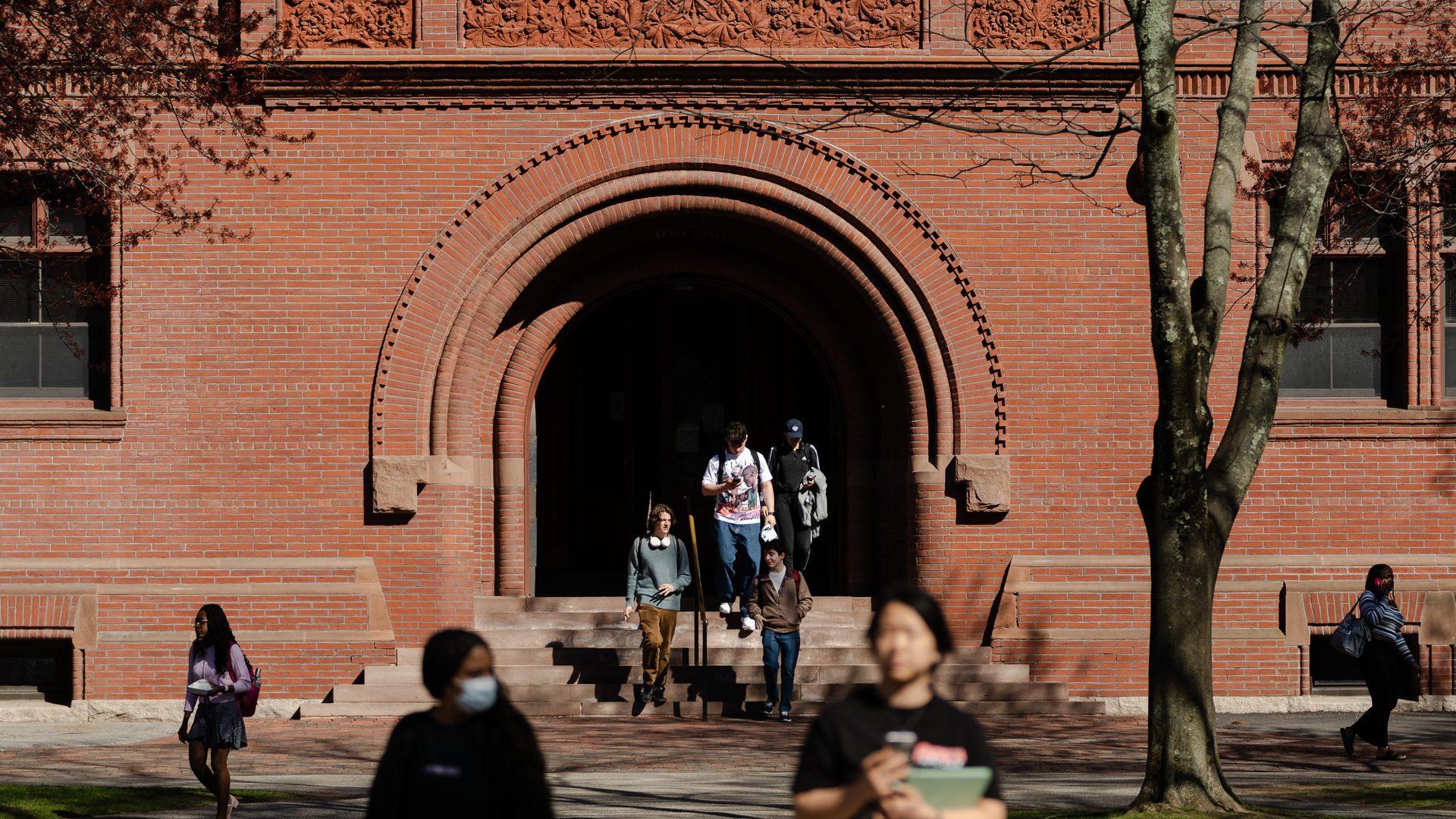
Harvard Yard. Photo: Sophie Park/Getty Images
For years, Boston and Cambridge residents have called on Harvard University to pay more taxes.
- Now Harvard is under the spotlight for its tax-exempt status — but not for the same reasons.
Why it matters: A perennial debate over how much Boston's major universities owe local governments has become dwarfed by the Trump administration's escalating fight with Harvard.
The latest: Trump said on the Truth Social platform he owns that his administration will strip Harvard of its tax-exempt status.
- This comes as Boston officials and Harvard are renegotiating the terms of Harvard's participation in its Payment In Lieu of Taxes program, to which Harvard has paid just 79% of the amount requested by Boston for the last eight years, the Harvard Crimson reported.
Friction point: The programs in Boston and Cambridge are voluntary, but Boston-area colleges with large swaths of land have come under scrutiny in recent years for not paying more.
- Local advocates, including progressive lawmakers who oppose Trump, have called on Harvard and other universities to pay property taxes, or at least higher PILOT-related payments, to support local residents.
How it works: The programs exempt major universities from paying taxes on their institutional properties in exchange for cash payments and investments in city services.
- Advocates have argued for years that these universities don't pay their fair share, while increasing student enrollment strains an already fraught housing market.
- Since fiscal 2012, Boston's PILOT program has asked certain institutions owning property valued over $15 million to invest 25% of what would have been paid.
- Up to half of that could be paid in the form of community services, per a 2024 Boston Municipal Research Bureau report.
By the numbers: Altogether, Bloomberg estimated that Harvard saved $158 million in 2023 on property tax bills in Cambridge and Boston.
- The university has paid Boston $33 million over the past 10 years, along with investments in services for Boston residents. (In fiscal 2024, they invested some $22 million, per city of Boston estimates.)
- Meanwhile, Harvard has given Cambridge under $5 million annually for its PILOT program. Harvard committed to paying $6 million this year, per the Crimson.
- It's unclear how much Harvard has paid Cambridge in services.
The other side: Boston officials, and even the research bureau, have called the PILOT program a success.
- A 2024 BMRB report says alternative payment methods — namely a $100-per-student fee other states have imposed — would have a "detrimental effect" on colleges' voluntary participation in the PILOT program.
Yes, but: All of that may become moot for Harvard if it loses its tax-exempt status.
Threat level: The Trump administration has already canceled millions in research grants and clawed back billions of dollars from Harvard, prompting the Ivy League school to sue.
- The Trump administration has suggested Harvard can rely on its $53 million endowment, but much of that funding is earmarked or can't be spent broadly.
- Revoking its tax-exempt status would put Harvard on the books for far more than its local property taxes.